
JOYO MOMIX CAB
4.2Editor score
Direct monitoring audio
Pocket-sized portability
Zero latency recording
This guide compares the top audio interfaces for guitar in 2026. We evaluate sound quality, latency, connectivity, and software to help you find the perfect
Choosing the right audio interface for guitar is essential for capturing your sound with clarity and precision. Whether you are recording demos, streaming live, or producing full albums, the interface acts as the bridge between your instrument and your computer.
We evaluated ten top models based on input quality, latency performance, compatibility, and included software. Our comparison covers budget-friendly options for beginners and high-end units for professional studios to ensure you find the best fit.
Each pick highlights key features, pros, and cons to help you make an informed decision. Prices and availability change frequently, so please check the current listings before purchasing to ensure you get the best value today.
4.2Editor score
4.6Editor score

The following table provides a side-by-side comparison of all ten selected audio interfaces. It highlights key specifications such as input types, resolution, and unique features to help you quickly identify the model that suits your specific recording needs.



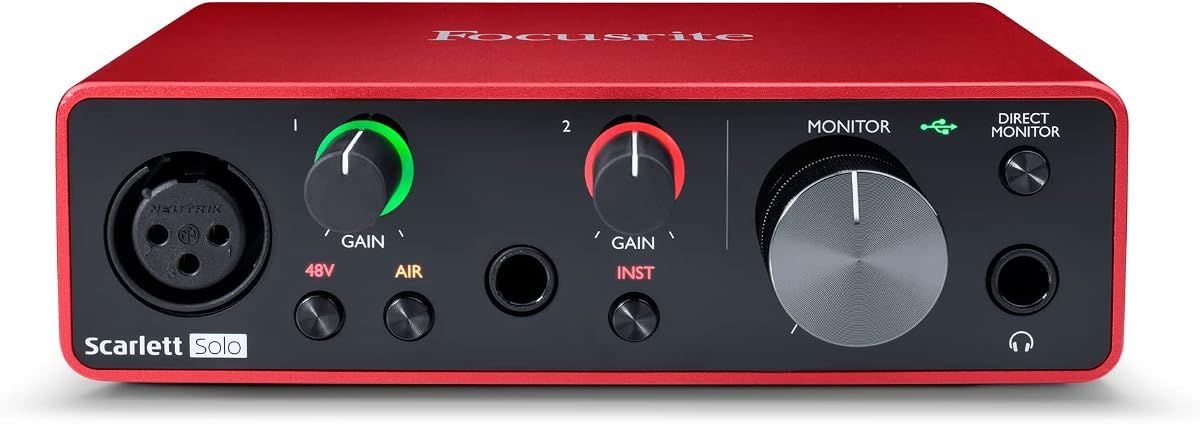
The Focusrite Scarlett Solo 3rd Gen stands out as a top choice for guitarists seeking studio-quality recording at home. With a rating of 4.6 stars, it delivers high-performance converters and pre-amps that capture every nuance of your playing without unwanted distortion.
We may earn a commission when you buy through this link, at no additional cost to you.
Its standout feature is the switchable Air mode, which adds clarity and presence to your instrument tones. The Gain Halos help you set perfect recording levels by lighting up when signal levels are optimal, ensuring clean takes every time.
While it offers only two inputs, this is ideal for soloists or duo recordings. Some users may find the Air mode alters their natural tone, but for most acoustic and electric applications, the enhancement is highly desirable and appreciated by professionals.
This interface is perfect for musicians who want a reliable, plug-and-play solution with industry-standard software included. Whether you are recording demos or streaming live, the Scarlett Solo provides the quality and ease of use you need to succeed.
High-performance converters allow you to record and mix at up to 24-bit/192kHz, retaining all sonic qualities.
It includes Pro Tools Intro, Ableton Live Lite, and other tools to help you start recording right away.
We may earn a commission when you buy through this link, at no additional cost to you.
The JOYO MOMIX CAB is an excellent budget option for guitarists who need to record directly to their phones. With a 4.2 star rating, it offers zero-latency monitoring, allowing you to hear your unprocessed guitar signal in real-time.
We may earn a commission when you buy through this link, at no additional cost to you.
Its main strength is portability and simplicity. You can plug it directly into your iPhone or Android device without needing drivers or external power. The clip design lets you attach it to your pocket or strap for recording on the go.
However, it is designed for direct recording only. You cannot use real-time software amp simulations, and the dry signal carries through the headphones, which might be distracting if you need to hear backing tracks clearly without your guitar.
For songwriters capturing ideas quickly or streamers who need simple monitoring, this device is unmatched in value. It is a practical tool for creators on a tight budget who need reliable performance without the bulk of a traditional interface.
Tested with iPhone, Google Pixel, and Samsung models, making it versatile for various mobile users.
Hear your clean signal straight to the headphone output while simultaneously sending it to the phone for recording.
We may earn a commission when you buy through this link, at no additional cost to you.
The M-AUDIO M-Track Duo is designed for versatility, serving both musicians and podcasters well. With a 4.4 star rating, it delivers pristine recording at 48kHz resolution and features transparent Crystal Preamps that guarantee optimal sound from all microphones.
We may earn a commission when you buy through this link, at no additional cost to you.
It comes equipped with two combo XLR inputs, allowing you to record guitar and vocals simultaneously. The USB/Direct switch ensures zero latency monitoring, which is crucial for tracking without delay. Stereo outputs and a headphone jack provide full monitoring flexibility.
While it lacks the high sample rates of some competitors, it performs reliably for standard music and voice work. The included MPC Beats software gives you essential production tools, making it a complete package for creators starting out in audio production.
This interface is best for users who need more than one input without stepping up to a large desk. It balances cost and quality effectively, offering professional features in a portable form factor that fits any home studio or live streaming setup.
Record guitar, vocals, or line input signals with two combo XLR / Line / Instrument Inputs with phantom power.
Includes MPC Beats Software complete with essential production tools from Akai Professional for creating beats and tracks.
We may earn a commission when you buy through this link, at no additional cost to you.
The IK Multimedia iRig USB Guitar Audio Interface is built to integrate seamlessly with your existing pedal and amp setups. With a 4.3 rating, it offers studio-grade 24-bit/48kHz resolution and includes a dedicated Amp Out jack with selectable FX or THRU settings.
We may earn a commission when you buy through this link, at no additional cost to you.
This allows you to record your processed tone directly from your amp or use it as a pure audio interface for digital effects. It works with Mac, PC, and iPad, offering seamless connectivity via the included USB-C cable. The compact design ensures portability for on-the-go recording.
One limitation is that it does not work with Lightning cables, so it is strictly USB-C. However, for users with USB-C devices, it provides a robust connection that ensures focus on music without technical hassles. The bundled software jumpstarts your creative journey immediately.
This interface is ideal for guitarists who already own gear and want to digitize that sound easily. Whether you are in a studio or on the road, its robust build and flexible routing make it a reliable companion for any musician seeking high-quality capture.
Connect to your amp and pedal rig with selectable FX settings or THRU settings for flexible signal routing.
Includes a complete suite of recording software and plug-ins to jumpstart your creative journey.
We may earn a commission when you buy through this link, at no additional cost to you.
The MAONO PS22 Lite is a high-resolution audio interface designed specifically for PC and Mac users who stream or record. With a 4.2 rating, it captures every detail at 24-bit/192kHz and offers a dynamic range of 106dB for realistic sound quality.
We may earn a commission when you buy through this link, at no additional cost to you.
Its ProStudio Routing Software is a standout feature, providing loopbacks and virtual channels essential for live streaming. You can control your broadcast easily while recording instruments and vocals. The device also supports ASIO drivers for low-latency output, crucial for real-time performance.
While it works with iPads, it requires selecting the correct ASIO driver in your software, which can be slightly technical for beginners. However, the intuitive modes for recording and broadcasting make switching setups easy. The dynamic light ring helps you monitor input status visually.
This interface is perfect for content creators who need professional audio without a studio desk. It fits in your palm but packs a powerful punch, ensuring every note and beat is captured clearly. Whether for music or voice-over, it offers flexible routing for complex setups.
Live-Streamers take control with virtual channels and loopbacks compatible with popular DAW software.
High-resolution recording ensures your sound is as clear and realistic as the original performance.
We may earn a commission when you buy through this link, at no additional cost to you.
The PIYONE 2X2 Interface offers professional resolution and a wide dynamic range in a compact package. Rated 4.3 stars, it captures every nuance with studio-grade converters and a modern design featuring illuminated LED rings on gain knobs for visibility.
We may earn a commission when you buy through this link, at no additional cost to you.
It is class-compliant, meaning no drivers are required for Mac and PC, just plug and play via USB-C. The combo jacks allow you to connect microphones or instruments flexibly, while the integrated phantom power supports condenser mics. Loopback and monitor mix functions enhance usability for content creation.
While the design is elegant, some users may need to manage cable length carefully for optimal setup. However, the zero-latency monitoring via the Direct Monitor feature ensures you hear your performance in real-time without delay. This makes it great for both tracking and streaming.
This interface is best for home studio users who value aesthetics and high-fidelity sound. It is portable, powerful, and ready to perform, providing clean, ample gain for demanding microphones and instruments. For laptop users and mobile creators, it delivers the sound required for professional production.
Class-compliant design eliminates bulky external power supplies and drivers for seamless connectivity.
LED light rings on gain knobs add a professional look and ensure visibility in dimly lit studios.
We may earn a commission when you buy through this link, at no additional cost to you.
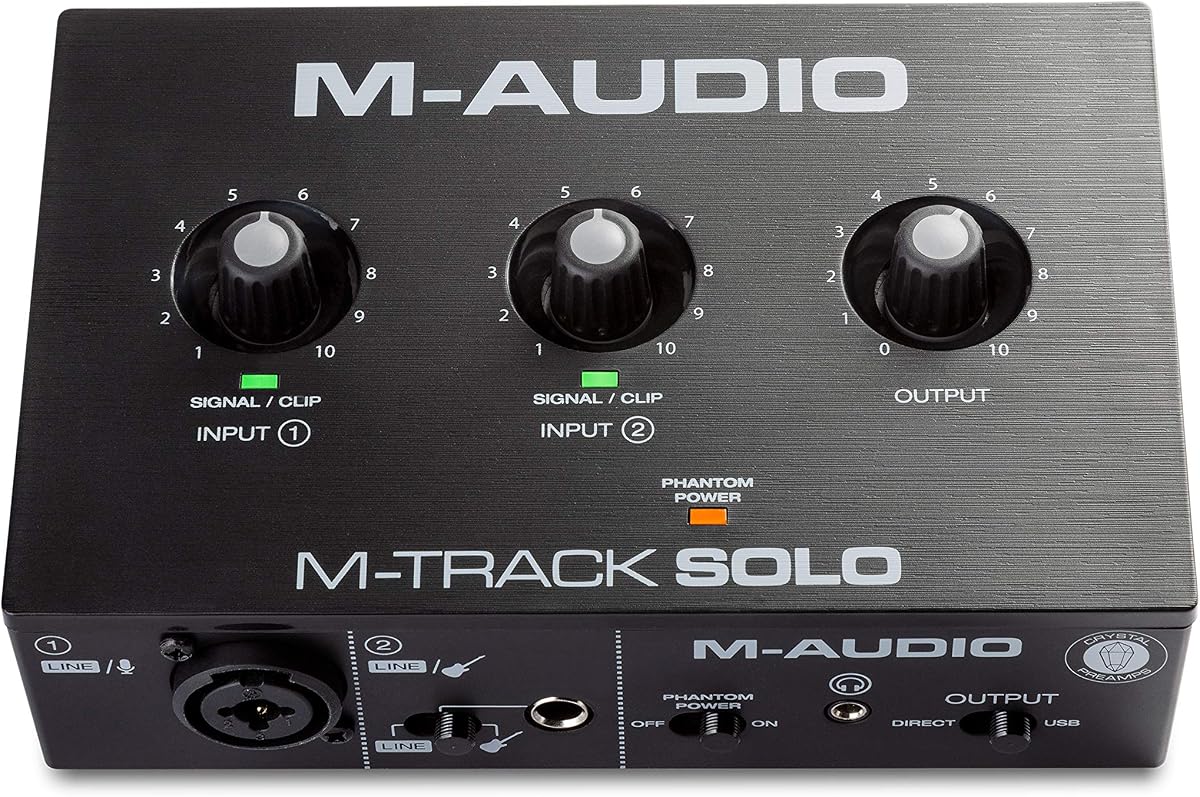
The M-AUDIO M-Track Solo is a portable interface designed for podcasters, live streamers, and solo musicians. With a 4.3 rating, it delivers pristine recording at 48kHz resolution and features a transparent Crystal Preamp that guarantees optimal sound from all microphones.
We may earn a commission when you buy through this link, at no additional cost to you.
It offers one combo XLR input and one Line/Instrument input, allowing you to record guitar and vocals separately. The USB/Direct switch provides zero latency monitoring, essential for tracking without delay. It also includes stereo RCA outputs for total monitoring flexibility in various setups.
While it lacks the higher sample rates of some competitors, it is reliable for standard music and voice work. The included MPC Beats software gives you essential production tools, making it a complete package for creators starting out in audio production without needing extra plugins.
This interface is best for individuals who need simple, effective recording capabilities. It balances cost and quality effectively, offering professional features in a portable form factor that fits any home studio or live streaming setup. Ideal for those starting their recording journey.
Guarantees optimal sound from all your microphones including condenser mics for clear vocal capture.
Headphone output and stereo RCA outputs allow you to monitor audio in various configurations.
We may earn a commission when you buy through this link, at no additional cost to you.
The Arturia MiniFuse 1 is a compact USB recording interface designed for guitarists, vocalists, and content creators. With a 4.6 rating, it offers best-in-class audio specs and easy-to-use features like the Loopback feature for capturing in-app or in-game audio alongside voice.
We may earn a commission when you buy through this link, at no additional cost to you.
It includes 1 Input with a combo Mic/Inst/Line XLR input, 2 outputs, and a USB hub. The 5-pin MIDI input and output connections sync it up with MIDI gear like synths and drum machines, making it a complete hub for production setups. The 5-year warranty ensures long-term reliability.
While it has limited audio inputs, its design is robust and reliable. The included software suite offers professional tools to get started immediately. It is engineered to last, going through over 200 reliability tests before approval, providing better value for long-term use.
This interface is best for producers who need MIDI integration without a large desk. Whether you are creating tracks at home or on the go, its plug-and-play workflow gets you creating in seconds. The comprehensive software bundle enhances its value for creative work.
Sync up with MIDI gear like synths and drum machines with 5-pin MIDI input and output connections.
Backed by a 5-year warranty, one of the most extensive on the market for peace of mind.
We may earn a commission when you buy through this link, at no additional cost to you.
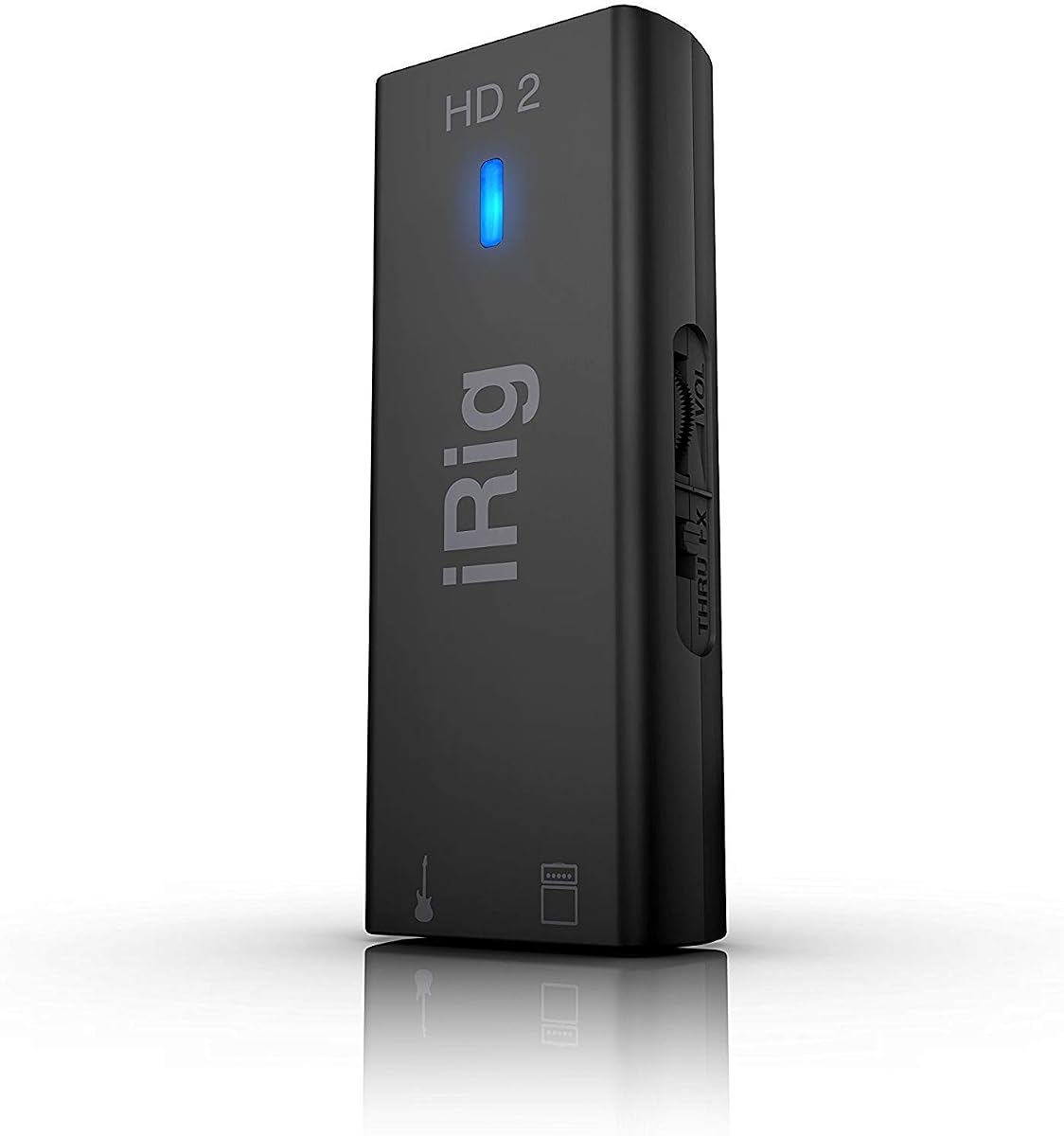
The IK Multimedia iRig HD 2 is a high-definition digital guitar interface renowned for its 96kHz sampling rate. With a 4.4 rating, it allows you to adjust input gain and delivers high-definition results for musicians on iPhone, iPad, Mac, and PC.
We may earn a commission when you buy through this link, at no additional cost to you.
It features a 1/4-inch Amp Out jack with switchable FX and Thru settings, connecting to your amp without additional accessories. You can use it with line-level signals from synthesizers, keyboards, and mixers. The headphone output includes a preamp and level control for silent practice.
While the unit is lightweight and compact, it relies on the included cables which may limit flexibility. However, its portability allows it to fit easily in a pocket or laptop bag. The interface unlocks exclusive content inside Amplitude and other apps for Mac and PC.
This interface is best for musicians who demand high resolution on the go. Whether you are practicing silently or recording demos, it offers distortion-free results. Its design allows you to create the sound like the artists you admire in minutes without compromising performance.
Renowned for its 96kHz sampling rate, the highest in its class for distortion-free amplifier and recording.
A platform designed to unlock exclusive content inside Amplitude and other versions for enhanced creative options.
We may earn a commission when you buy through this link, at no additional cost to you.
The Fender Quantum HD 2 is a top-tier USB-C audio interface designed for professional music production. With a rating of N/A yet, it offers ultra-high-fidelity 20×24 channels and high-performance 32-bit/192 kHz converters for pristine capture of vocals and instruments.
We may earn a commission when you buy through this link, at no additional cost to you.
It includes the complete Fender Amp & FX Pack in the Fender Studio app, granting access to authentic amp models and effects. The Auto Gain button instantly sets perfect recording levels, and dual re-amp outputs let you explore new tones with external gear. ADAT and S/PDIF I/O expand inputs for hybrid studio growth.
While expensive, it provides professional clarity for studios and creators. The DSP monitor mixer and loopback routing streamline streaming and latency-free monitoring. Full remote control via apps adds convenience. It is a powerhouse for users demanding the highest fidelity and flexibility.
This interface is best for professionals who need a robust expansion solution. With a perpetual license for Fender Studio Pro, it includes a complete suite for recording and mastering. Whether you are in a studio or creating content, it ensures your sound reaches its full potential.
Unlock the Complete Fender Amp & FX Pack to access a full collection of authentic amp models.
ADAT expansion and S/PDIF I/O add sixteen digital inputs for hybrid studio growth.
We may earn a commission when you buy through this link, at no additional cost to you.
Selecting the right audio interface requires considering several key factors that impact sound quality and workflow. This guide breaks down essential specifications to help you find a model that suits your recording needs and budget.
Look for inputs that match your gear. If you record guitar and vocals simultaneously, ensure the interface has at least two inputs. XLR/Instrument combo jacks offer the most flexibility for both microphones and line-level instruments.
Verify the number of inputs before buying. A single input is fine for soloists, but two or more are needed if you plan to record vocals and guitar together.
Audio resolution determines the clarity of your recordings. Higher bit depth and sample rates like 24-bit/96kHz capture more detail and dynamic range. Most consumer interfaces offer 24-bit/48kHz, which is sufficient for most home studio applications.
Prioritize at least 24-bit resolution to ensure professional-quality sound. Higher rates are beneficial for complex productions but may require more storage and processing power.
Latency is the delay between your input and the heard sound. Low latency is crucial for monitoring while recording to avoid timing issues. Look for interfaces with direct monitoring switches that bypass the computer to eliminate delay.
Ensure the interface supports ASIO drivers for low-latency performance on PC. Without this, you might experience lag that makes recording difficult and frustrating.
Connectivity determines how the interface links to your computer. USB-C is becoming the standard for faster data transfer and power delivery. Ensure your device has the right port to avoid needing extra adapters.
Check if the interface is bus-powered. This means it draws power from your computer, removing the need for a separate power supply for travel convenience.
Many interfaces come with DAW software, plugins, and instrument libraries. These tools can jumpstart your creative workflow immediately. Check if the software is compatible with your operating system and your preferred recording tools.
Evaluate the software bundle before buying. Full versions or substantial trial periods add significant value and save money on additional purchases.
Portability matters if you plan to record on the go. Compact designs with built-in features like clips or sturdy casings are ideal for mobile creators. Ensure it fits easily in your bag without adding bulk.
Consider the size and weight. A lightweight unit makes it easier to set up in different locations without compromising on sound quality.
Preamps amplify weak signals from instruments and microphones. High-quality preamps introduce less noise and distortion. Look for transparent preamps that provide clean gain without coloring the original sound.
Read reviews on preamp performance. Clean gain is essential for recording quiet passages without introducing background noise.
A solid warranty protects your investment against manufacturing faults. Look for manufacturers that offer at least one year of coverage. Good support ensures you can get help quickly if issues arise during setup or use.
Check the terms of the warranty before purchasing. Longer warranties indicate confidence in build quality and provide peace of mind for long-term use.
Connect your interface to your computer using the provided USB cable. Ensure your computer is turned on and recognize the device before opening your recording software. Install any required drivers if prompted by your system settings.
Set your output and input levels carefully to avoid distortion. Use the gain knobs to adjust volume so the signal lights up green or yellow. Aim for peaks that are not too low or too high to maintain dynamic range.
Store your interface in a dry, dust-free environment when not in use. Use a protective case if you travel frequently. Keep cables organized and avoid bending them sharply to ensure long-term performance and reliability.
No, standard 1/4-inch instrument cables work for most interfaces. Ensure your cable is in good condition to avoid noise or signal loss. Some interfaces also support balanced XLR connections for studio microphones.
Yes, many modern interfaces support mobile devices via USB-C or Lightning adapters. Check compatibility with your specific phone or tablet model to ensure proper power delivery and signal recognition.
This is usually due to high latency. Use the direct monitor feature to hear yourself instantly. Also, ensure you have the correct drivers installed and your buffer size is optimized for performance.
No, phantom power is required for condenser microphones. You generally do not need it for electric guitars, but you can leave it on if you also plan to record vocals with a condenser mic.
Yes, if you choose an interface with two or more inputs. You can connect your guitar to one input and your microphone to another to record both channels simultaneously in your software.
Visit the manufacturer's website and download the latest firmware utility. Connect your interface to your computer and follow the instructions carefully. Always keep the device connected and do not interrupt the update process.
We explored ten top options ranging from budget-friendly mobile solutions to high-end studio interfaces. Each model offers unique strengths, whether it is portability, sound quality, or specific features for streaming.
Prioritize the factors that matter most to your workflow. If you need versatility, choose a unit with multiple inputs and loopback capabilities. For pure sound quality, focus on converters and preamps that deliver clean and detailed audio.
Remember to check current prices and availability before purchasing to ensure you get the best deal. With the right interface, you can capture your best performances and take your music to the next level.