
NIMO 15.6 Student Laptop
5.0Editor score
128GB SSD fast storage speed
Backlit keyboard for low light typing
Fingerprint security for easy access
Finding the right laptop for kids to learn coding requires balancing performance, durability, and ease of use. Young developers need devices that support various programming environments while remaining simple enough for children to navigate independently without constant adult supervision or technical troubleshooting.
We evaluated ten top-rated devices based on processor power, screen quality, battery life, and educational software compatibility. Our analysis includes budget-friendly Chromebooks, dedicated learning laptops, and versatile student machines designed to grow with a child's technical skills and interests over several years of use.
Each pick highlights specific strengths like touchscreen interaction, keyboard comfort, or offline capabilities essential for focused coding practice. Prices and availability change frequently so please verify current listings before purchasing to ensure you get the best value for your family's educational technology investment needs.
5.0Editor score

4.2Editor score

4.2Editor score
As an Amazon Associate we earn from qualifying purchases.
This side by side comparison highlights the key specifications and strengths of each device to help you choose the right tool for your child's coding journey based on age and skill level.




This HP Chromebook stands out as a versatile machine for kids learning to code with its convertible design. Rated 4.2 stars it balances performance and portability making it ideal for both classroom and home learning environments.
We may earn a commission when you buy through this link, at no additional cost to you.
The Intel N150 processor handles web based IDEs and coding tutorials smoothly while the 14 inch touchscreen allows for intuitive navigation. Kids can switch between laptop mode for typing code and tablet mode for drawing diagrams or reading documentation.
While storage is limited to 128GB cloud based tools like GitHub and Google Drive mitigate this issue. The lack of heavy local software installation keeps the system lean and focused on web development tasks.
Buy this if you want a durable device that grows with your child from elementary school through early high school coding projects. The MIL STD tested build ensures it survives the rigors of daily student use.
The 360 degree hinge lets kids use the device as a tablet for interactive coding games or as a laptop for writing scripts.
Chrome OS provides a secure environment with automatic updates ensuring kids always have the latest tools without technical overhead.
We may earn a commission when you buy through this link, at no additional cost to you.
The Lenovo Chromebook offers an affordable entry point into coding education with solid performance for the price. With a 4.4 rating it is highly regarded for reliability and value among student users.
We may earn a commission when you buy through this link, at no additional cost to you.
The MediaTek Kompanio 520 processor provides enough power to run multiple browser tabs for research and coding practice simultaneously. The included mouse and card reader enhance usability for learning basic file management skills.
Storage is split between internal memory and a card which is manageable for text based coding but requires planning for larger media projects. This design keeps costs down while still offering sufficient space for essential tools.
Choose this for younger students who need a reliable device for introductory programming courses without overspending. The accessory bundle ensures you have everything needed for immediate use upon arrival.
The included mouse and card reader make it easier for kids to learn standard computer workflows beyond just typing on the keyboard.
Web based coding environments run smoothly on this processor allowing kids to experiment with HTML CSS and JavaScript freely.
We may earn a commission when you buy through this link, at no additional cost to you.
Designed specifically for educational environments this HP Chromebook is tough and portable making it perfect for young students. With a 4.5 rating it excels in durability and reliability for daily classroom use.
We may earn a commission when you buy through this link, at no additional cost to you.
The 11.6 inch screen is compact but sufficient for typing code and following tutorials. The keyboard is spill resistant which is a crucial feature for younger users who might not be careful with liquids.
Storage is minimal at 32GB so all work must be saved to the cloud. This encourages good habits of backing up files and using services like Google Docs and Scratch which run entirely in the browser.
This model is ideal for elementary students whose main task is introductory coding activities. It is robust enough to withstand backpacks and daily transport between home and school.
The spill resistant keyboard and rugged chassis ensure that minor accidents do not disrupt the learning process.
Limited local storage pushes kids toward cloud based tools which are standard for modern web development and coding education.
We may earn a commission when you buy through this link, at no additional cost to you.
The VTech Genio introduces very young children to the concept of using a computer without the need for an internet connection. With a 4.5 rating it is a favorite for introducing basic tech skills safely.
We may earn a commission when you buy through this link, at no additional cost to you.
The full size keyboard helps kids practice typing before moving to a real computer. While it does not run code it builds the mechanical confidence needed for future typing tasks.
Offline operation ensures there is no risk of unwanted web exposure. This is beneficial for parents who want to control screen time and content without setting up complex filters.
Buy this for children under six who need to familiarize themselves with keyboard layout and mouse movement. It is a stepping stone rather than a true coding tool.
Using a realistic keyboard layout helps young children develop muscle memory for typing that transfers well to real laptops.
Without internet access the device is completely safe from external content making it a worry free option for unsupervised play.
We may earn a commission when you buy through this link, at no additional cost to you.
The NIMO laptop offers a powerful alternative to Chromebooks with a dedicated operating system and faster storage. With a perfect 5.0 rating it is praised for its speed and build quality.
We may earn a commission when you buy through this link, at no additional cost to you.
The 128GB SSD ensures that boot times are fast and applications launch quickly. This is critical when running lightweight Linux distributions or IDEs for coding practice.
The backlit keyboard is a rare feature at this price point allowing kids to code in low light without eye strain. The fingerprint reader adds a layer of security for keeping work private.
This is a strong choice for kids who need more than a browser to learn coding. The warranty provides peace of mind for parents investing in a new device.
Solid state drives load files much faster than traditional hard drives making the coding workflow more efficient.
A 15.6 inch screen allows kids to see code and reference materials side by side without squinting.
We may earn a commission when you buy through this link, at no additional cost to you.
This HP model stands out for having 8GB of RAM which is significant for a Chromebook in this range. It handles heavier multitasking better than most budget options.
We may earn a commission when you buy through this link, at no additional cost to you.
The higher RAM allows kids to run more virtual machines in the browser or keep many tabs open for research while coding. This prevents slowdowns during complex educational tasks.
While the screen is small the portability is excellent for students on the go. The Chrome OS ensures that software updates are handled automatically without user intervention.
Pick this if your child often has too many browser tabs open and needs the extra memory to stay productive. It is a workhorse for web based learning.
Eight gigabytes of RAM ensures that the browser remains responsive even with many coding tools running simultaneously.
The lightweight chassis makes it easy to carry in a backpack without adding extra weight to the student load.
We may earn a commission when you buy through this link, at no additional cost to you.
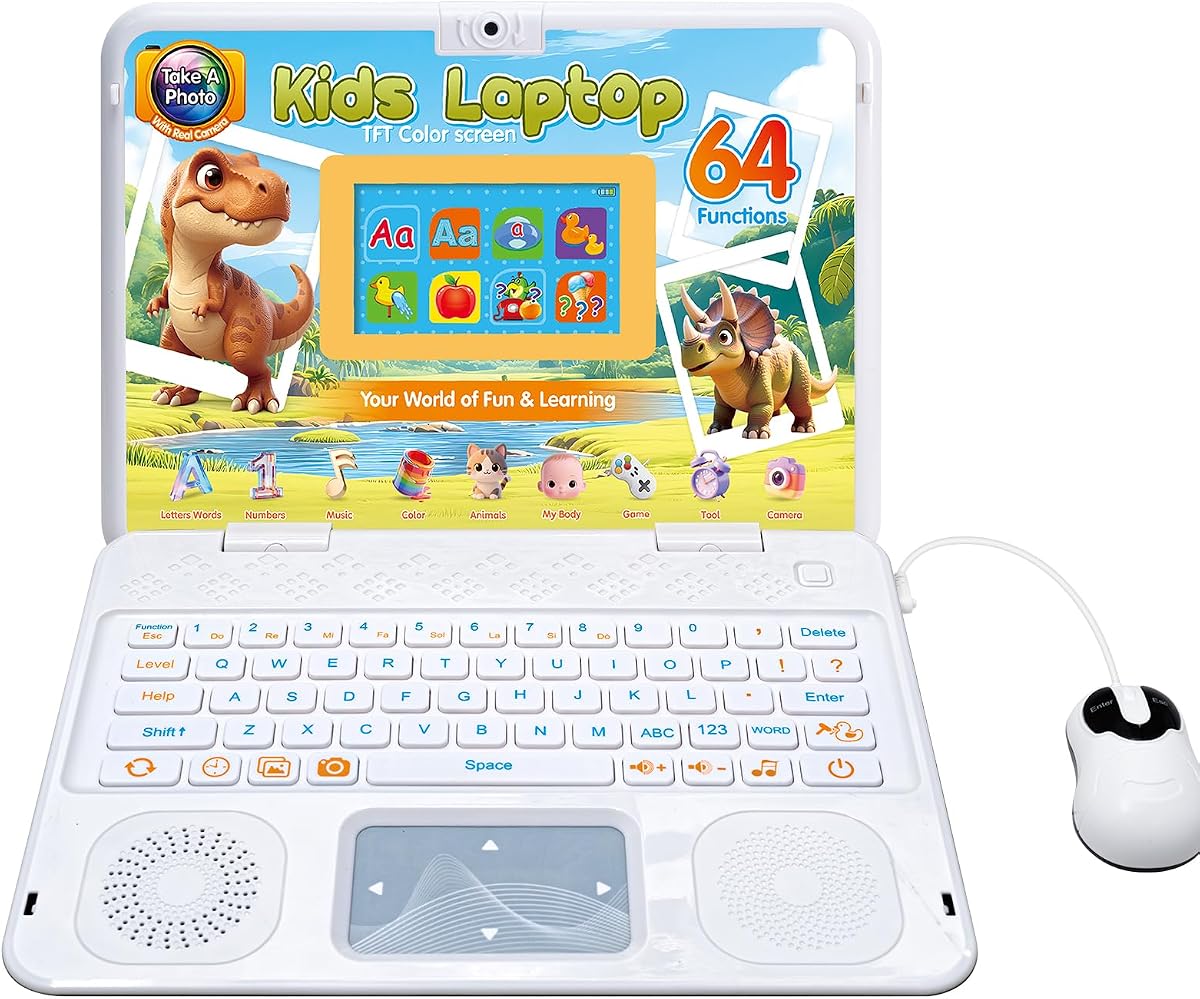
This educational laptop focuses on engaging younger kids with interactive activities and a built in camera for fun. It is designed to make learning feel like play rather than work.
We may earn a commission when you buy through this link, at no additional cost to you.
The 64 learning modes include alphabet and math activities that prepare kids for more complex logic later. The camera encourages them to document their creative projects digitally.
While it does not support programming languages the logic games help build the foundational skills needed for coding. The compact size fits easily in small hands.
Choose this for children who need motivation through fun activities before tackling serious coding tasks. It bridges the gap between toys and computers effectively.
Fun modes keep children engaged longer which builds positive associations with technology and learning time.
The camera lets kids take photos of their work helping them document progress and share with parents.
We may earn a commission when you buy through this link, at no additional cost to you.
The LeapFrog laptop introduces the logic of sequencing through simple commands like moving a character or making a sound. It is perfect for preschoolers who are just beginning to understand instructions.
We may earn a commission when you buy through this link, at no additional cost to you.
The interactive character Pixel guides kids through activities ensuring they stay motivated. This gamification approach is essential for maintaining focus at such a young age.
The coding is basic but lays the groundwork for thinking in steps. Kids learn that specific actions lead to specific results which is the core of programming.
This is the best starting point for toddlers who are curious about computers. It is safe engaging and completely appropriate for their developmental stage.
Simple sequence commands teach the order of operations a key concept in writing functional code later.
The animated character keeps the experience lively so kids do not get bored quickly with the tasks.
We may earn a commission when you buy through this link, at no additional cost to you.
This laptop focuses on visual learning with a bright color screen that captures attention easily. It is designed to teach basic skills through engaging visuals and simple interactions.
We may earn a commission when you buy through this link, at no additional cost to you.
The ergonomic design ensures that it fits well in a child's hands making it comfortable for longer play sessions. The 48 modes cover a range of subjects including logic and reading.
While not a coding computer it teaches the logic required for programming through fun activities. The visuals help kids connect cause and effect in a digital context.
Buy this for visual learners who benefit from colorful interfaces. It is a fun supplement to screen time that teaches useful basic logic.
The bright screen keeps eyes focused and interested which helps maintain attention during learning tasks.
The games and modes teach simple logical connections that are essential for understanding how computers work.
We may earn a commission when you buy through this link, at no additional cost to you.
The LEXiBOOK LAPTAB offers access to Google Play apps which is a step beyond typical educational toys. It allows kids to run coding apps like Scratch Junior on a touchscreen.
We may earn a commission when you buy through this link, at no additional cost to you.
The 10 inch screen is a good size for interacting with touch based coding blocks. The parental controls ensure that kids only access safe and approved apps for learning.
While it runs Android which limits full development tools it is perfect for mobile app concepts. The 128GB storage allows for many educational apps to be installed.
This is a great option for parents who want a safe Android environment for coding apps. It balances entertainment and education effectively for younger teens.
Apps like Scratch Junior use touch inputs to make programming intuitive for kids who are not ready for text.
Robust parental controls keep the device safe from unrestricted web browsing ensuring a secure learning environment.
We may earn a commission when you buy through this link, at no additional cost to you.
Selecting the right device involves considering screen size performance and operating system. This guide breaks down the critical factors to help you make an informed decision.
Chrome OS is excellent for web based coding tools and requires less maintenance. Windows and Android offer more app variety but may need more security management.
Choose a system that matches the tools your child needs to learn.
A 14 inch or 15 inch screen is ideal for comfortable typing and viewing code. Smaller screens are portable but may strain eyes during long sessions.
Larger screens are better for coding but consider portability needs.
Modern entry level processors are sufficient for web coding. Ensure the chip handles multiple browser tabs without lag.
Avoid very old processors that may struggle with modern tools.
At least 4GB of RAM is recommended for smooth multitasking. This prevents slowdowns when switching between coding windows.
More RAM helps future proof the device for complex projects.
128GB storage is adequate for most student needs. SSDs are faster than eMMC which improves overall system responsiveness.
Prioritize SSD storage over capacity for better speed.
A comfortable keyboard is essential for long coding sessions. Backlit keyboards help in low light environments.
Ensure the key spacing fits your child's hand size.
Look for rugged designs if the laptop will be transported daily. Spill resistant keyboards are a major plus.
Durability reduces replacement costs and extends device life.
Built in controls help manage screen time and app access. This is vital for keeping online learning safe.
Ensure the device allows easy setup for parental restrictions.
Start by installing the necessary coding tools like Scratch or Code.org in the browser. Ensure all updates are applied before starting the first lesson.
Teach your child to save work in the cloud regularly to prevent loss. Use folders to organize projects by date or topic for easy access.
Clean the screen with a soft cloth to avoid damage. Avoid eating near the laptop to keep it safe from spills and crumbs.
A Chromebook with at least 4GB of RAM is ideal for most beginners. It runs web based tools like Scratch and Python effectively without needing complex software. For older kids, a Windows laptop offers more flexibility with advanced IDEs. The key is finding a balance between performance and ease of use.
Not necessarily for beginners. Most introductory coding platforms run directly in a web browser which requires minimal power. A standard entry level processor and 4GB of RAM are sufficient for HTML, CSS, and JavaScript. More power is only needed for game development or complex software engineering.
Yes Chrome OS is very good for web based coding education. It is secure and easy to maintain. It supports tools like Scratch and Code.org well. While it lacks native desktop IDEs it is perfect for learning the basics.
Yes many apps allow coding on tablets. Touch based coding is great for younger children. However a physical keyboard is better for typing long scripts. Consider a tablet with keyboard support for best results.
Children can start using simplified coding tools around age 7 or 8. Before that, tablet apps or toy laptops are better. By age 9, they can use real laptops for more complex tasks. Adjust based on their interest and typing skills.
At least 64GB of storage is sufficient for learning. Cloud storage handles most file needs. If using local environments 128GB is better. Focus on speed of storage rather than large capacity.
A touchscreen is not necessary for typing code but is useful for navigation. It can help with design tasks and interactive coding. It adds versatility but is not a requirement for learning programming.
We recommend the HP Chromebook 14 x360 Plus for its versatility and durability. The NIMO laptop offers great value for those needing more power and a larger screen.
Prioritize a comfortable keyboard and reliable connection for long study sessions. Ensure the device supports the specific tools your child needs for their curriculum.
Check current prices and availability before buying as deals change frequently. Invest in a device that will last through your child's next learning stages.