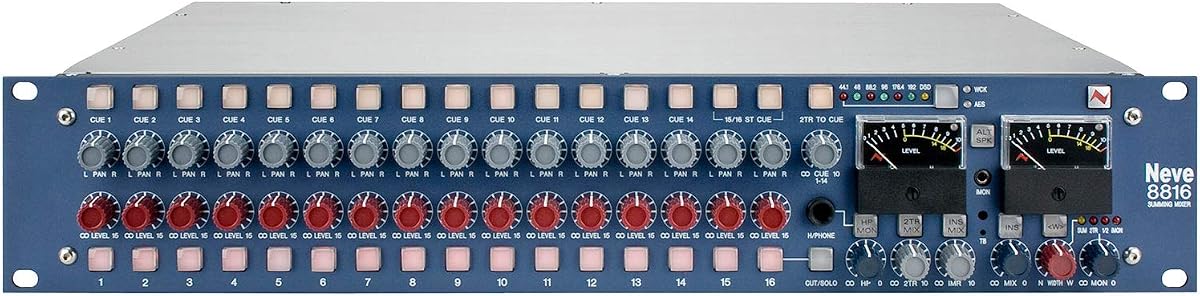
Neve 8816 Summing Mixer
Sixteen channel summing
Transformer balanced inputs
Dual headphone outputs
This guide compares the top analog summing mixers for studio and live use to help you find the right tool for your mixing and monitoring needs today.
Analog summing mixers provide the warmth and depth that digital plugins often struggle to replicate. These devices combine multiple audio channels into a cohesive mix, adding harmonic richness and spatial clarity to your recordings.
We have carefully reviewed ten standout models ranging from compact passive units to full-scale studio consoles. Each product was evaluated on build quality, sound character, connectivity options, and overall value for professional and semi-pro engineers.
Each selection below highlights specific strengths to help you match the mixer to your workflow. Please note that pricing and availability can change frequently, so verify current details before making your final purchase decision.

5.0Editor score

4.8Editor score
The table below provides a side by side overview of every model included in this guide. Compare their core specifications and design focus to see which unit fits your specific audio routing needs best.




The Neve 8816 represents the pinnacle of analog summing technology. It offers a rich harmonic profile that enhances digital mixes with warmth and depth. This unit is designed for serious professionals who need reliable performance and top tier sound quality.
We may earn a commission when you buy through this link, at no additional cost to you.
Its transformer balanced architecture ensures clean signal paths with minimal noise. The sixteen channel capacity allows for complex mixes without sacrificing headroom. The monitoring section provides excellent control over speaker outputs and headphone mixes.
While the price point is steep, the sound quality justifies the investment for many studios. It does require significant rack space and careful integration into existing workflows. However, the sonic rewards are substantial for critical listening environments.
This mixer is ideal for mastering engineers and top level producers. If you need the definitive analog summing experience, this is the gold standard to target. It delivers a cohesive sound that digital tools alone cannot achieve.
The internal transformers add subtle saturation and depth to every channel path.
Dual headphone outputs let multiple engineers listen simultaneously during sessions.
We may earn a commission when you buy through this link, at no additional cost to you.
This passive mixer is perfect for merging two signal sources without adding coloration. It requires no external power and maintains signal integrity through simple resistance networks. The design is straightforward and effective for basic routing tasks.
We may earn a commission when you buy through this link, at no additional cost to you.
Its compact form factor makes it easy to hide in racks or on desktops. The passive nature means it handles signals gently without active circuitry interference. It is a reliable tool for specific signal management needs.
You cannot adjust levels or frequencies directly on this unit. It is strictly for combining signals into one mono output. This limitation keeps costs low but reduces flexibility for complex setups.
Buy this if you need a basic summing solution on a tight budget. It works well for submixing or connecting two outputs to one input. Simplicity and reliability are its strongest selling points.
No power supply is required since the circuit is purely passive.
Combines inputs into a single mono signal for easy integration.
We may earn a commission when you buy through this link, at no additional cost to you.
The 5059 brings the legendary Shelford sound into a dedicated summing unit. It delivers the classic warmth and punch associated with the Neve legacy. This mixer is built for those who demand the highest sonic fidelity.
We may earn a commission when you buy through this link, at no additional cost to you.
It features sixteen main inputs plus stereo returns for flexible routing. The internal design minimizes noise while maximizing dynamic range. Every detail is crafted to ensure professional grade performance in any studio.
The cost is a significant barrier for most home studios. Additionally, integrating it with digital consoles requires careful planning and cabling. These hurdles are acceptable for high budget projects where sound is paramount.
This unit is for producers who need that distinct analog texture. It elevates mixes beyond standard digital summing capabilities. The result is a cohesive and vibrant final product.
Designed to work seamlessly with other Shelford series components.
Handles loud signals without distortion for clean summing.
We may earn a commission when you buy through this link, at no additional cost to you.
While primarily a DJ mixer, the R4 offers robust analog processing tools. Its filter system provides creative control over frequency and resonance. The build quality feels substantial with real wood side panels.
We may earn a commission when you buy through this link, at no additional cost to you.
It accepts a wide range of inputs including turntables and microphones. The routing allows for independent master and booth monitoring. This versatility makes it a strong choice for performance environments.
It does not function as a traditional studio summing mixer. It is optimized for live mixing rather than multitrack consolidation. Users seeking a mixing console should look elsewhere.
Consider this if you need a hybrid mixer for live sets. The filter controls offer a unique sonic signature. It stands out for its tactile feel and analog character.
High pass and low pass filters with resonance controls.
Independent booth output for private monitoring during mixes.
We may earn a commission when you buy through this link, at no additional cost to you.
This mixer blends traditional analog control with modern digital features. The Onyx preamps are renowned for their clarity and gain range. It offers a complete solution for recording without extra interfaces.
We may earn a commission when you buy through this link, at no additional cost to you.
Direct USB recording lets you capture each track separately for editing. Bluetooth streaming adds convenience for monitoring from mobile devices. The effects engine provides extra color for live or recorded outputs.
It is a general purpose mixer rather than a dedicated summing box. The digital features add bulk and may complicate simple analog workflows. However, the flexibility is ideal for small studios.
Buy this for an all in one analog and digital hub. It serves both live sound and recording needs effectively. The preamps alone make it a compelling choice.
Records individual channels directly to your computer via USB.
Legendary Perkins style EQ and low noise gain.
We may earn a commission when you buy through this link, at no additional cost to you.
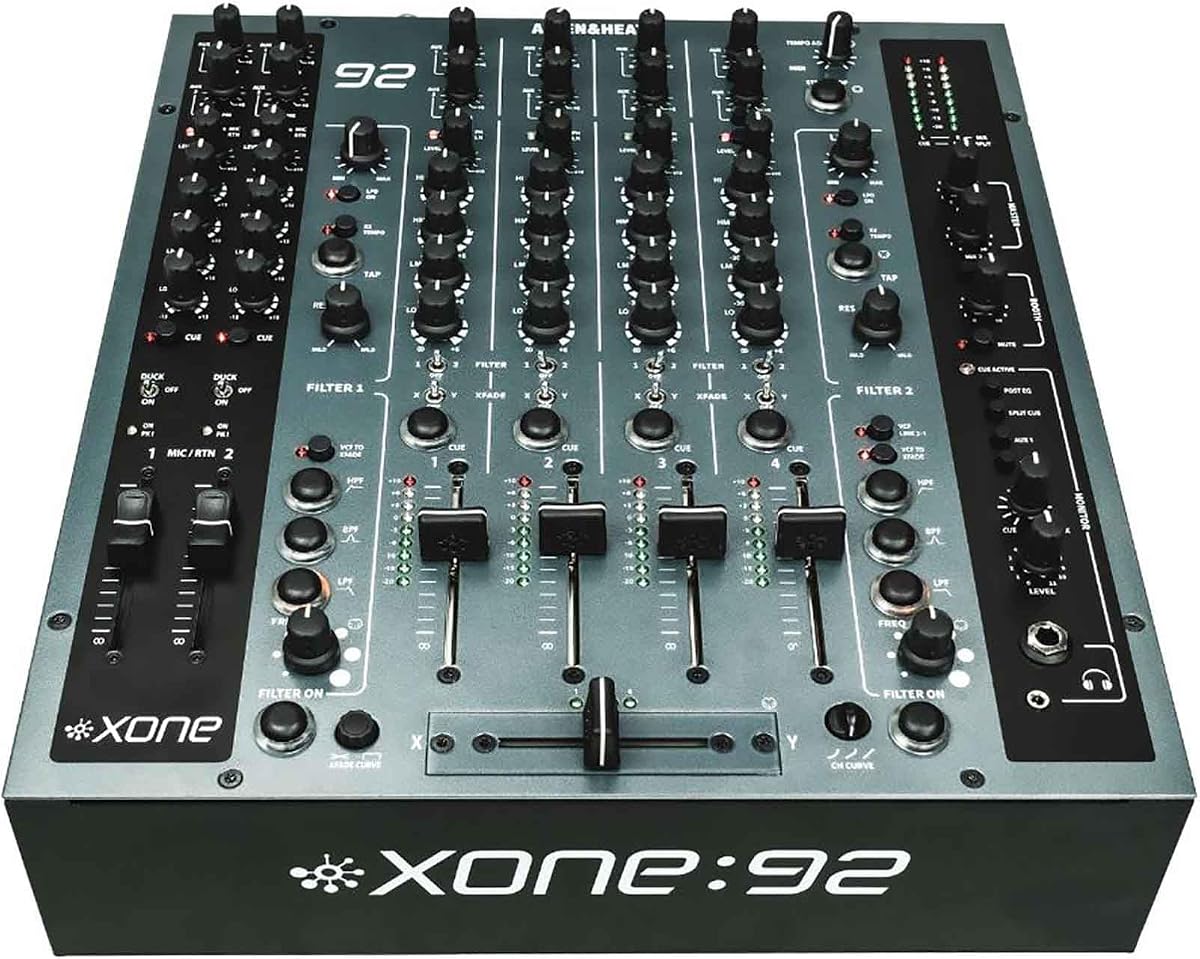
The Xone:92 Mk2 is a high end tool for performance mixers. Its multimode filters provide deep sculpting of frequencies. The analog path ensures smooth and warm signal transfer.
We may earn a commission when you buy through this link, at no additional cost to you.
Send and return connections allow for external effects integration easily. The build quality is solid with high grade faders and knobs. It delivers a polished sound for club and stage use.
It lacks the matrix features found in studio summing mixers. The design prioritizes performance flow over static mixing. This makes it less suitable for recording workflows.
Choose this for professional DJ performance setups. The filters are a standout feature for creative mixing. It offers top tier analog fidelity in its class.
Switchable filter types for diverse sonic shaping options.
Integrate external processors with dedicated loop connections.
We may earn a commission when you buy through this link, at no additional cost to you.
This mixer strikes an ideal balance between cost and capability. The analog path is clean and free from digital artifacts. It is a favorite among performers who value signal purity.
We may earn a commission when you buy through this link, at no additional cost to you.
The voltage controlled filter system allows smooth transitions between tracks. Send and return ports make adding effects simple. Dedicated outputs ensure reliable recording and monitoring.
Channel count is limited compared to larger consoles. The EQ is functional but not as flexible as studio units. These trade offs keep the price accessible for most users.
It is the best choice for those entering professional mixing. The build quality exceeds expectations for the price. It delivers a professional sound without breaking the bank.
No digital processing ensures natural sound reproduction.
Precise knobs and faders for responsive mixing.
We may earn a commission when you buy through this link, at no additional cost to you.
The 1202VLZ4 is a staple in live and studio environments. It offers twelve channels with high quality Onyx preamps. The design is intuitive for quick setup during live shows.
We may earn a commission when you buy through this link, at no additional cost to you.
Signal noise is exceptionally low even at high gain settings. The frequency response is wide and balanced for many instruments. It handles a variety of inputs without distortion.
It lacks digital interfaces or extensive routing options. This simplicity is good for analog purists but limits recording flexibility. It serves best as a live mixer or summing stage.
Choose this for reliable analog sound on a budget. It is robust enough for regular transport and use. The sound quality is impressive for its size.
Up to 60dB of gain covers various mic types.
Fits easily in small setups or portable cases.
We may earn a commission when you buy through this link, at no additional cost to you.
This console bridges the gap between analog warmth and digital ease. It uses SuperAnalogue circuitry for precise signal handling. The USB interface supports high resolution multitrack workflows.
We may earn a commission when you buy through this link, at no additional cost to you.
The master bus compressor adds glue to mixes efficiently. Listening controls provide clear monitoring with detailed talkback features. It brings console grade features to a desktop setup.
It is expensive and takes up significant space. Integration with large systems can be complex. However, the sonic performance is world class for hybrid production.
Invest in this for high end hybrid studios. It offers the tools needed for top tier mixing. The clarity and depth are unmatched in this category.
Proprietary circuit design ensures minimal noise.
Adds cohesion to stereo mixes automatically.
We may earn a commission when you buy through this link, at no additional cost to you.
The MG10 is designed for small venues and basic home use. It features D-PRE preamps that deliver rich low end. The chassis is built to withstand regular handling and transport.
We may earn a commission when you buy through this link, at no additional cost to you.
One knob compressors make dynamics control accessible for beginners. The layout is clean with clear labeling for quick changes. It handles vocals and instruments with clarity and balance.
There is no digital connectivity for recording directly. Routing options are minimal compared to larger mixers. This limits its use in complex multi-source setups.
Select this for simple analog mixing needs on a budget. It offers reliable performance for small groups or events. The build and sound quality are solid basics.
Inverted Darlington circuit for natural sound.
Easy compression to tighten up vocals or guitars.
We may earn a commission when you buy through this link, at no additional cost to you.
Choosing the right analog summing mixer requires understanding your workflow, budget, and audio goals. This section breaks down the key factors to help you make an informed decision.
The number of inputs determines how many tracks you can sum at once. Look for units with enough channels to handle your typical session size without needing complex routing.
Ensure your selected mixer has sufficient inputs for all instruments and vocal tracks you plan to mix.
Active mixers require power and offer gain control, while passive units need no power but cannot boost signal levels. Passive units are simpler but may suffer from signal loss.
Decide between active flexibility and passive simplicity based on your power availability and signal needs.
Transformers add coloration and warmth to the signal path. High quality transformers enhance dynamics and depth, which is ideal for studio applications.
Choose units with premium transformers if warmth and harmonic richness are your priorities.
Check the input and output types to ensure compatibility with your equipment. XLR and 1/4 inch connections are common, but some units offer RCA or balanced TRS jacks.
Verify that the mixer matches your existing cable standards and interface inputs.
Durability is crucial if you transport gear regularly. Look for metal chassis, robust knobs, and quality faders to ensure longevity in demanding environments.
Prioritize sturdy construction if you plan to move the unit between venues or locations.
Good monitoring sections allow multiple engineers to listen simultaneously. Dedicated headphone and speaker outputs provide better control during collaborative sessions.
Select models with dual headphone outputs if you work in team environments.
Some mixers integrate with digital audio workstations via USB or MIDI. This hybrid approach allows analog summing with digital recording convenience.
If you use DAWs, look for units that support seamless digital and analog integration.
Prices vary widely from entry level units to high end consoles. Determine how much you are willing to spend for the sound quality and features you need.
Balance cost against the sonic improvements and features that matter most to your work.
Start by connecting all inputs to your source gear using appropriate cables. Set initial levels to unity gain to avoid distortion during the mix process.
Adjust channel faders slowly to blend the sounds. Use any available EQ or filter controls to carve out space for each element in the mix.
Regularly inspect cables and connectors to maintain signal integrity. Store the unit in a dry place to prevent oxidation or corrosion on the metal components.
An analog summing mixer combines multiple audio signals into a single stereo output. It adds warmth and depth that digital mixing often lacks by using analog circuitry to process the audio paths.
Most analog summing mixers output stereo signals, so you need an audio interface to bring them into your computer. Some models include built-in interfaces for direct recording without extra gear.
Passive mixers have fewer components and may introduce less noise, but they cannot boost signals. Active units offer more control but require power and have more complex circuitry.
Analog summing provides harmonic saturation and natural compression. It creates a cohesive sound by blending signals physically rather than mathematically as software does.
Yes many units work well for live sound mixing. Look for models with rugged builds and flexible routing to suit stage requirements effectively.
Connect the mixer outputs to your interface line inputs. If the mixer has USB, you can connect it directly to your computer for integrated recording.
Most units do not require calibration after purchase. Periodically check levels and connections to ensure consistent performance over time.
High quality analog mixers keep noise low. Look for units with low distortion specs and balanced inputs to maintain a clean signal path.
The Neve 8816 stands out for premium warmth while the Allen & Heath Xone:43 offers great value. The Radial Mix 2:1 remains a simple option for budget needs.
Prioritize sound quality and build reliability when making your final decision. Match the mixer to your specific channel count and connectivity requirements.
Remember to verify current pricing and availability before buying. Market conditions change quickly and deals may shift for these specialized audio tools.