
TADA 200g/0.2g Mechanical Balance Scale
3.8Editor score
Portable design
200g capacity
Weight set included
Discover the top mechanical balance scales for labs and classrooms. This guide compares precision, durability, and features to help you choose the right scale.
Selecting the right mechanical balance is essential for accurate measurements in scientific and educational settings. These tools provide reliable mass determination without needing external power sources.
We evaluated ten top-rated mechanical balances based on accuracy, build quality, and user feedback. Our comparison highlights key features that matter most for labs and classrooms.
Each pick demonstrates specific strengths suited for different needs. Please note that product availability and pricing may change over time.
3.8Editor score

4.4Editor score

4.4Editor score
This side-by-side comparison highlights the key specifications and capabilities of each mechanical balance to help you make an informed decision.

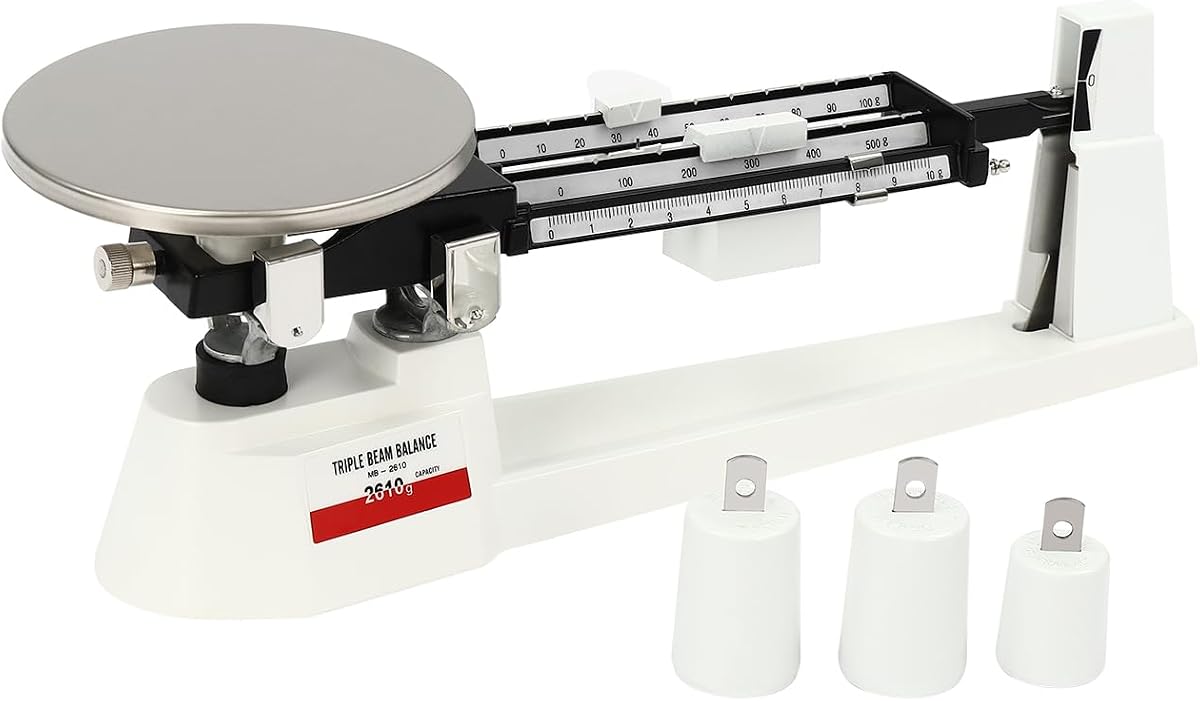


This mechanical balance stands out for its high capacity and reliable accuracy in various lab settings. With a solid 4.4 rating, users appreciate its durability and ease of use.
We may earn a commission when you buy through this link, at no additional cost to you.
The 0.1g resolution ensures precise measurements for analytical applications. Its built-in magnetic damping system stabilizes readings quickly, enhancing efficiency during repeated weighing tasks.
While the unit is robust, it may require recalibration after transport to ensure zero accuracy. The weight is noticeable, making it less ideal for frequent relocation.
Ideal for schools and laboratories needing a durable tool for accurate mass determination. Its straightforward design reduces errors and supports consistent results over time.
The 0.1g resolution supports detailed measurements essential for analytical work and student experiments.
Magnetic damping reduces stabilization time, allowing faster measurements without compromising accuracy.
We may earn a commission when you buy through this link, at no additional cost to you.
This scale is perfect for basic classroom teaching needs where cost and portability are priorities. Users find it practical for demonstrations and simple experiments.
We may earn a commission when you buy through this link, at no additional cost to you.
With a 200g capacity and 0.2g precision, it meets requirements for introductory science lessons. The compact design allows easy storage and transport between different learning environments.
While it lacks the capacity of heavier models, it remains reliable for its intended educational purpose. The included weight set ensures immediate usability upon arrival.
Recommended for teachers and home learners looking for an affordable and functional tool. It delivers consistent performance for lightweight samples and basic measurements.
Designed specifically for educational use, this scale supports student learning with clear and straightforward operation.
Its lightweight build and compact form factor make it easy to move and store as needed.
We may earn a commission when you buy through this link, at no additional cost to you.
This model provides reliable accuracy for analytical applications in both school and professional settings. Its robust build ensures long-term usability in demanding environments.
We may earn a commission when you buy through this link, at no additional cost to you.
The 0.1g resolution enables precise measurements, while the magnetic damping feature speeds up the weighing process significantly. Users appreciate the included attachment weights for extended capacity.
Some users note the need to recalibrate after shipping to maintain zero accuracy. Its size makes it less portable but ideal for fixed laboratory stations.
A solid choice for institutions requiring consistent and durable weighing solutions. Its design minimizes systematic errors and supports efficient experimental workflows.
Attachment weights allow increased capacity up to 2610g, accommodating a wider range of sample sizes.
Zero adjustment knobs help minimize systematic errors for more accurate results over time.
We may earn a commission when you buy through this link, at no additional cost to you.
This mechanical balance combines durability with versatility for both industrial and classroom applications. Its stainless steel platform ensures resilience against corrosion and frequent use.
We may earn a commission when you buy through this link, at no additional cost to you.
The 0.1g accuracy meets professional standards for precise measurements. Magnetic damping and clear markings contribute to reliable and quick reading results in diverse settings.
While it lacks user ratings, its design features suggest strong performance in practical weighing tasks. Users should note its substantial weight for handling and placement.
Ideal for environments needing robust and accurate tools without electronic dependencies. Its straightforward operation supports consistent workflow efficiency in labs and kitchens.
Stainless steel construction maintains performance integrity even when exposed to moisture or chemical samples.
Threaded zero adjustment knobs provide stable finger positioning for accurate and repeatable setup.
We may earn a commission when you buy through this link, at no additional cost to you.
Designed for medical and professional settings, this scale offers exceptional durability and capacity for patient weighing. Its 10-year warranty reflects confidence in long-term reliability.
We may earn a commission when you buy through this link, at no additional cost to you.
The powder-coated finish protects against rust and wear in high-use clinical environments. Optional wheels and counterweights provide flexibility to adapt the scale to specific needs.
While it is more expensive, its safety and capacity features justify the investment. It is less suited for tasks requiring small gram precision due to larger graduations.
Recommended for clinics and hospitals requiring robust and compliant medical scales. Its construction ensures stability and patient safety during routine weighing procedures.
Non-slip platform mats enhance stability and comfort, ensuring safe patient handling during weighing.
The 10-year limited warranty provides peace of mind against defects and extensive wear over time.
We may earn a commission when you buy through this link, at no additional cost to you.
This model represents a classic and reliable option for laboratory settings requiring consistent accuracy. Users value the trusted Ohaus reputation for quality and performance.
We may earn a commission when you buy through this link, at no additional cost to you.
The built-in magnetic damping and spring-loaded zero adjust compensator enable quick and fine-tuned measurements. Its metal construction ensures durability under frequent classroom or lab usage.
While the capacity is modest, the readability remains precise for analytical tasks. It may lack modern features found in newer models but remains effective for core functions.
Ideal for educators and technicians needing a proven balance for general weighing. Its design supports accurate and repeatable measurements with minimal maintenance.
Spring-loaded zero adjustments allow precise calibration for maintaining measurement accuracy over time.
Metal beams and bases provide the stability needed for consistent results in busy lab environments.
We may earn a commission when you buy through this link, at no additional cost to you.
Engineered for industrial and professional applications, this scale offers reliable accuracy and long service life. Users appreciate its clear design features that simplify operation and calibration.
We may earn a commission when you buy through this link, at no additional cost to you.
The magnetic damping system ensures rapid stabilization, supporting efficient workflows in fast-paced settings. Its durable construction resists wear from frequent use in diverse environments.
While lacking explicit ratings, the material quality suggests strong performance for professional needs. The scale is robust but may be less portable for mobile tasks.
Best for labs and industries needing consistent and durable weighing tools. Its straightforward operation reduces errors and supports accurate measurements for various sample types.
Inbuilt magnetic damping significantly reduces stabilization time, improving throughput in measurement tasks.
Clear weight range marks on the base help prevent user errors and increase confidence during operation.
We may earn a commission when you buy through this link, at no additional cost to you.
This lightweight balance excels in versatility and portability for labs and professional environments. Its 5.0 rating suggests strong user satisfaction with its performance and design.
We may earn a commission when you buy through this link, at no additional cost to you.
The 0.1g accuracy supports precise measurements across various industries including food and medical applications. Its compact footprint ensures it fits easily on desks and workstations.
Some users may need to recalibrate after shipping to maintain zero accuracy. While the platform is durable, handling heavy loads requires care to prevent damage.
Recommended for users needing a portable and accurate tool for diverse weighing needs. Its reliable performance and ease of use make it a practical choice.
Small size ensures the scale fits easily in limited workspace without sacrificing measurement accuracy.
Suitable for food, medical, and textile industries, offering broad utility across multiple professional sectors.
We may earn a commission when you buy through this link, at no additional cost to you.
This classic instrument provides tactile and visual learning experiences for students and lab users. Users appreciate its straightforward design that emphasizes precision and ease of use.
We may earn a commission when you buy through this link, at no additional cost to you.
Spring-loaded zero adjustment and magnetic damping ensure stable and accurate readings. The coated aluminum frame resists corrosion, extending the instrument's usable life significantly.
While lacking explicit ratings, its construction supports repeated educational use. The offset beams improve visibility, making it easy for learners to read measurements accurately.
Ideal for classrooms and labs needing a reliable teaching apparatus. Its design helps students understand mass determination through hands-on practice and clear feedback.
Offset beams provide unobstructed vertical views, helping students read measurements without confusion.
Stainless steel pans and coated frames ensure durability against frequent handling and classroom conditions.
We may earn a commission when you buy through this link, at no additional cost to you.
This scale delivers reliable accuracy for scientific and educational weighing tasks with robust build quality. Users value its clear scale and magnetic damping for consistent results.
We may earn a commission when you buy through this link, at no additional cost to you.
The 0.1g precision and stainless steel platform ensure durability and precise measurements. Its zero adjustment knob allows easy calibration to maintain measurement integrity over time.
Users may need to recalibrate after transport to ensure zero accuracy. The platform size accommodates various materials but may limit larger samples.
Recommended for labs and kitchens needing a dependable mechanical balance. Its straightforward operation supports accurate measurements for solids and powders.
0.1g precision supports accurate weighing for experiments and professional tasks requiring detailed data.
Zero adjustment knobs simplify calibration, reducing measurement errors for reliable and consistent use.
We may earn a commission when you buy through this link, at no additional cost to you.
Choosing the right mechanical balance requires evaluating several key factors to ensure it meets your specific measurement needs.
The capacity determines the maximum weight the balance can measure accurately. For laboratory work, balances typically range from 200g to 2610g. Accuracy or readability indicates the smallest measurable increment such as 0.1g or 0.2g. Higher accuracy is essential for precise scientific tasks while larger capacity suits industrial applications.
Look for a balance that matches your typical sample sizes and precision requirements. Balances with lower readability provide finer measurements but may be more sensitive to environmental factors.
Robust construction ensures durability in frequent use environments. Stainless steel platforms resist corrosion and are easy to clean. Aluminum or zinc alloy frames provide lightweight yet stable bases. Powder-coated finishes protect against rust and extend service life.
Select materials that align with your usage setting. For labs or kitchens where liquids or chemicals may spill, stainless steel components are preferable.
Magnetic damping stabilizes the balance pointer quickly after placing items. This reduces stabilization time and improves measurement speed. It also minimizes oscillation that could lead to reading errors. Some higher-end models include this feature for enhanced efficiency.
Prioritize models with magnetic damping if you need fast and consistent readings. This feature significantly improves productivity in busy laboratory or classroom settings.
Compact designs are ideal for transport between classrooms or field work. Lightweight balances are easier to handle but may be less stable. Larger models offer better stability but require more workspace. Consider the dimensions when selecting for limited bench space.
If frequent movement is necessary, choose a lightweight portable option. For fixed laboratory stations, larger and heavier models may provide better stability and capacity.
Mechanical balances require periodic calibration to maintain accuracy. Look for models with zero adjustment knobs for easy recalibration. Some units come professionally calibrated but may need resetting after shipping. Proper calibration reduces systematic errors and ensures reliable measurements.
Regular calibration is essential for accurate results. Choose balances with accessible adjustment features to simplify this maintenance task over time.
Many balances come with included weights to extend their measurable range. These attachment weights are critical for utilizing full capacity. Check if the package includes necessary calibrations weights or tools. Accessories like trays or covers can add convenience and protection.
Verify what accessories are included before purchase. Missing weights or tools may delay your ability to use the balance effectively.
Different settings have unique requirements. Educational tools prioritize ease of use and safety features like non-slip mats. Industrial balances require higher capacity and durable finishes. Medical scales often include optional mobility components and longer warranties. Match features to your specific environment.
Select a balance tailored to your industry needs. Specialized features enhance usability and compliance within specific professional contexts.
A solid warranty indicates manufacturer confidence in product quality. Some models offer extended coverage such as 10 years for professional use. Check for customer support availability for calibration guidance. Good warranty terms protect your investment against defects and wear.
Prioritize products with reliable warranty and support. This ensures long-term satisfaction and assistance if issues arise during usage.
Begin by placing the balance on a level and stable surface. Use the adjustment knobs to calibrate the zero reading before each use. Ensure no drafts or vibrations affect the platform during measurements.
Place items gently on the platform to avoid damaging the sensitive beam. Adjust the sliding weights carefully until the pointer aligns with the center mark. Record the total weight by summing the values indicated on each beam.
Clean the platform with a soft cloth after use to prevent corrosion. Store the balance in a dry place away from direct sunlight or moisture. Periodically check and recalibrate to maintain measurement accuracy over time.
To calibrate a mechanical balance, first ensure the balance is on a level surface. Use the zero adjustment knob to set the pointer to zero with no load. If it drifts, adjust carefully and recheck. Periodic calibration maintains accuracy over time.
Yes, mechanical balances can measure liquids if the container is placed on the platform. Ensure the liquid is contained securely to prevent spills that could damage the scale. Use a compatible container that fits the platform size.
Accuracy refers to how close a measurement is to the true value while precision indicates the consistency of repeated measurements. A balance with high accuracy and precision provides reliable results. Look for specifications that indicate both properties clearly.
Magnetic damping stabilizes the balance pointer quickly after placing items. This reduces oscillation and shortens stabilization time for faster readings. It improves efficiency and reduces errors caused by pointer movement.
Yes, many mechanical balances are designed for industrial applications with higher capacity and durable materials. Check specifications to ensure the model meets your industry's weight and precision requirements. Some include features like powder coating for harsh environments.
Recalibration frequency depends on usage frequency and environment. Regular calibration is recommended weekly for heavy use or monthly for lighter applications. Always recalibrate after shipping or significant movement to maintain measurement integrity.
Choosing the right mechanical balance depends on your specific needs and environment. Our top picks offer reliable accuracy and durability across various applications from classroom teaching to industrial use.
Prioritize features like capacity accuracy and build quality when selecting a model. Consider portability and maintenance needs to ensure long-term satisfaction with your purchase.
Always verify current availability and pricing as they may change over time. Investing in a quality mechanical balance supports accurate and consistent measurements for your projects.