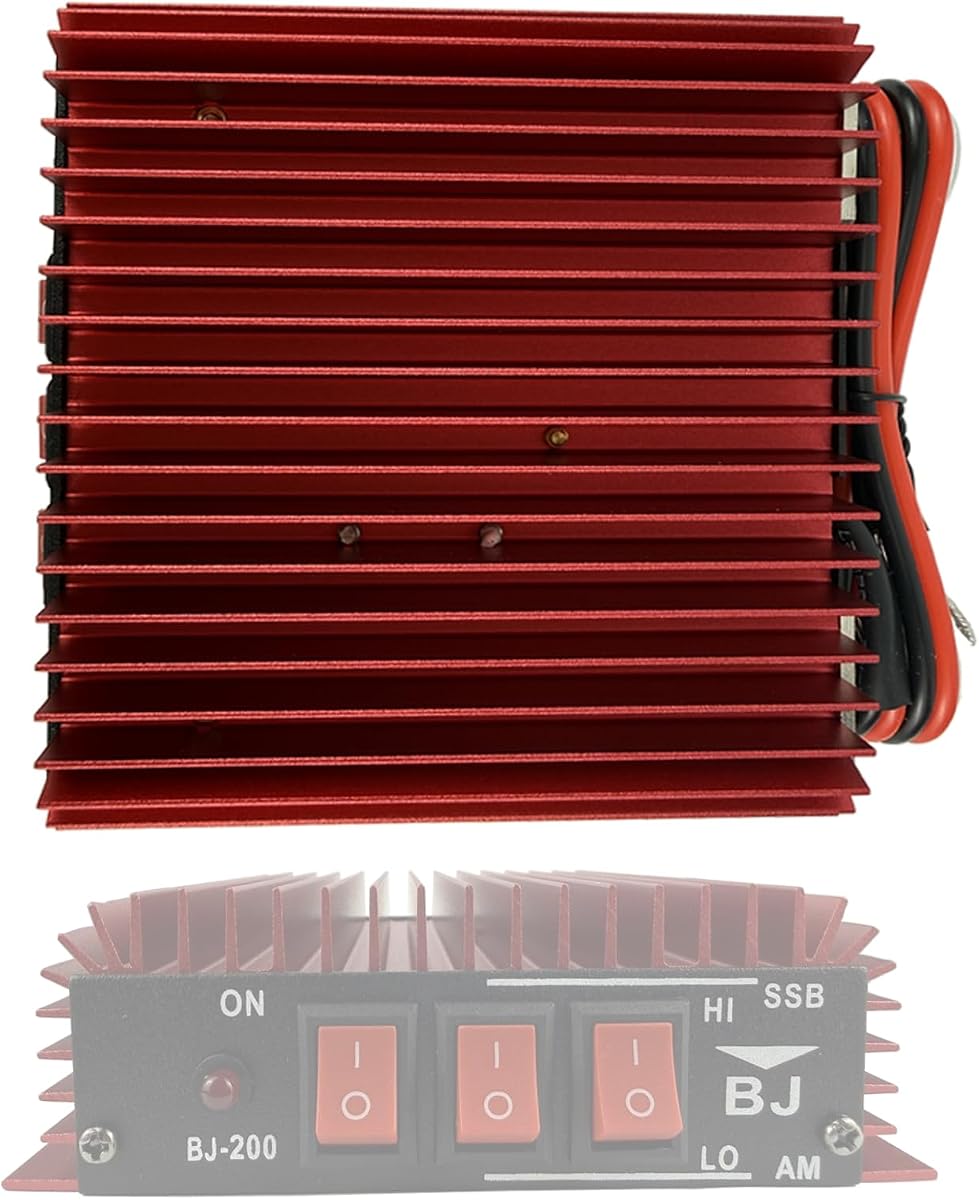
BJ-200 Linear
5.0Editor score
50W FM 100W AM
Compact design
Polarity protection
This guide compares the top linear amplifiers for ham radio to help you choose the right power boost for your HF station.
Linear amplifiers are essential for ham radio operators seeking to extend their communication range and signal clarity. A good amplifier provides stable output across bands while maintaining signal purity for clear transmission.
We compared ten reliable models based on power output, compatibility, cooling systems, and user feedback. Our list covers budget options and premium units suitable for various transceiver setups.
Each pick highlights key features and real-world performance to help you decide. Note that pricing and availability can change, so check current listings before purchasing.
5.0Editor score

4.2Editor score

3.9Editor score
The following table compares key specifications for all ten models to help you evaluate power, compatibility, and features side by side.


The Xiegu GPA100 delivers high-performance linear amplification for HF transceivers. With a rating of 4.2 it offers clean stable output up to 100W ensuring signal purity.
We may earn a commission when you buy through this link, at no additional cost to you.
Its flexible band switching allows manual or auto selection with indicator lights for instant feedback. The built-in BT enables wireless control when paired with supported radios like the IC-705.
Advanced cooling and intelligent protection detect issues like high SWR or overheating to safeguard operation. While it costs more than budget models its reliability and automation justify the investment.
Operators upgrading QRP setups will find this amplifier ideal for expanding range without sacrificing clarity. It is a strong choice for those needing dependable amplification across multiple bands.
The amplifier uses advanced control to maintain efficiency and protect components during extended use.
Bluetooth connectivity eliminates extra cables when working with compatible transceivers for a cleaner setup.
We may earn a commission when you buy through this link, at no additional cost to you.
The BJ-300 Plus supports multiple modulation modes with output up to 150W SSB. It is designed for HF transceivers and CB radios needing extended communication range.
We may earn a commission when you buy through this link, at no additional cost to you.
Thermal management includes a high-efficiency fan and large heat sink to prevent overheating during long sessions. Controls are straightforward with power switch and mode selector for quick adjustments.
While effective it lacks some advanced safety features found in pricier models. Users report mixed experiences with reliability which may require careful monitoring during operation.
This unit suits operators needing high power on a budget. It provides reliable performance for casual use where advanced automation is less critical.
The cooling system ensures stable operation even during extended use by managing internal temperatures effectively.
Compatibility with AM FM SSB and CW makes it versatile for various radio applications and modes.
We may earn a commission when you buy through this link, at no additional cost to you.
This BJ-300 Plus variant offers similar performance with high power output and multiple modulation support. It includes polarity protection for safer operation against incorrect power connections.
We may earn a commission when you buy through this link, at no additional cost to you.
The cooling fan and aluminum heat sink help maintain stability during use. Simple controls allow users to adjust power and select modes without complexity.
Despite its capabilities user feedback suggests inconsistencies in performance. Careful handling and monitoring are recommended to ensure optimal results over time.
It is a viable option for operators seeking affordable amplification. While not flawless it delivers necessary power for basic HF communication needs.
Electronic polarity reversal protection helps prevent damage from incorrect wiring during installation and operation.
Standard PL-259 connectors and clear labels make installation quick for both new and experienced users.
We may earn a commission when you buy through this link, at no additional cost to you.
The BJ-300 delivers up to 150W max output from a low input power range. It supports AM FM SSB and CW modes for versatile HF transceiver applications.
We may earn a commission when you buy through this link, at no additional cost to you.
Built-in overvoltage and polarity protection safeguard the amplifier against electrical surges and incorrect connections. The compact aluminum heat sink design aids efficient heat dissipation.
Though lacking user ratings its feature set suggests reliability for basic amplification. It is suitable for operators needing a simple and effective power boost.
This model works well for those wanting to expand signal range without complex setups. Its protection features make it a safe choice for various environments.
Dual switches and electronic protection ensure safe operation even if power connections are not perfectly aligned.
Standard RTX and ANT ports allow quick connection to most radios and antenna systems without adapters.
We may earn a commission when you buy through this link, at no additional cost to you.
The BJ-200 Linear receives top user ratings for reliable performance and safety. It offers up to 150W SSB output from a low input power requirement.
We may earn a commission when you buy through this link, at no additional cost to you.
Features include polarity reversal protection and clear ON/OFF switch with HI/LO power adjustment. The red aluminum heat sink maintains thermal stability during continuous use.
While output is lower than premium models it suits casual operators and vehicle installations. The simplicity and affordability make it a popular choice for budget-conscious buyers.
Ideal for two-way radio enthusiasts needing dependable power without complex controls. Its rugged design ensures longevity in various mobile or base station setups.
The aluminum alloy heat sink ensures optimal thermal management and extends the amplifier lifespan.
Clear switches and LED indicator confirm power status and mode selection for easy operation.
We may earn a commission when you buy through this link, at no additional cost to you.
The Xiegu XPA125B combines a power amplifier with an automatic antenna tuner for comprehensive station control. It supports 100W to 125W output for QRP radios and SDR transceivers.
We may earn a commission when you buy through this link, at no additional cost to you.
The 2.7 inch LCD display shows input/output power SWR voltage current and temperature for detailed monitoring. Protection circuits enter bypass mode during high SWR or overheating to ensure safety.
Its design is smaller than previous versions enhancing portability and desktop efficiency. While some users note moderate ratings its versatility remains a strong selling point.
Operators seeking an all-in-one solution will appreciate the integrated tuner. It simplifies tuning and allows focus on communication rather than technical adjustments.
The automatic tuner handles impedance matching independently or together with the amplifier for flexible operation.
Real-time display of voltage current and temperature helps users monitor health and performance easily.
We may earn a commission when you buy through this link, at no additional cost to you.
The LICAEVEY 30W amplifier board delivers clean linear output for CW and SSB modes. It operates across the full shortwave spectrum from 3MHz to 30MHz.
We may earn a commission when you buy through this link, at no additional cost to you.
Broadband circuitry ensures consistent gain without manual tuning. Its design includes an integrated heat sink and low loss PCB material for extended transmit cycles.
This module is ideal for DIY setups or portable stations. While output is modest it provides ample boost for QRP transceivers and kits.
Suitable for operators prioritizing clarity and frequency coverage over raw power. Its straightforward integration supports field days and home station enhancements.
Consistent gain across the shortwave range supports reliable amplification without constant adjustments.
Marked input/output ports allow straightforward connection to QRP transceivers and custom radio projects.
We may earn a commission when you buy through this link, at no additional cost to you.
This BJ-200 model targets CB radio amplification with a 12-14V DC input compatible with automotive supplies. It features a simple three-wire connection for easy setup.
We may earn a commission when you buy through this link, at no additional cost to you.
Standard SO-239 connectors fit most CB radios and antenna systems directly. The unit ensures stable operation even during engine start with its wide voltage tolerance.
While tailored for CB it may suit specific HF scenarios where voltage matching is available. Its simplicity reduces installation time and complexity significantly.
Best for CB enthusiasts needing a straightforward power boost. It is practical for mobile setups requiring quick installation and reliable performance.
Wide DC input ensures stable operation even with automotive power fluctuations during engine start.
Three-wire connection using standard connectors makes installation quick for most CB antenna systems.
We may earn a commission when you buy through this link, at no additional cost to you.
This Low Noise RF Amplifier covers 0.1 to 2000MHz with 32dB gain for weak signal reception. It is designed for receive applications improving clarity in noisy environments.
We may earn a commission when you buy through this link, at no additional cost to you.
Operating on 9-12V DC with low current draw it works well for portable field use. The low noise figure ensures better signal quality without distortion.
Unlike transmit amplifiers it focuses on enhancing front-end reception. Users appreciate its stability and consistent impedance for various radio and antenna setups.
Ideal for operators seeking better signal capture before processing. It serves as a practical upgrade for shortwave listening and SDR setups.
High gain and low noise figure improve weak signal reception in challenging environments.
Low current consumption supports battery friendly operation for field use or temporary setups.
We may earn a commission when you buy through this link, at no additional cost to you.
The Xiegu XPA125B provides robust communication capabilities with 100W output for HF ranges. It features automatic tuning to simplify the tuning process for users.
We may earn a commission when you buy through this link, at no additional cost to you.
Designed for compatibility with G90 G106 and other Xiegu models it enhances operational efficiency. Construction materials guarantee durability for long-term use.
Support services from professional technicians ensure users receive quality after-sales assistance. Its seamless integration reduces manual adjustments and setup time.
Ideal for Xiegu users seeking a reliable station upgrade. It balances performance and convenience for both home and field operations.
Specific design for Xiegu transceivers ensures smooth integration and optimized performance.
High-quality materials and professional support contribute to consistent performance over years.
We may earn a commission when you buy through this link, at no additional cost to you.
Selecting the right amplifier depends on power needs compatibility and operational environment. This section outlines key factors to consider.
Determine the output power needed based on your communication goals. Higher wattage extends range but requires more cooling and protection.
Choose output that matches your transceiver and regulatory limits for safe and legal operation.
Ensure the amplifier supports the modulation modes you use such as SSB CW FM or AM.
Broadband models support multiple modes while others may be limited to specific ones.
Check the required input power from your transceiver to avoid overload or under-drive.
Most units work with low input ranges but verify your radios output matches the amp.
Extended transmissions generate heat so efficient cooling prevents overheating and component damage.
Look for fans or large heat sinks that ensure stable operation during long QSOs.
Safety circuits such as SWR protection overvoltage and polarity reversal prevent damage.
These features safeguard both the amplifier and your transceiver from electrical faults.
Modern amplifiers may offer Bluetooth or auto band switching for convenience.
Manual controls are simpler but automation reduces setup time during active use.
Consider the footprint for desktop or vehicle installation especially in portable setups.
Compact units save space but may have different cooling requirements than larger ones.
Professional support ensures help if issues arise after installation.
Reliable brands provide better service and access to replacement parts if needed.
Connect the amplifier between your transceiver and antenna using proper connectors. Ensure all power connections are secure before turning on the unit.
Allow the amplifier to warm up and check indicator lights before transmitting. Monitor temperature and SWR during operation to avoid overheating or reflected power.
Store the unit in a dry well-ventilated area when not in use. Regularly inspect cables and connectors to maintain performance and prevent damage.
A linear amplifier preserves the waveform shape and phase of the input signal ensuring minimal distortion. This is essential for SSB and CW modes where signal clarity and purity matter.
Not always but an external tuner helps match impedance if SWR is high. Some models include built-in tuners which simplify setup and improve performance across bands.
Most units work with low-power HF transceivers but compatibility varies. Check the required input power and supported modulation modes before purchasing to ensure proper fit.
Cooling is critical since extended transmission generates significant heat. Proper fans or heat sinks prevent overheating and protect internal components from premature wear.
Look for SWR overvoltage and polarity reversal protections. These circuits safeguard both the amplifier and your transceiver from electrical faults and incorrect wiring.
Some compact models are designed for portable use with lightweight cases. Ensure the unit has efficient cooling and adequate battery input to support field operations.
These ten models cover a range of budgets and feature sets from basic power boosters to advanced units with integrated tuners.
Prioritize compatibility and protection features to ensure safe and reliable operation for your transceiver setup.
Prices and availability change frequently so verify current listings before making a purchase decision.