
50pcs LDR Photoresistor Kit
4.9Editor score
Fifty pieces included
Great for prototyping
Compatible with 3.3V and 5V
This guide compares the best Light Sensor for Arduino modules including photoresistors and digital chips to help you choose the right sensor for your project.
Choosing the right light sensor for your Arduino project can be challenging given the variety of options available. Whether you need simple ambient light detection or precise lux measurements, understanding the differences between photoresistors and digital modules is essential for success.
We evaluated ten top-rated light sensors based on accuracy, ease of use, compatibility with microcontrollers, and user feedback. Our comparison covers everything from budget-friendly analog modules to high-precision digital sensors designed for professional applications.
Each pick below highlights key features, pros, and cons to help you make an informed decision. Please note that product availability and pricing may change over time, so always verify current details before purchasing.
4.9Editor score
5.0Editor score
4.7Editor score
The table below provides a side-by-side comparison of all ten light sensor modules to help you quickly identify the best fit for your specific needs and budget.


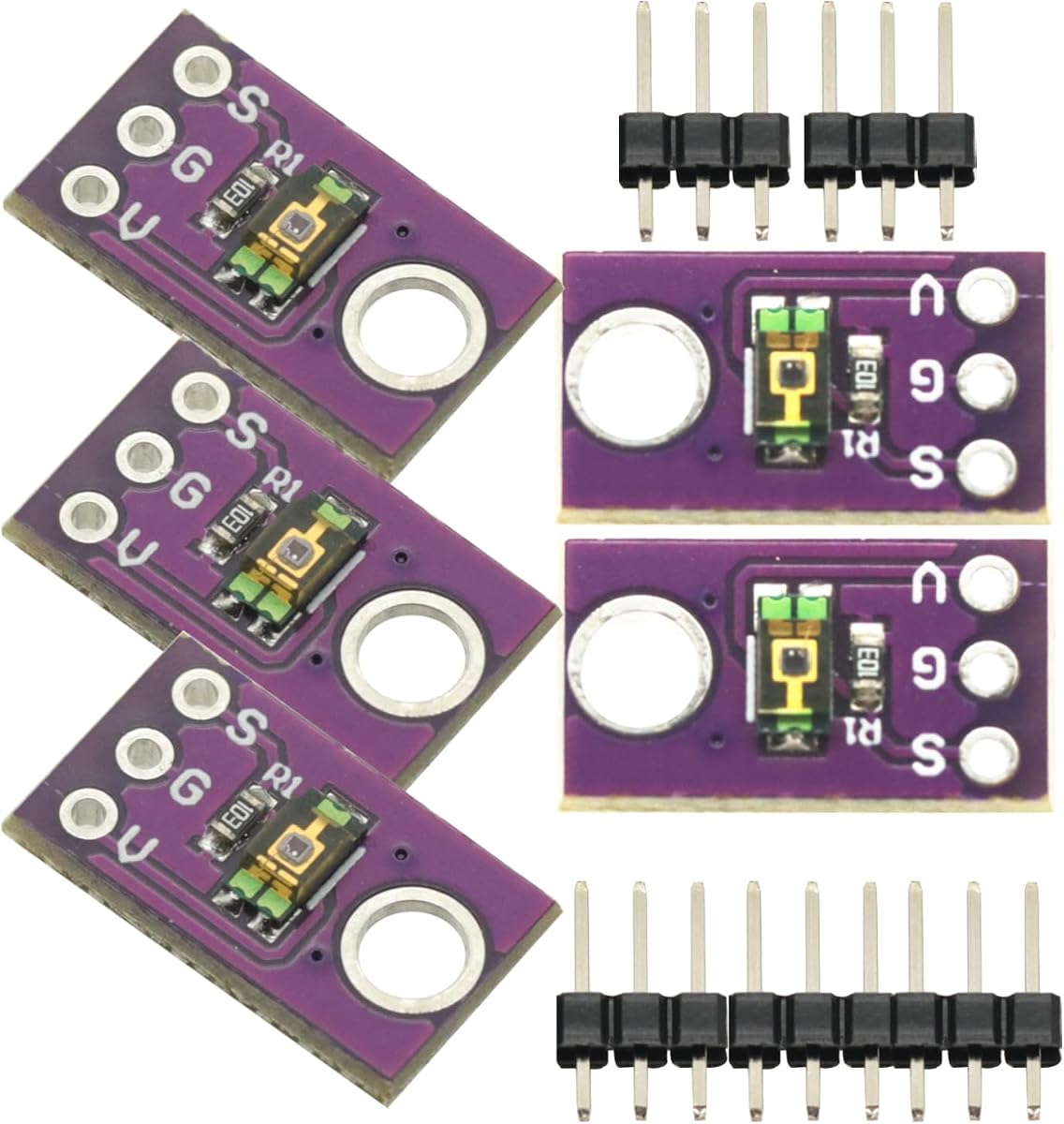
This TEMT6000 module stands out as a professional-grade light sensor offering perfect accuracy for ambient light detection. With a flawless 5.0 rating from users, it excels in applications requiring precise control like display backlight dimming.
We may earn a commission when you buy through this link, at no additional cost to you.
The sensor is specifically designed for controlling LCD displays and keypad backlighting in mobile devices. Its ability to handle industrial on/off lighting operations makes it versatile for both consumer and commercial electronics projects.
While it offers superior precision, it may require specific libraries for Arduino integration compared to simpler analog sensors. However, the accuracy and reliability make this trade-off acceptable for serious projects.
Engineers and hobbyists needing precise ambient light control should choose this module. It is the top recommendation for projects where light intensity must be measured accurately and consistently.
The TEMT6000 chip provides highly accurate ambient light readings suitable for professional display dimming tasks.
Its versatility allows use in both industrial lighting control and consumer mobile device backlighting systems.
We may earn a commission when you buy through this link, at no additional cost to you.
This kit offers an exceptional value with fifty GL5516 photoresistors included. It is perfect for beginners who need plenty of sensors for multiple trials or class projects involving light-dependent resistors.
We may earn a commission when you buy through this link, at no additional cost to you.
Each component shows a resistance of 5-10KOhm in bright light and 0.2MOhm in darkness. This wide range makes it highly suitable for solar tracking projects and general light automation tasks.
While these are basic components without built-in comparators, their simplicity allows for flexible circuit design. You can add your own LM393 modules if needed for digital output switching.
For students and makers working on multiple prototypes, this bulk pack is the best budget option. It ensures you never run out of sensors during long development sessions.
Having fifty pieces allows for extensive prototyping without worrying about running out of components mid-project.
The significant difference between dark and bright resistance ensures clear signal changes for Arduino analog inputs.
We may earn a commission when you buy through this link, at no additional cost to you.
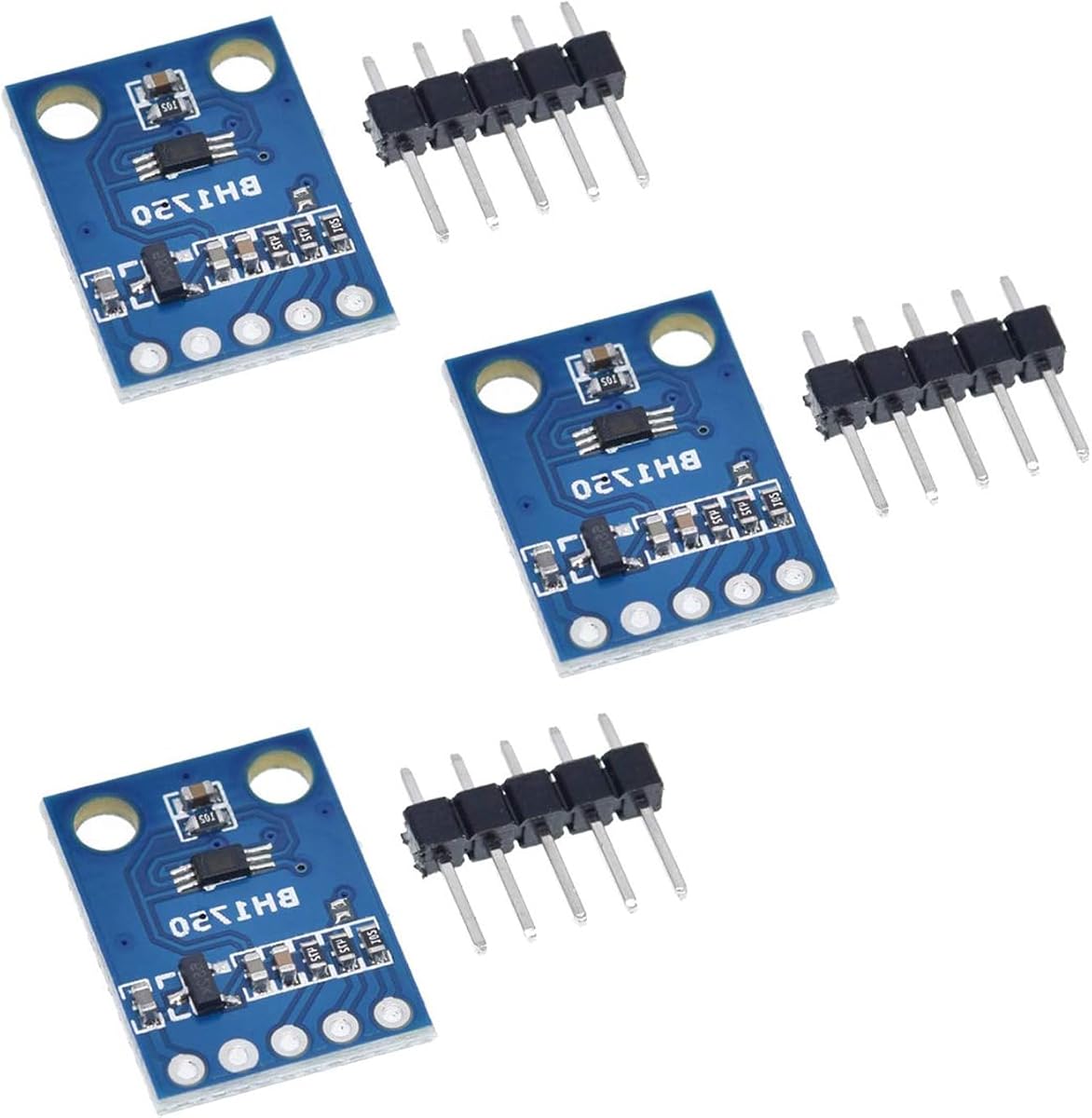
The GY-302 module features the high-quality BH1750FVI chip from ROHM for accurate digital readings. It is an ideal choice for those needing precise lux measurements rather than simple on/off detection.
We may earn a commission when you buy through this link, at no additional cost to you.
Its compact size of 13.9mm x 18.5mm makes it easy to integrate into tight spaces. The versatile power supply range of 3-5V ensures compatibility with a wide array of microcontrollers.
The I2C interface reduces pin usage on your Arduino but requires specific wiring and library setup. Despite this slight complexity, the digital output provides consistent and calibrated data.
This module is recommended for advanced users and professionals needing reliable ambient light data. It is the best premium choice for automated systems requiring precise illumination monitoring.
The BH1750FVI chip provides calibrated digital outputs that represent actual light intensity accurately.
The small board dimensions allow installation in compact electronics housings without blocking light intake.
We may earn a commission when you buy through this link, at no additional cost to you.
This module uses a photodiode sensor that detects light directionally, meaning it only senses light directly in front of it. This is useful for applications like light seeking robots or specific source detection.
We may earn a commission when you buy through this link, at no additional cost to you.
Each board includes both digital and analog outputs allowing flexible integration. The sensitivity is adjustable via a blue potentiometer to tune the detection threshold for your specific environment.
The directional feature is a trade-off compared to omnidirectional sensors. It might miss light from the sides but ensures accurate detection of frontal sources for automation tasks.
Choose this module if you need to detect light from a specific direction. It is excellent for line following robots or devices that need to face a light source.
The directional nature helps isolate specific light sources from ambient background noise effectively.
Having both digital and analog outputs allows you to use the module for either threshold or continuous readings.
We may earn a commission when you buy through this link, at no additional cost to you.
This pack contains thirty GM5539 photoresistors with a maximum voltage of 150 Volt DC. It is a reliable choice for hobbyists who need durable components for high-voltage applications or general use.
We may earn a commission when you buy through this link, at no additional cost to you.
The operating temperature range spans from -30 to +70 degree Celsius ensuring stability in various environments. The spectral peak at 540 nm matches well with visible green light detection.
While these are simple resistors without modules, they are easy to integrate with standard voltage divider circuits. They are perfect for basic light sensing tasks where cost efficiency matters.
Users looking for a large supply of standard photoresistors should pick this pack. It is suitable for classroom projects or prototyping where many sensors are needed.
The 150 Volt DC maximum voltage rating makes these suitable for more demanding electrical environments.
With a wide operating range, these sensors maintain performance even in cold or hot conditions.
We may earn a commission when you buy through this link, at no additional cost to you.
This sensor module features a built-in LM393 comparator that outputs a digital signal directly to the microcontroller. It detects ambient light changes and can trigger relays automatically based on thresholds.
We may earn a commission when you buy through this link, at no additional cost to you.
The module has three pins for power, ground, and digital output. It is designed to be easily connected to Arduino for detecting environment light intensity changes without extra components.
The threshold is adjustable using the potentiometer which allows fine-tuning for specific lighting conditions. This makes it convenient for automatic lighting switches or alarm systems.
Choose this if you need a quick and ready-to-use digital sensor. It is ideal for projects where you want to detect light changes and trigger an action instantly.
The digital signal allows direct connection to microcontroller pins for simple logic triggering.
The output can drive relay modules directly to control high-power devices like lights or fans.
We may earn a commission when you buy through this link, at no additional cost to you.
This digital light sensor module is compatible with Arduino, ESP32, ESP8266 and Raspberry Pi. It comes with tutorials which make it highly accessible for beginners learning sensor integration.
We may earn a commission when you buy through this link, at no additional cost to you.
The module has two output pins allowing both digital and analog data read. The supply voltage of 3.3 to 5V DC ensures compatibility with various microcontroller logic levels.
Having tutorials included is a significant advantage for new users who might struggle with wiring. It reduces the setup time and helps you start testing quickly.
This module is perfect for educational projects and learning how sensors work. It provides a balance of functionality and ease of use for students.
Included tutorials simplify the learning curve for new makers working on their first light sensor project.
Compatibility with popular boards like ESP32 and Raspberry Pi expands your project options significantly.
We may earn a commission when you buy through this link, at no additional cost to you.
This bulk pack offers fifty GL5516 light dependent resistors ideal for automation projects. It is a cost-effective way to stock up on sensors for solar tracking or light automation tasks.
We may earn a commission when you buy through this link, at no additional cost to you.
The resistance values are clearly specified as 5-10KOhm when bright and 0.2MOhm when dark. This wide dynamic range ensures sensitive detection of ambient light changes.
These resistors work with Arduino, ESP32, and Raspberry Pi making them versatile. You will need to build your own circuit with resistors to use them effectively.
Ideal for makers planning multiple projects or large-scale automation. This pack ensures you have enough sensors for various prototypes and experiments.
The specification and quantity make this pack suitable for light automation and solar tracking setups.
Compatible with ESP32 and Raspberry Pi in addition to Arduino expanding your hardware choices.
We may earn a commission when you buy through this link, at no additional cost to you.
This module uses a wide voltage LM393 comparator for stable light intensity detection. It provides both digital and analog outputs for flexible use in smart cars or industrial applications.
We may earn a commission when you buy through this link, at no additional cost to you.
The working voltage of 3.3V to 5V allows connection to MCU devices directly. It is widely used in applications requiring reliable light intensity detection for automation.
With three pieces included, it is a small pack compared to bulk options. However the stability of the comparator ensures consistent performance across different environmental conditions.
Choose this module for smart car light detection projects. It is a reliable option for hobbyists needing a standard photodiode module with dual outputs.
The LM393 chip ensures good stability in output signals which is crucial for consistent detection.
Access to both digital and analog outputs provides flexibility in how you process light data.
We may earn a commission when you buy through this link, at no additional cost to you.
This module features the original ROHM BH1750FVI chip ensuring high quality and accurate light readings. It is designed to measure light intensity and illumination for Arduino projects.
We may earn a commission when you buy through this link, at no additional cost to you.
The dimensions of 13.9mm x 18.5mm offer a compact footprint for integration. Power supply is 3-5V which matches standard Arduino and ESP8266 logic levels.
The BH1750FVI chip provides reliable digital data reducing the noise found in analog sensors. It is ideal for precision measurement tasks requiring calibrated light levels.
Pick this module if you need accurate illumination measurement. It is a solid choice for projects where data quality is more important than cost.
Using the original ROHM chip ensures that the sensor readings are consistent and calibrated correctly.
The small dimensions make it easy to embed into tight spaces in your electronics enclosure.
We may earn a commission when you buy through this link, at no additional cost to you.
Selecting the right light sensor depends on your project needs such as accuracy, interface type, and budget. This guide breaks down the key factors to consider.
The most common types are photoresistors (LDR) and photodiodes or digital modules. Photoresistors are cheap and simple but analog. Photodiodes and digital modules like BH1750 offer better precision and stability.
Choose photoresistors for simple light detection and digital modules for precise measurements.
Sensors may provide analog or digital outputs. Analog requires an ADC pin and code conversion. Digital modules offer direct I2C or GPIO outputs which reduce CPU load and simplify wiring.
Digital interfaces are preferred for complex projects while analog is sufficient for basic switches.
Check the supply voltage of the module. Most work on 3.3 to 5V. Ensure this matches your microcontroller to avoid damage. Some modules have built-in regulators for flexibility.
Always verify voltage compatibility before connecting to your Arduino or ESP8266.
For general on/off detection, analog LDRs work well. For measuring lux levels accurately, use dedicated digital sensors like TEMT6000 or BH1750 which provide calibrated values.
Prioritize digital sensors if precise data is required for your application.
Modules vary in size and pin layout. Compact boards are easier to install in tight spaces. Consider whether you need a bare component or a breakout board with headers.
Choose a form factor that fits your enclosure and mounting needs.
Some modules include potentiometers to adjust sensitivity or thresholds. This allows tuning the sensor without changing code. Others rely solely on software calibration.
Adjustable modules provide more flexibility for varying light environments.
Products come in packs of 3, 10, or 50 pieces. Buying in bulk saves money for larger projects but may be excessive for single use. Consider your total component needs.
Buy bulk packs if you plan multiple projects or testing phases.
Look for modules that provide clear wiring diagrams or tutorials. This reduces setup time especially for beginners. Some sellers include code examples for popular platforms.
Good documentation ensures you can integrate the sensor successfully.
Connect the power and ground pins of the sensor to your microcontroller. For analog modules, connect the output to an analog input pin. For digital modules, follow the I2C or GPIO connections described in the documentation.
Install software libraries if required for digital sensors. Most digital light sensors have specific Arduino libraries available via the library manager to simplify reading data. Upload a test sketch to verify readings.
Place the sensor in an area that accurately represents the ambient light. Avoid direct sunlight if measuring indoor light levels. Keep the sensor clean from dust and obstructions to maintain accuracy.
An LDR or photoresistor provides an analog resistance value that changes with light. A digital light sensor provides a calibrated digital signal or lux value. Digital sensors are more accurate and easier to interface with microcontrollers.
Many modern modules support 3.3V to 5V inputs. However check the specifications to ensure your board logic matches the sensor voltage. Using 5V sensors on 3.3V boards may cause reading issues.
The BH1750FVI sensor typically works with the BH1750 library available in the Arduino library manager. It simplifies communication over I2C and provides functions to read light intensity in lux directly.
Calibration often involves measuring known light conditions and adjusting thresholds in code. For analog sensors, you may need to set reference values in your software based on dark and bright readings.
Many modules work outdoors but may need protection from moisture. Ensure your project enclosure is weatherproof if exposing the sensor to rain or extreme conditions for long periods.
Sensors detect ambient light which changes with time of day and artificial lighting. Variations are normal. Adjust thresholds or calibration values to fit your specific environment conditions.
Choosing the right sensor depends on balancing accuracy and budget. The TEMT6000 stands out as the professional choice while the 50pcs LDR kits offer incredible value for prototyping.
Prioritize digital modules if you need precise data or compact setups. Analog photoresistors remain ideal for simple detection tasks and educational projects due to their simplicity.
Remember to check current prices and availability before ordering. We hope this guide helps you find the perfect light sensor for your next Arduino project.