
AURSINC ZK09‑UM LNA Module
4.9Editor score
100kHz to 10GHz range
USB powered design
21.5dB gain
Discover the top ham radio amplifier for boosting signal options to enhance your communication range and clarity in various radio frequency environments.
Amateur radio enthusiasts constantly seek ways to improve their communication range and signal clarity. A high quality amplifier plays a crucial role in achieving better transmission and reception across various bands and conditions.
We evaluated ten leading models based on performance specifications compatibility with common transceivers and user feedback. This analysis covers low noise receivers and linear power amplifiers designed for diverse operational needs.
Each selection highlights key strengths ideal use cases and potential limitations. Note that product availability and pricing may fluctuate over time. Always verify current details before making a final purchase decision.
4.9Editor score

4.2Editor score
4.2Editor score
This side by side comparison outlines the core specifications and capabilities of each selected amplifier model to help you identify the best fit for your specific radio setup.


This low noise amplifier module stands out for its wide bandwidth and affordable price point. With a 4.9 rating from users, it delivers reliable performance for software defined radio and TinySA testing applications.
We may earn a commission when you buy through this link, at no additional cost to you.
The ultra broadband range from 100kHz to 10GHz allows it to handle diverse signal types effectively. Its on chip bias solution and high PSRR LDO ensure clean power supply noise suppression for better reception.
While not designed for high power transmission, it serves well as a preamp for weak signal detection. Avoid excessive input power to prevent saturation or permanent damage to the internal components.
Ideal for hobbyists and engineers seeking a cost effective front end boost. This module pairs well with TinySA Ultra for high frequency testing where onboard LNAs fall short.
The 100kHz to 10GHz span ensures compatibility with FM SDR ham radio and remote control systems.
Built in LDO technology suppresses power supply noise for clearer reception compared to standard USB LNAs.
We may earn a commission when you buy through this link, at no additional cost to you.
The Xiegu GPA100 delivers robust linear amplification with up to 100W on HF bands. Its 4.2 rating reflects strong performance for QRP setups needing reliable power extension across multiple modes.
We may earn a commission when you buy through this link, at no additional cost to you.
Advanced cooling and intelligent protection guard against high SWR overheating and overcurrent conditions. This ensures stable operation during long transmission sessions while preserving component lifespan.
Bluetooth connectivity allows cable free band tracking with compatible radios like IC-705. This adds convenience for field operators who frequently switch between SSB CW and digital modes.
Best for operators expanding QRP stations into 100W systems. Its automatic band sync and ALC support simplify setup while maintaining signal purity and efficiency.
Solid state design ensures low distortion and high signal purity across AM FM and CW modes.
Built in Bluetooth enables automatic band switching without extra cables for streamlined operation.
We may earn a commission when you buy through this link, at no additional cost to you.
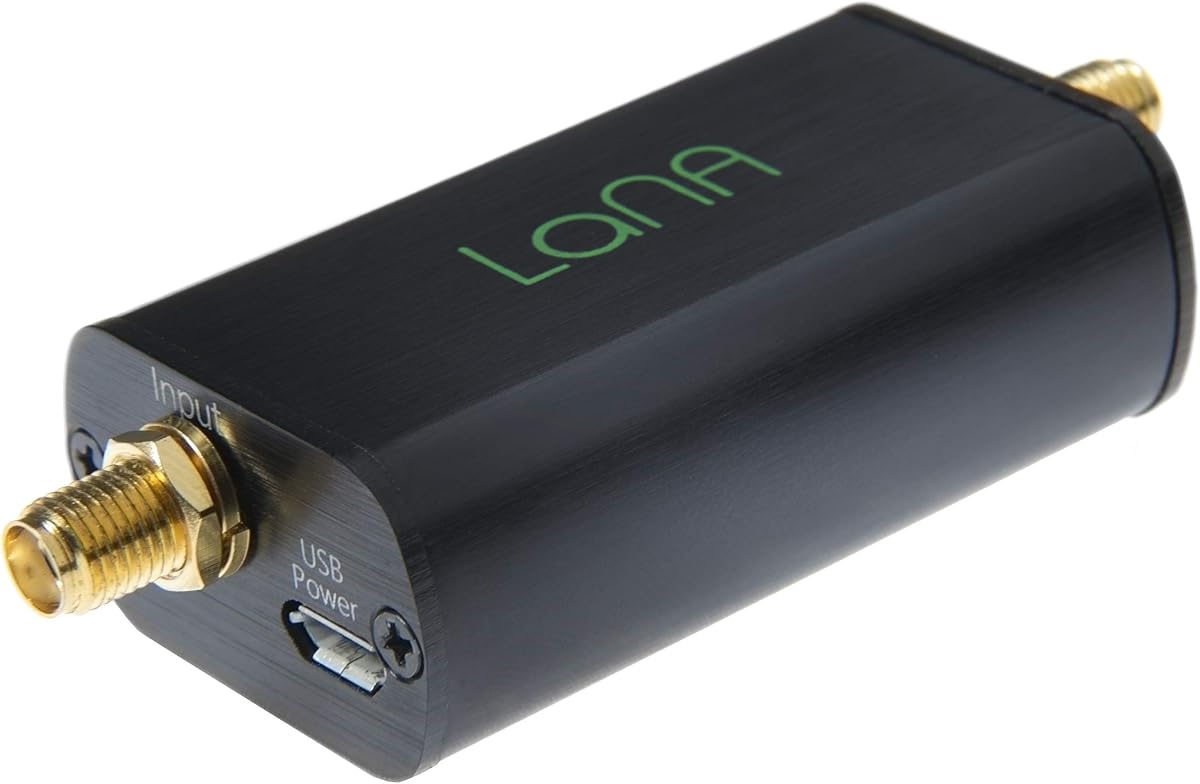
Nooelec Lana provides a high performance low noise amplifier module for RTL-SDR and other software defined radios. Its 4.2 rating highlights reliable SNR improvement with a wideband 20MHz to 4GHz capability.
We may earn a commission when you buy through this link, at no additional cost to you.
The module can be powered via bias tee USB or DC adapter offering flexibility for different setups. A quality aluminum enclosure protects components and aids heat dissipation during extended use.
Its lower noise figure and better linearity outperform similar modules based on SPF5189Z ICs. This results in cleaner signal reception especially in weak signal environments or crowded bands.
Ideal for SDR enthusiasts prioritizing signal clarity and build quality. Note some setups may require a DC block between LNA and SDR when using external power options.
Lower noise figure and linearity enhance reception compared to common LNA MMIC based modules.
Bias tee USB or DC power options allow seamless integration into various radio and test configurations.
We may earn a commission when you buy through this link, at no additional cost to you.
This RF amplifier covers an exceptional frequency range from 0.1MHz to 2000MHz supporting FM VHF UHF and even cellular signals. Its 4.2 rating confirms consistent performance across diverse receiving applications.
We may earn a commission when you buy through this link, at no additional cost to you.
With a typical 32dB gain and low noise figure it significantly improves weak signal reception for SDR and CB radio. The 27mA current draw makes it ideal for battery powered portable field use.
Built for 50 ohm impedance it ensures stable reliable performance in RF receiving front ends. However it is designed for receive only applications not high power transmission needs.
Perfect for DIY projects shortwave listening and spectrum analysis setups. Its small power profile and wide band make it a practical addition to portable radio gear.
Covers shortwave FM broadcast VHF UHF and 2G to 4G signals for multi use cases.
Supports 9V to 12V with minimal current draw for extended battery powered operation.
We may earn a commission when you buy through this link, at no additional cost to you.
This RF amplifier earns a perfect 5.0 rating for its dependable performance and high gain design. It strengthens weak signals across a 10MHz to 6GHz range with a low noise figure of 5dB.
We may earn a commission when you buy through this link, at no additional cost to you.
P1dB is rated at 10dBm at 2GHz ensuring stable operation in receiving setups. The Type C 5V power and aluminum case make it easy to install in compact radio and test setups.
SMA female connectors with 50 ohm impedance simplify integration with existing RF cables and devices. Its lightweight design fits neatly into portable kits for field monitoring tasks.
Ideal for users needing a reliable front end booster without complex power needs. It is well suited for FM broadcasting SDR monitoring ham radio and remote control systems.
30dB gain with low noise ensures clear reception across a broad working frequency span.
Type C power and SMA connectors streamline installation for compact and portable use cases.
We may earn a commission when you buy through this link, at no additional cost to you.
This LNA amplifier enhances weak signal detection with a 100k to 10GHz range and 21dB gain flatness. It integrates a built-in 300mAh battery for up to 5 hours of field operation without wall outlets.
We may earn a commission when you buy through this link, at no additional cost to you.
The miniature metal housing provides solid shielding against interference for stable performance in labs or outdoors. Its compact size fits easily in toolkits for antenna tuning and DXing sessions.
A complete kit includes the amplifier and USB charging cable. To avoid receiver overload it advises against use in overly noisy urban areas or with TinySA built-in LNA simultaneously.
Best for portable testing and outdoor tuning where tethered power is inconvenient. The rugged design and battery feature make it a trustworthy addition to a field engineer toolkit.
Integrated battery allows continuous operation up to 5 hours without external power sources.
Solid metal housing ensures stable performance against interference in both lab and outdoor environments.
We may earn a commission when you buy through this link, at no additional cost to you.
This broadband linear radio AMP supports AM FM SSB and CW modes with up to 150W SSB output. Its 3.1 rating indicates mixed feedback but notable features for CB ham and radio use.
We may earn a commission when you buy through this link, at no additional cost to you.
A high efficiency cooling fan and large aluminum heat sink prevent overheating during extended use. Electronic polarity reversal protection and dual 15A fuses safeguard the unit from power surges and incorrect connections.
Controls include power switch mode selector and high/low power adjustment for straightforward operation. Standard PL-259 connectors simplify antenna and transceiver wiring for both new and experienced users.
Suitable for operators needing versatile high power amplification across multiple modes. Ensure proper ventilation and check input power requirements for your specific HF transceiver before installation.
High efficiency fan and heat sink ensure stable operation during extended transmission sessions.
Works with HF transceivers requiring 3 to 5W AM or 2 to 10W SSB input power.
We may earn a commission when you buy through this link, at no additional cost to you.
This wideband scanner pre-amplifier covers 25 to 2000MHz with 6 to 20dB gain. It is designed specifically for scanner receivers and arrives with a BNC patch lead for easy connection.
We may earn a commission when you buy through this link, at no additional cost to you.
PP3 battery support allows portable operation without wall adapters. The simple type and compact design make it an accessible choice for hobbyists needing basic signal boosting.
While it lacks advanced controls it provides consistent performance for scanner monitoring tasks. The included lead simplifies setup right out of the box.
Ideal for users wanting a no fuss scanner amplifier. Verify your scanner's frequency needs align with the 25 to 2000MHz range before purchasing.
Designed specifically as a scanner amplifier with coverage matching common public safety bands.
PP3 battery option provides flexible placement without reliance on fixed power sources.
We may earn a commission when you buy through this link, at no additional cost to you.
This amplifier delivers up to 150W SSB output with support for AM FM and CW modes. Its 3.1 rating reflects mixed experiences but solid core features for reliable long-distance operation.
We may earn a commission when you buy through this link, at no additional cost to you.
Thermal management includes a cooling fan and aluminum heat sink to prevent overheating. Safety features like polarity reversal protection and dual fuses protect against electrical surges and incorrect power connections.
Setup is straightforward with simple controls and PL-259 connectors. It works with HF transceivers requiring low input power for versatile use across CB and ham bands.
Suitable for users needing a robust amplifier with multiple mode flexibility. Ensure your transceiver meets input requirements and provide adequate airflow for safe continuous operation.
Supports AM FM SSB and CW modulation modes for diverse radio communication needs.
Works with HF transceivers needing 3 to 5W AM or 2 to 10W SSB input.
We may earn a commission when you buy through this link, at no additional cost to you.
This broadband linear AMP delivers up to 150W max output for HF transceiver applications. It supports AM FM SSB and CW modes with HI/LO power switches for flexible operation.
We may earn a commission when you buy through this link, at no additional cost to you.
Built-in electronic switch and polarity inversion protection ensure stable safe operation. Compact aluminum alloy heat sink construction provides efficient heat dissipation for reliable performance.
Standard antenna and transceiver ports simplify quick installation. Note there is no current rating data available for this model so check specifications carefully before use.
Best for users prioritizing high power output with protection features. Verify input power compatibility and ensure proper cooling for optimal functionality during long sessions.
HI/LO power selection switches adjust output strength based on specific operating needs.
Polarity inversion and overvoltage protection safeguard the unit from incorrect power connections.
We may earn a commission when you buy through this link, at no additional cost to you.
Selecting the right amplifier depends on your primary use case whether it is reception boosting or transmission power expansion.
Ensure the amplifier covers the frequency bands you use most. Low noise amplifiers often span wide ranges from kHz to GHz while linear amps focus on HF bands.
Match the frequency range to your transceiver or receiver capabilities for optimal signal improvement.
Higher gain boosts weak signals but can introduce noise if the noise figure is high. Look for low noise figures under 5dB for receive applications.
Balance gain with noise performance to avoid degrading signal to noise ratio in your setup.
Check voltage and current requirements. Some models use USB or battery while others need 13.8V DC supplies for linear power amps.
Choose a power source compatible with your operating environment whether fixed or portable.
Linear amplifiers must match your radio input power levels. Verify the required input wattage to avoid damaging your transceiver.
Ensure connectors and control interfaces like ALC work with your existing radio hardware.
High power amplifiers generate heat. Look for fan cooling or large heat sinks to prevent overheating during extended use.
Proper ventilation is critical to maintain stable performance and extend component lifespan.
Safety features such as polarity reversal protection overvoltage and SWR guards protect your equipment from electrical faults.
These safeguards are essential for reliable operation especially in field or outdoor environments.
Metal enclosures and shielded designs reduce interference and improve durability for rugged use.
Select a model with robust construction if you plan on frequent transport or harsh conditions.
Consider controls connector types and cable requirements. Simple switches and standard PL-259 connectors make setup quicker.
User friendly interfaces save time and reduce complexity during initial deployment.
Connect the amplifier between your antenna and receiver using high quality coaxial cables with correct impedance. Ensure all connections are tight to avoid signal loss or reflections.
Power the unit according to its voltage specifications. For linear amplifiers match the power supply to required current ratings to prevent instability or damage.
Regularly inspect connectors and cooling components for dust or damage. Keep ventilation areas clear to maintain optimal operating temperatures during transmission.
A low noise amplifier improves receive sensitivity by boosting weak incoming signals with minimal added noise. A linear power amplifier increases transmit power output from your radio for better range and signal strength on the air.
No low noise amplifiers are designed for receive only applications. Using them for transmission can cause saturation damage or permanent failure due to high output power levels.
Some LNAs work with USB or batteries while linear amplifiers typically need dedicated DC power supplies. Always check the specific voltage and current needs before purchasing or installing.
Ensure adequate airflow around the unit and avoid enclosing it tightly. Use models with built-in fans or heat sinks especially during extended transmission sessions.
Most amateur radio equipment uses 50 ohm impedance. Ensure your amplifier input output match this standard to avoid standing wave ratios or signal loss.
Avoid operating amplifiers during severe weather unless properly grounded. Surges and electrical interference can damage sensitive components even with built-in protection features.
Most units come with standard connectors but verify cable types. SMA PL-259 or BNC may require adapters depending on your existing radio and antenna setup.
Keep connectors clean and check for loose wiring periodically. Ensure cooling fans operate smoothly and replace any damaged cables or power supplies promptly.
The top picks balance performance value and ease of use across both receive and transmit amplification needs. Each model offers distinct advantages depending on whether you prioritize signal clarity or power output.
Focus on matching frequency ranges input power and compatibility with your current equipment. Proper selection ensures reliable operation without risking damage to sensitive radio components.
Remember to verify current pricing and availability as they may vary over time. Review the latest product details before purchasing to confirm features meet your operational requirements.