
VEVOR Greenhouse Heater
4.4Editor score
Fast PTC heating technology
Lightweight portable design
Multi-scene application support
This guide compares the top greenhouse heater options for 2026, evaluating performance, safety, and features to help you choose the right model for your plants.
Maintaining the right temperature is crucial for plant health in any greenhouse. A quality heater ensures your crops survive cold snaps without risking fire hazards or humidity issues.
We analyzed ten leading greenhouse heaters based on heating power, thermostat accuracy, safety features, and user feedback. This list covers various needs from small tents to larger garden spaces.
Each pick highlights key strengths and potential drawbacks based on available data. Prices and availability can change frequently so verify details before purchasing to ensure the best deal for your setup.
4.4Editor score

4.0Editor score

4.9Editor score
This table provides a side-by-side comparison of all ten models highlighting their core specifications and key features to simplify your decision process.


This BioGreen model stands out as a robust solution for serious growers needing reliable heat and air movement. It carries a solid user rating reflecting consistent performance over time.
We may earn a commission when you buy through this link, at no additional cost to you.
Its dual heating elements allow you to choose between 750 or 1500 watts saving energy when full power is not needed. The high air circulation helps prevent stagnant air which can lead to plant disease.
While the stainless steel body is durable it can be heavier than plastic alternatives making relocation slightly harder. The price is higher than basic models but the build quality justifies the investment for many users.
Ideal for medium to large greenhouses where moisture resistance and precise temperature tracking are priorities. This heater balances power efficiency and durability well for year round use.
The fan mode moves up to 5800 cubic feet of air per hour ensuring even heat distribution throughout the space.
IPX4 splash protection allows safe operation in humid environments or near irrigation sources without risking electrical failure.
We may earn a commission when you buy through this link, at no additional cost to you.
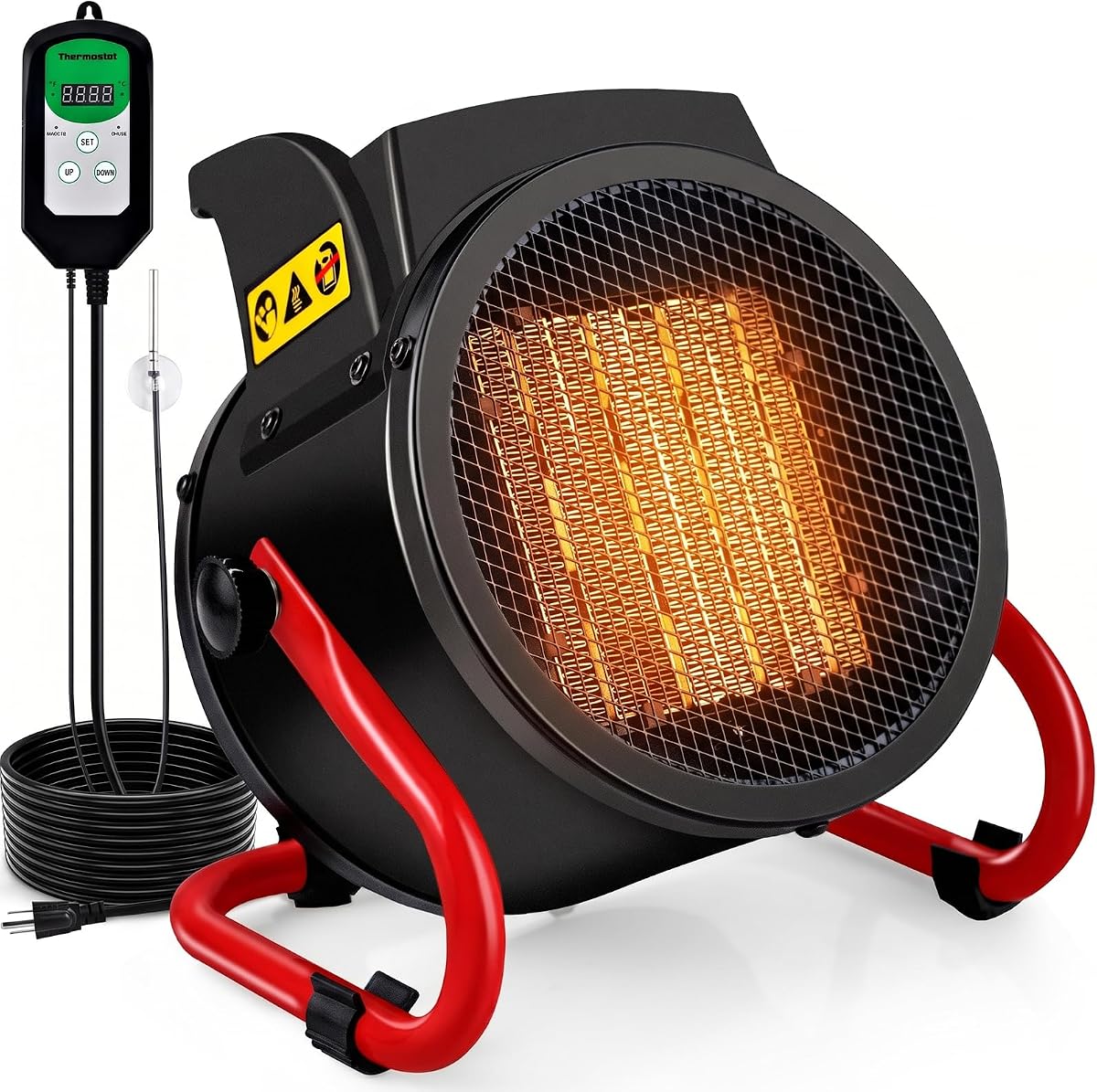
The VEVOR model offers quick heating capabilities thanks to its PTC technology which warms up spaces efficiently. It is well rated for its versatility across different indoor environments.
We may earn a commission when you buy through this link, at no additional cost to you.
Users appreciate the independent thermostat that monitors soil temperature directly allowing precise control for sensitive seedlings. The ability to switch between heating and fan modes adds value for year round operation.
The IP20 rating means it is less suited for very wet environments compared to splash proof models. It is best used in controlled dry setups or where humidity is managed separately.
This unit is a strong choice for grow tents or small flower rooms where quick warmth is essential. Its portable design makes it easy to move between different zones as needed.
The free independent thermostat allows you to set exact target temperatures for your specific plant needs without constant monitoring.
With both hot and cold modes available this heater provides warmth in winter and ventilation cooling in summer for consistent comfort.
We may earn a commission when you buy through this link, at no additional cost to you.
This heater receives a high rating for its ability to maintain consistent warmth while reducing excess dampness in covered areas. It is a popular choice for seedling trays and winter growth.
We may earn a commission when you buy through this link, at no additional cost to you.
The 41 to 108 degree range provides enough flexibility for various plant stages without risking overheating. Its flame resistant body and overheat shutoff offer peace of mind during long unattended runs.
The moisture reduction feature is particularly useful for enclosed spaces where humidity can get high. However the coverage area is capped at 160 square feet which limits its use in larger greenhouses.
It is an excellent plug-and-play solution for small indoor gardens or temporary setups. The ease of use and safety features make it a reliable option for casual growers.
Designed to lower excess dampness it helps prevent mold and mildew while keeping the environment balanced for healthy plants.
Automatic overheat shutoff ensures the unit turns off if internal temperatures get too high preventing potential fire hazards.
We may earn a commission when you buy through this link, at no additional cost to you.
This VEVOR model features an adjustable angle to direct heat exactly where it is needed making it ideal for workspaces. It holds a moderate rating reflecting mixed user experiences.
We may earn a commission when you buy through this link, at no additional cost to you.
The larger air outlet helps spread heat over a wider area which is helpful for open flower rooms or small greenhouses. The portable handle makes it easy to shift between locations as required.
While functional it does not have the advanced features found in higher end models. The lower rating suggests some users may find it less durable or quiet than other options.
It is a practical choice for those who need flexibility in heat direction without spending extra. Use it in dry areas where portability is more important than advanced climate control.
The 25 degree adjustable angle lets you aim warmth towards specific work zones or plant rows for targeted comfort.
Switch between heating mode for winter warmth and fan mode for summer air circulation to maximize utility throughout the year.
We may earn a commission when you buy through this link, at no additional cost to you.
This unit uses PTC ceramic elements which provide consistent heat without consuming oxygen making it safe for enclosed plant spaces. It has a strong rating for reliability and efficiency.
We may earn a commission when you buy through this link, at no additional cost to you.
The three power modes allow you to tailor output from standby to full 1500 watt heat. The IPX4 rating ensures it can handle splashes in damp greenhouses or covered patios safely.
One limitation is the green color which may not blend well with all decor styles. The coverage is limited to around 160 square feet so it is best for smaller setups.
For those prioritizing energy efficiency and safety this heater is a solid candidate. It is particularly well suited for seedling areas or small workshops where consistent warmth is needed.
The ceramic heating elements deliver steady warmth quickly while maintaining high efficiency without degrading over time.
With options for standby gentle warmth and full output you can adjust energy use based on current weather conditions.
We may earn a commission when you buy through this link, at no additional cost to you.
This heater stands out with an IPX5 waterproof rating making it ideal for humid or wet greenhouse environments where splashes are common. It has a strong user rating for performance.
We may earn a commission when you buy through this link, at no additional cost to you.
The intelligent temperature control maintains the desired range automatically reducing manual intervention. Thickened power cords add durability for long term operation in harsher conditions.
While the waterproof feature is excellent it may add weight to the unit making it less portable than lighter options. Ensure you have enough outlet access given the cord design.
Best for outdoor or high humidity greenhouses where moisture is a primary concern. Its safety features and water resistance make it a reliable choice for tough environments.
IPX5 rating protects against water jets allowing safe operation in heavy rain or high humidity zones without risk.
Thickened power cords and flame retardant materials ensure long life even when used in demanding workshop or garden settings.
We may earn a commission when you buy through this link, at no additional cost to you.
This model boasts a perfect rating from users indicating high satisfaction with its build quality and performance. The stainless steel shell ensures durability against daily wear and tear.
We may earn a commission when you buy through this link, at no additional cost to you.
It covers larger areas up to 200 square feet efficiently with a precise digital thermostat that senses air temperature via a waterproof probe. This allows for accurate control even in varying conditions.
The price is higher than average but the build quality and coverage area justify the cost for serious gardeners. The non-slip base adds stability on uneven surfaces.
For those needing a robust outdoor or greenhouse heater with high capacity this is a top choice. It is designed to handle cold snaps while maintaining plant safety.
The waterproof probe connects to the thermostat to measure actual air temperature for accurate heating control without guesswork.
Stainless steel construction resists corrosion and dents ensuring the unit remains functional and safe for years of use.
We may earn a commission when you buy through this link, at no additional cost to you.
This heater features an auto power control kit that monitors temperature and switches the unit on or off as needed. It heats spaces in about three seconds making it very responsive.
We may earn a commission when you buy through this link, at no additional cost to you.
The digital temperature display makes it easy to see current conditions at a glance. Energy saving controls help reduce electricity costs by avoiding unnecessary run time.
Some users find the digital display small or hard to read in low light. The cord length may limit placement in larger rooms without an extension cord.
Great for users who want hands off temperature management. It is ideal for spaces where quick heating and energy efficiency are key priorities.
The 1500W heater warms up in 3 seconds ensuring you feel the heat almost immediately after switching it on.
Automatic power control reduces waste by cycling off when the desired temperature is reached lowering your utility bills.
We may earn a commission when you buy through this link, at no additional cost to you.
This VEVOR model is incredibly lightweight weighing less than 5 pounds making it the most portable option on the list. It performs well for its size with fast PTC heating.
We may earn a commission when you buy through this link, at no additional cost to you.
The anti-slip base and handle make it easy to move to different spots or angle as needed. It is a reliable budget friendly option for small grow tents.
The IP20 protection means it is not suitable for damp environments. It should only be used in dry indoor areas to avoid water damage.
Choose this if you need to move your heater frequently. It is perfect for temporary setups or small spaces where weight and portability matter.
Weighing under 5 pounds this unit is easy to carry around and store when not in use without strain.
Adjustable up to 25 degrees with a stable base lets you aim the heat where it is needed most.
We may earn a commission when you buy through this link, at no additional cost to you.
This premium heater offers smart WiFi control allowing you to adjust settings from anywhere. It has a near perfect rating for its advanced features and ease of use.
We may earn a commission when you buy through this link, at no additional cost to you.
The external probe measures temperature where it matters most near your plants rather than at the heater unit. Scheduling lets you automate temperatures to match day and night cycles.
Setup requires a 2.4 GHz WiFi connection which may be tricky for some routers. It is more expensive than basic models but offers unmatched convenience for tech savvy users.
Ideal for those who want remote access and precise scheduling. It transforms your greenhouse climate control into a smart system that saves time and effort.
Use the Smart Life app to monitor probe temperature and adjust settings from anywhere without being in the greenhouse.
Create a weekly heating routine that mimics natural cycles ensuring optimal growth conditions with minimal daily input.
We may earn a commission when you buy through this link, at no additional cost to you.
Selecting the right heater involves balancing power safety features and compatibility with your greenhouse environment to ensure optimal plant health.
Look for wattage and BTU ratings that match the square footage of your space. 1500 watts is common and can handle around 150 to 200 square feet but larger areas may need multiple units.
Ensure the heater capacity aligns with your space size to avoid under heating during cold nights or wasting energy by over sizing.
A good thermostat maintains a steady temperature preventing spikes or drops that can stress plants. Digital models often offer more precise control than analog dials.
Choose a thermostat with a wide adjustable range to accommodate different plant needs and seasonal changes effectively.
Greenhouses are humid so look for IP ratings like IPX4 or higher that indicate splash or water resistance. This reduces the risk of electrical shorts in damp conditions.
Prioritize water resistance ratings based on your environment to ensure safe operation around irrigation or humidity.
Overheat protection is essential to prevent fires if the unit gets too hot. Flame retardant materials add an extra layer of safety especially in dry spaces.
Always verify that the heater includes automatic shutoff mechanisms for peace of mind when left unattended.
Consider the weight and if it has a handle or wheels for moving it around. Adjustable angles help direct heat where it is needed most.
A compact and lightweight design makes it easier to store or move between different growing zones as needed.
Heaters with energy saving modes or multiple power settings help lower electricity bills. PTC ceramic technology often provides efficient heat with low power waste.
Choose models with variable power settings to match your energy use with actual heating needs.
WiFi enabled heaters allow remote monitoring and control which is useful if you are away from the greenhouse. Look for features like scheduling and temperature probes.
Smart capabilities offer convenience and precision but require a stable internet connection to function properly.
Materials like stainless steel or high quality plastics ensure the heater lasts longer in humid environments. Check for robust construction and reliable brand reputation.
Investing in a durable build reduces replacement costs and ensures consistent performance over time.
Place the heater on a level stable surface away from flammable materials to prevent accidents. Ensure there is enough clearance around the unit for proper air intake and exhaust.
Regularly clean the vents and filter if applicable to maintain airflow and efficiency. Dust buildup can cause overheating so wipe down the unit monthly or as needed.
Check the thermostat settings periodically to ensure they match current plant needs. Adjust for seasonal changes to avoid unnecessary energy use or plant stress.
A 1500 watt heater generally covers 150 to 200 square feet but you should measure your space accurately. For larger greenhouses consider using multiple smaller units to distribute heat evenly.
Most modern units have overheat protection and automatic shutoff which make them safe for unattended use. Always place the unit away from flammable plants or materials to minimize any risk.
Yes but you should look for models with water resistance ratings like IPX4 or higher. These prevent moisture from damaging electrical components and reduce the risk of short circuits.
Usage depends on the wattage and how often the unit cycles on. Choosing a model with a good thermostat helps maintain temperature without continuous running saving on energy costs.
PTC heaters use Positive Temperature Coefficient materials which heat up quickly and are energy efficient. Ceramic heaters are also efficient but PTC models are often lighter and safer to use.
Keep the vents free of dust and debris by wiping them regularly. Check the power cord for damage and ensure the thermostat calibration is accurate for consistent heating.
We reviewed ten top options ranging from smart WiFi models to budget friendly portable units. Each offers unique benefits depending on your specific greenhouse size and climate control needs.
Prioritize safety features like overheat protection and water resistance when making your final decision. A reliable heater ensures your plants stay safe and healthy even during cold snaps.
Prices and stock can vary so check current listings before purchasing to find the best deal. With the right heater your greenhouse can thrive year round regardless of the weather outside.