
HGLRC Mini M100 GPS Module
4.6Editor score
Compact 2-7 Inch
Ceramic Antenna
3.3V-5V Power
This guide compares the top GPS modules for drones, evaluating chip generations, compass accuracy, and protocol support to help you choose the best navigation
GPS modules are essential components for modern drones, enabling precise positioning, autonomous flight paths, and reliable return-to-home functions. Selecting the right module ensures stability and safety during flight operations.
We evaluated ten leading GPS modules based on chip technology, signal stability, compass integration, and compatibility with popular flight controllers. Our analysis focuses on real-world performance and build quality.
Each pick highlights specific strengths like compact size, multi-GNSS support, or dual protocol flexibility. Note that prices and availability may change, so verify current details before purchasing your next drone component.
4.6Editor score
4.8Editor score

4.5Editor score
The following table provides a side-by-side comparison of all ten GPS modules, highlighting key specifications such as chip generation, compass type, and compatible flight controllers to assist your decision-making process.




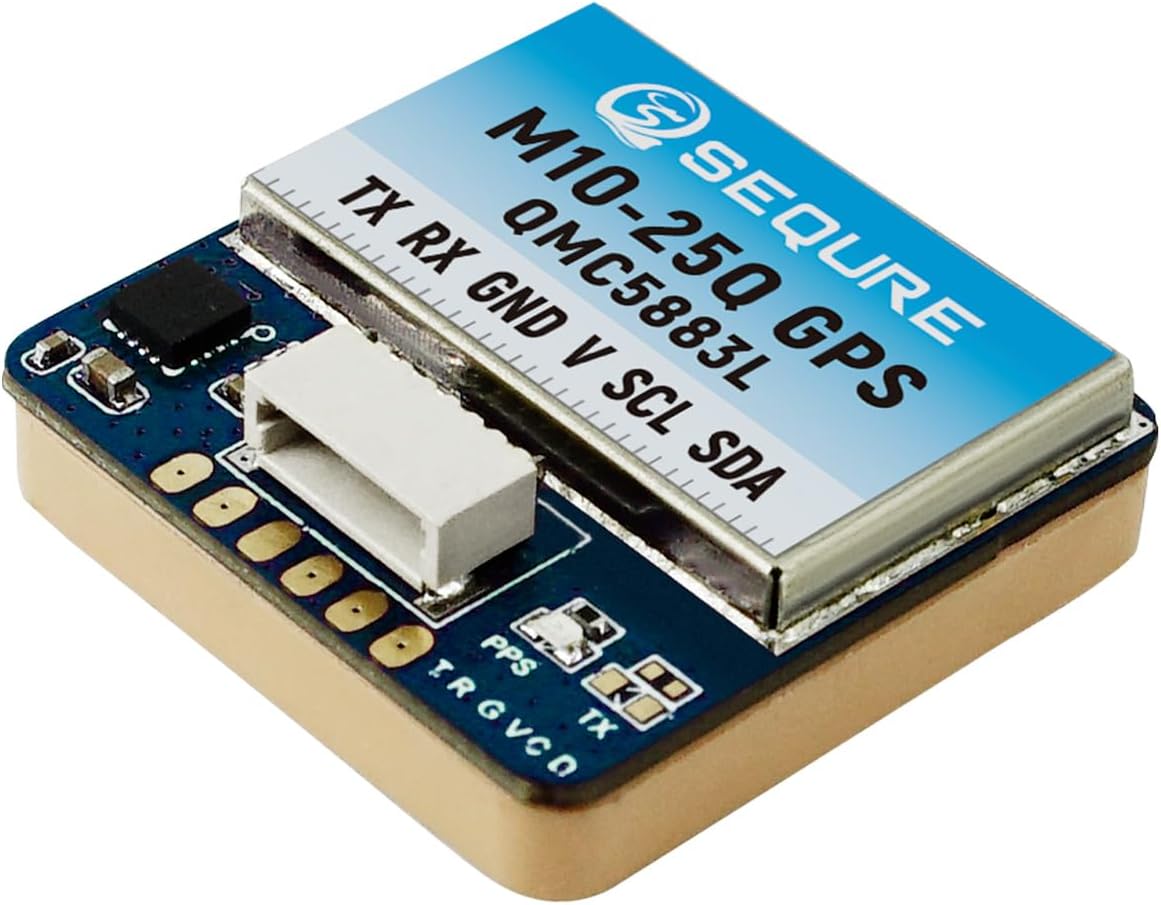
The SEQURE M10-25Q stands out as a top-tier GPS module for FPV drones, earning a high rating for its reliable performance. It features an upgraded 10th generation chip that ensures rapid satellite acquisition in various environments.
We may earn a commission when you buy through this link, at no additional cost to you.
Its dual protocol support allows flexibility for different flight controllers, while the integrated QMC5883L compass provides accurate heading data. The ceramic antenna ensures stable signal reception even during high-speed maneuvers.
While it offers a soldering-free plug-and-play option, some users may find the compact size challenging during initial installation. However, these trade-offs are minor compared to the robust navigation capabilities it delivers.
This module is ideal for racers and long-range pilots who need precise return-to-home functionality. We highly recommend it for anyone seeking a balance of performance and ease of use.
The external PCB design enhances antenna performance for consistent satellite locks.
Supports GPS, GLONASS, BDS, and GALILEO for broader coverage.
We may earn a commission when you buy through this link, at no additional cost to you.
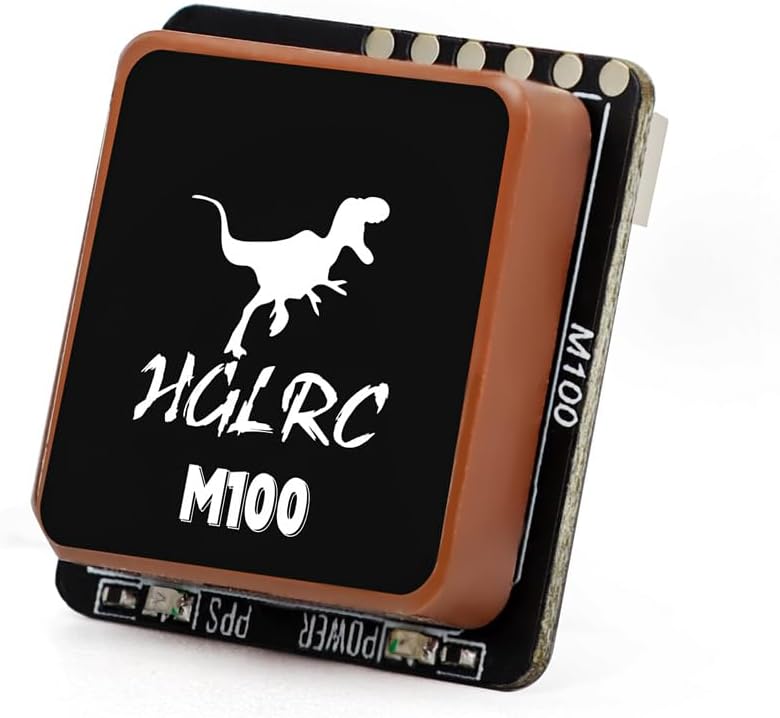
The HGLRC Mini M100 offers exceptional value for budget-conscious drone builders seeking reliable GPS functionality. It fits comfortably in drones ranging from 2 to 7 inches, making it versatile for various builds.
We may earn a commission when you buy through this link, at no additional cost to you.
Its ceramic antenna ensures strong signal reception, while the onboard power and PPS indicators make status checks effortless. The module accepts a wide voltage range, simplifying power supply setups.
Although it lacks an integrated compass, external compass options are readily available. The small size means careful mounting is needed to avoid interference, but the performance justifies this minor inconvenience.
Ideal for hobbyists and FPV racers, this module delivers core navigation features without unnecessary complexity. It remains a top choice for cost-effective drone navigation solutions.
Supports 3.3V to 5V DC input for easy integration.
LED indicators provide clear feedback on module activity.
We may earn a commission when you buy through this link, at no additional cost to you.
The JeeFly M8N is a premium GPS module designed for serious users requiring advanced navigation features. It supports multiple GNSS systems, ensuring high-precision positioning even in challenging environments.
We may earn a commission when you buy through this link, at no additional cost to you.
With a 10Hz update rate, it provides responsive data for autonomous flights and precise return-to-home functions. The integrated compass eliminates the need for external components, simplifying build layouts.
While it may require specific firmware configurations for certain models, the setup process is manageable. The price is higher than basic units, but the reliability and feature set justify the investment.
This module is perfect for professional pilots and robotics enthusiasts. It delivers the robust performance needed for complex missions and autonomous operations.
Seamlessly works with Pixhawk and PX4 flight controllers.
10Hz refresh rate ensures real-time navigation data accuracy.
We may earn a commission when you buy through this link, at no additional cost to you.
The HGLRC M100 Pro is engineered specifically for FPV fixed-wing UAVs, offering a robust navigation solution. Its upgraded 10th generation chip provides reliable performance across diverse flight conditions.
We may earn a commission when you buy through this link, at no additional cost to you.
The expanded 120-channel capacity ensures faster satellite acquisition, while the QMC5883L compass delivers precise heading data. This combination is crucial for maintaining stability in fixed-wing applications.
While it is tailored for specific drone types, the performance benefits are significant. Users may need to consider its size for smaller builds, but the features are well-suited for its intended purpose.
We recommend this module for fixed-wing enthusiasts prioritizing reliability and compass accuracy. It offers a dependable platform for autonomous and manual flight modes.
120 channels allow for better satellite signal acquisition.
Direct contact with HGLRC for assistance and updates.
We may earn a commission when you buy through this link, at no additional cost to you.
The HGLRC M100-5883 offers strong multi-GNSS support, enabling rapid satellite locks across GPS, Galileo, and BDS systems. Its compact design makes it suitable for a variety of UAV configurations.
We may earn a commission when you buy through this link, at no additional cost to you.
The ceramic antenna provides reliable signal stability, ensuring consistent performance during flights. Combined with the QMC5883 compass, it delivers accurate positioning and heading data for precise navigation.
Installation is straightforward, but users should verify controller compatibility to ensure seamless integration. The module is slightly heavier than some alternatives, yet the performance benefits outweigh this factor.
Ideal for FPV fixed-wing pilots, this module balances size and functionality effectively. It is a solid choice for those needing dependable navigation capabilities.
Supports GPS, Galileo, and BDS for faster locks.
At just 7.73g, it adds minimal weight to your drone.
We may earn a commission when you buy through this link, at no additional cost to you.
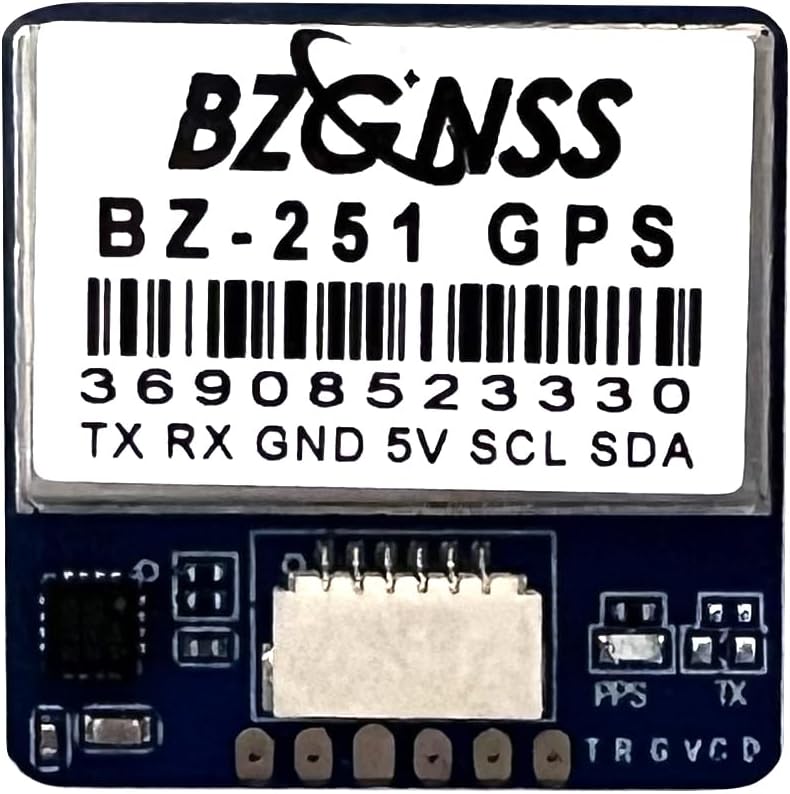
The BZGNSS BZ-251 excels in safety-oriented applications with robust fail-safe return-to-home capabilities. Its M10 chip ensures rapid and stable positioning even in complex signal environments.
We may earn a commission when you buy through this link, at no additional cost to you.
The dual protocol design offers versatility with NMEA and UBX compatibility, while the ceramic antenna's oil-sprayed coating enhances durability. This makes it a reliable choice for demanding flight scenarios.
While configuration may be required for specific controllers, the precision and safety features are top-notch. The 1.5m accuracy ensures confident navigation during autonomous operations.
This module is highly recommended for pilots prioritizing safety and reliability. It provides the critical data needed for effective rescue functions.
Oil-sprayed ceramic prevents oxidation and scratching over time.
10Hz refresh ensures real-time positioning during high-speed flights.
We may earn a commission when you buy through this link, at no additional cost to you.
The Readytosky M10 is designed specifically for Pixhawk 2.4.8 flight controllers, providing optimized performance. Its onboard FLASH memory retains configuration settings even after power cycles.
We may earn a commission when you buy through this link, at no additional cost to you.
With a high precision of 1.5m CEP, it ensures accurate navigation for mission-critical flights. The low power consumption makes it energy efficient for extended operations.
While it requires an external compass and limited to a specific controller, the integration is seamless. Users must verify compatibility before purchase to avoid fit issues.
This module is ideal for Pixhawk users seeking a dedicated solution. It delivers reliable performance tailored to the controller's architecture.
Onboard FLASH ensures settings are saved after power off.
1.5m CEP positioning accuracy in ideal environments.
We may earn a commission when you buy through this link, at no additional cost to you.
This BZGNSS module offers broad compatibility with both NMEA and UBX protocols, making it versatile for various setups. It is particularly well-suited for Speedybee flight controllers like the F405 and F722.
We may earn a commission when you buy through this link, at no additional cost to you.
The M10 chip ensures rapid satellite acquisition, even in challenging environments. Its built-in battery helps maintain stability in battery connections, enhancing reliability during operation.
Installation is simple due to its lightweight design, but users should confirm controller matches. The BDS satellite support adds valuable flexibility for different geographic regions.
We recommend this module for racing and fixed-wing pilots using Speedybee hardware. It delivers dependable performance with minimal setup complexity.
Built-in battery eliminates connection issues from poor power.
Compatible with both NMEA and UBX protocols seamlessly.
We may earn a commission when you buy through this link, at no additional cost to you.
The AERO SELFIE FK-C1 is a highly compact GPS module ideal for space-constrained drone builds. Its 20x20mm dimensions and 7g weight make it perfect for racing and FPV drones.
We may earn a commission when you buy through this link, at no additional cost to you.
Powered by the M9 chipset, it supports multiple constellations for enhanced accuracy in challenging environments. The integrated IST8310 compass ensures reliable heading control and navigation.
While its small size is a major advantage, careful mounting is required to avoid magnetic interference. The LED indicator provides clear feedback on 3D GNSS fix acquisition.
This module is recommended for lightweight builds prioritizing minimal footprint. It offers robust navigation features without adding unnecessary bulk.
20x20mm x 8mm design fits tight drone frames easily.
GPS, GLONASS, Galileo, and BeiDou up to 32 satellites.
We may earn a commission when you buy through this link, at no additional cost to you.
The FK-D1 GNSS module is designed for drones and robotics applications needing precise and reliable navigation. Its 10th generation chip offers a 10Hz update rate for real-time performance.
We may earn a commission when you buy through this link, at no additional cost to you.
With UART interface and internal flash memory, configuration is saved automatically across power cycles. It supports GPS, GLONASS, Galileo, and BeiDou for comprehensive satellite tracking.
While it is slightly heavier than micro modules, the signal reception and integration benefits are substantial. It is ideal for systems requiring stable connectivity without repeated setup.
We suggest this module for robotics and drone projects needing versatile connectivity. It delivers consistent performance across varied operational environments.
Built-in flash memory saves settings after configuration.
Supports INAV, Betaflight, Ardupilot, and PX4 controllers.
We may earn a commission when you buy through this link, at no additional cost to you.
Selecting the right GPS module requires evaluating several technical and practical factors to ensure compatibility and performance with your drone platform.
Modern GPS modules often use the 10th generation u-blox M10 chip for rapid acquisition. A 10Hz update rate provides real-time data critical for racing or autonomous flights.
An integrated compass like QMC5883L helps with heading and directional control without extra wiring. External options exist but require careful placement to avoid magnetic interference.
Ensure the module supports protocols like NMEA or UBX that your flight controller can read. Dual protocol options offer flexibility if you switch systems frequently.
For FPV racing drones, weight and size are critical. Compact modules like 20x20mm help maintain balance while larger units fit better on fixed-wing aircraft.
Modules supporting multiple systems like GPS, GLONASS, Galileo, and BeiDou acquire more satellites. This improves accuracy and reliability in urban or forested areas.
Ceramic antennas with external PCBs ensure stronger signal reception than standard units. Durability features like oil-sprayed coatings help in outdoor environments.
Check voltage inputs like 3.3V-5V to match your drone's power system. Lower consumption helps extend flight time, especially for battery-powered builds.
Plug-and-play options simplify setup, while soldering offers more stable connections. Mounting bases help secure the module properly to prevent vibration damage.
When mounting the module, ensure it is placed away from motor wires and other sources of magnetic interference to maintain compass accuracy. Use foam or rubber mounts to dampen vibrations that could affect sensor performance.
Configure your flight controller to recognize the specific protocol and update rate of the GPS. Verify that the LEDs indicate a 3D GNSS fix before taking off to ensure safe autonomous functions.
Regularly inspect the antenna for scratches or damage to prevent signal degradation. Store your drone in a dry place to protect the electronics from moisture and extreme temperatures.
GPS refers specifically to the American satellite system, while GNSS includes all global systems like GLONASS, Galileo, and BeiDou. Using GNSS allows for more satellites and better accuracy.
Many modern modules have integrated compasses, but some require external ones. Check your module specs and flight controller requirements to decide if an internal compass is sufficient.
LED indicators typically flash during satellite search and stay solid once locked. Verify the status lights or flight controller software to ensure a 3D GNSS fix is achieved.
Not all modules are universal. Verify protocol compatibility like UBX or NMEA and voltage requirements to ensure seamless integration with controllers like Pixhawk or Betaflight.
Factors include nearby metal structures, power wires, and antenna placement. Ceramic antennas with proper orientation help mitigate interference for stable signal reception.
A 10Hz rate refreshes position data ten times per second, providing real-time accuracy. This is crucial for racing drones or autonomous return-to-home functions.
Mount the module as far from motors and power wires as possible. Use non-magnetic mounts and ensure the antenna has a clear view of the sky.
Some modules use plug-and-play setup, while others require NMEA or UBX configuration via flight controller software. Always check the manual for specific steps.
The SEQURE M10-25Q, HGLRC Mini M100, and JeeFly M8N represent top choices for performance, budget, and premium needs respectively. Each offers distinct features to match different drone types and pilot requirements.
Prioritize chip generation and GNSS support to ensure reliable navigation in various environments. Consider weight and protocol compatibility to guarantee seamless integration with your flight controller.
Always verify current availability and pricing before purchasing since product details may change. With the right GPS module, you can enjoy safer and more precise flight operations.