
Siraya Tech Tenacious Flex Black
4.7Editor score
Soft rubber-like flexible resin
Superior elasticity and fast rebound
Excellent for shock-absorbing components
This guide compares the top 10 flexible resins for 3D printing based on toughness, flexibility, print speed, and durability to help you choose the right
Flexible resin for 3D printing allows creators to produce parts that bend, stretch, and absorb shock without breaking. These materials are essential for making gaskets, grips, toys, and functional prototypes that require durability and elasticity in real-world applications.
We evaluated ten leading flexible resin products from top manufacturers like ANYCUBIC, SUNLU, Siraya Tech, and ELEGOO. Our analysis focused on Shore hardness, elongation at break, print speed compatibility, odor levels, and overall performance in LCD and DLP printers.
Each pick highlights key strengths and ideal use cases for different project needs. While we provide accurate details based on manufacturer data, note that pricing and availability can change over time. Always check the latest product listings before making a purchase decision.
4.7Editor score
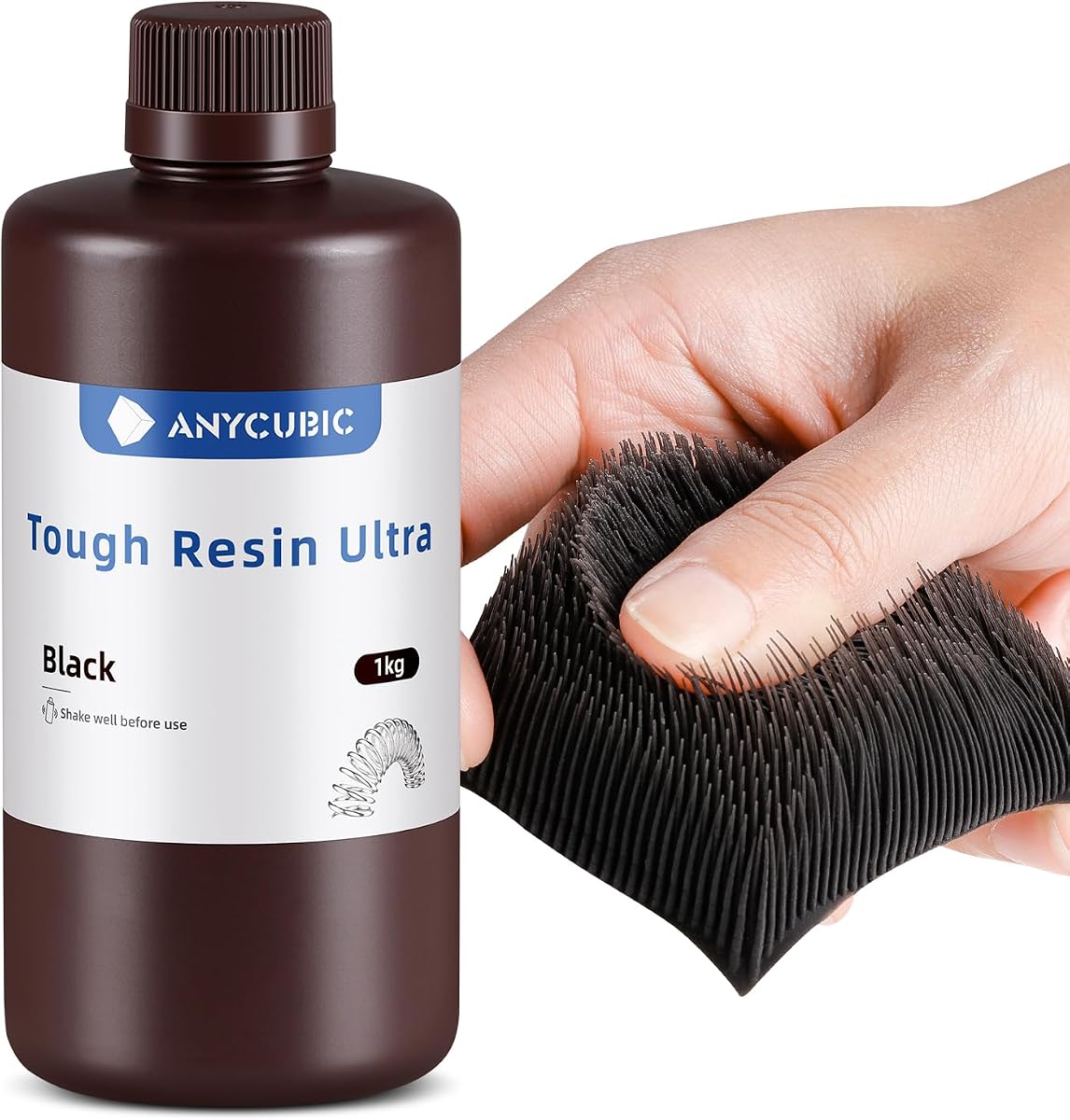
4.7Editor score
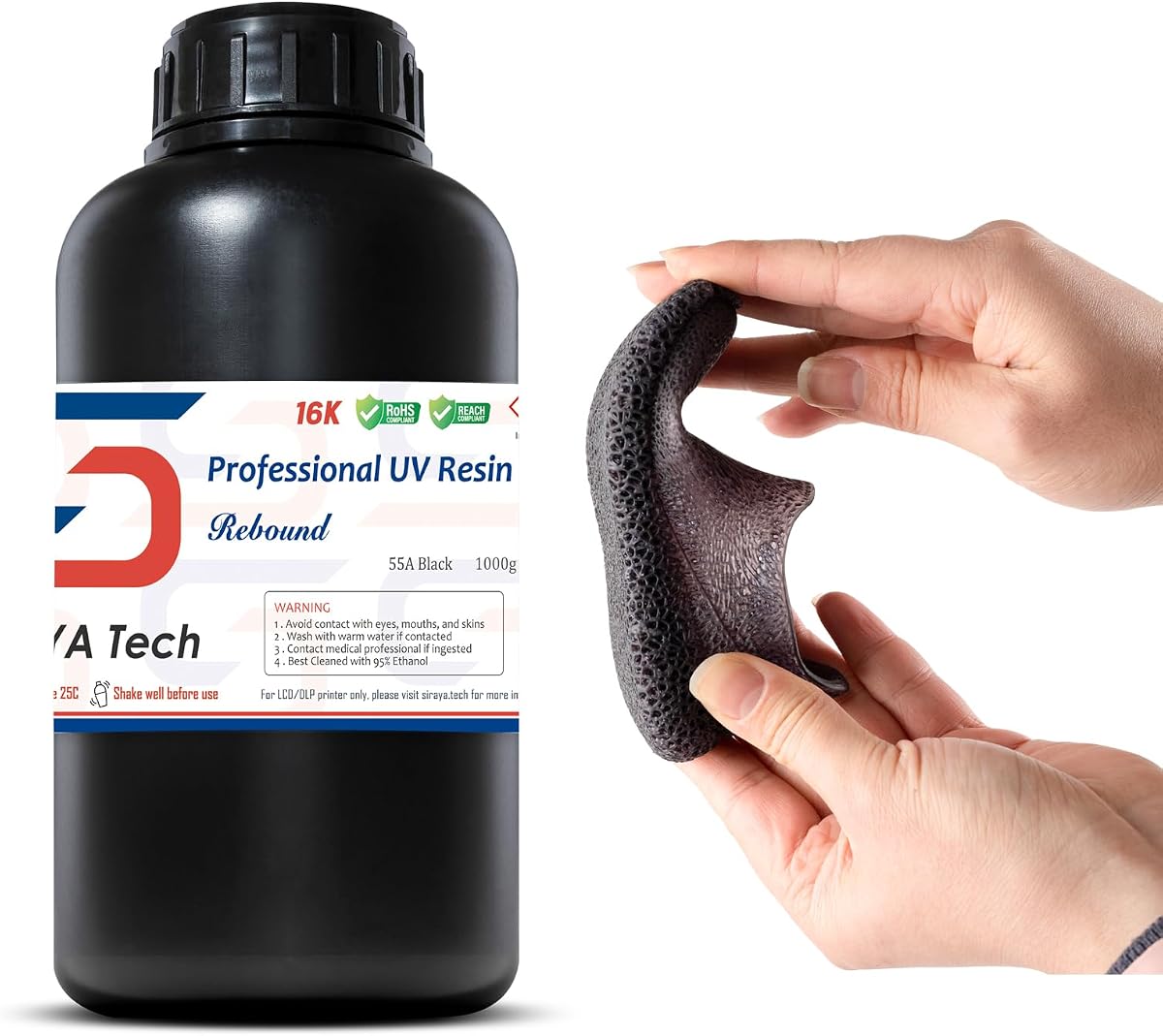
4.2Editor score
The following comparison table summarizes the key specifications and features of each flexible resin product. Use this side-by-side view to quickly identify which material best fits your printer type and project requirements.



The ANYCUBIC Ultra Tough Resin stands out as a top choice for creators needing reliable flexible prints. With a strong rating of 4.7 out of 5, it delivers exceptional impact resistance and flexibility suitable for a wide range of projects.
We may earn a commission when you buy through this link, at no additional cost to you.
Its standout qualities include superb flexibility that allows models to recover their shape after deformation. This resin excels at creating hair-like textures and seamless movement in articulated models. The cured surface is non-irritating, making it safe for wearable items like earphone covers.
While it performs excellently, blending it with other resins might affect final colors if different shades are mixed. However, using the same color avoids this issue. Proper curing ensures optimal performance and durability in varying environmental conditions.
Buyers looking for a versatile flexible resin for functional prototypes or wearables will find this product highly effective. It combines durability with adaptability, making it an ideal choice for both direct use and enhancing other resin formulations.
This resin facilitates seamless movement and interchangeability of parts in printed models, perfect for complex designs requiring articulation.
The cured resin provides a non-irritating experience on the skin, enhancing wearability for daily-use prototypes like jewelry or wearable accessories.
We may earn a commission when you buy through this link, at no additional cost to you.
Siraya Tech Tenacious Flex Black offers a softer and more rubber-like alternative to the classic Tenacious resin. Rated 4.7 out of 5, it provides incredible elasticity and faster rebound for resilient 3D prints at a competitive price point.
We may earn a commission when you buy through this link, at no additional cost to you.
This formulation withstands extreme bending and compression, quickly returning to its original shape. The superior elasticity allows for dynamic flexible prints with high impact resistance. It is specifically designed for projects needing soft grips, gaskets, and shock-absorbing components.
While versatile, it may not suit all applications where the original Tenacious resin is used due to its distinct softness. Users should test for compatibility in rigid projects. Mixing it as an additive can boost impact resistance in other resins effectively.
For budget-conscious makers needing high flexibility, this resin delivers outstanding value. Its ability to enhance other resins and its excellent performance in shock-absorbing applications make it a practical choice for prototypes and end-use parts.
Compared to the original Tenacious resin, this version offers superior elasticity allowing for more dynamic and flexible prints with quick shape recovery.
Adding a small amount to other resins including tough resins can significantly enhance impact resistance and flexibility of your prints.
We may earn a commission when you buy through this link, at no additional cost to you.
Siraya Tech Rebound 55A provides significantly faster rebound than standard elastic resins, making it a premium choice for high-performance applications. It holds a 4.2 out of 5 rating, reflecting its promising durability and balanced flexibility and structural integrity.
We may earn a commission when you buy through this link, at no additional cost to you.
This resin offers a good mix of flexibility and structural integrity, softer than Tenacious Flex while maintaining excellent compression properties. It is well-suited for personal protective equipment prototypes, shock-absorbing components, and industrial prototyping like gaskets and seals where elasticity is critical.
While initial testing shows good resilience during compression cycles, long-term performance testing is still ongoing. This means users might want to monitor durability over extended use. However, it prints on standard LCD and DLP printers without special cleaning requirements.
Investors in premium materials for shock-absorbing components will appreciate this resin's fast rebound action. Its ease of use and compatibility with standard printing methods make it a compelling option for those needing reliable elasticity and impact absorption.
This resin provides significantly faster rebound than standard elastic resins, ideal for applications needing quick shape recovery and impact absorption.
Unlike other elastomers requiring A/B mixing, Rebound 55A prints on standard LCD and DLP printers and cleans with standard isopropyl alcohol methods.
We may earn a commission when you buy through this link, at no additional cost to you.
Superflex 3D Printer Resin is known for its fast printing capabilities, allowing users to print 50um layers in just 1.7 seconds on monochrome LCD printers. With a 4.4 out of 5 rating, it combines speed with balanced softness and strength for reliable flexible prototypes.
We may earn a commission when you buy through this link, at no additional cost to you.
This resin has an 80A Shore hardness and 100% elongation at break, making it well-suited for cushioning, damping, and shock absorption. It passes the ISO 10993-5 test when properly cleaned and fully post-cured, ensuring safe use in specific environments.
While efficient, the 500g bottle size may require more frequent purchases for larger production runs. The clear color option limits aesthetic choices compared to colored options. However, productivity gains from fast printing offset these minor inconveniences for many users.
For those prioritizing printing speed and productivity in a farm setting, Superflex offers significant advantages. Its ability to enhance productivity by at least 40% makes it a practical choice for businesses needing quick turnaround times on flexible parts.
Super fast printing enhances the productivity of 3D printing farms by at least 40% and up, saving significant time and electricity bills.
Properly cleaned and fully post-cured Superflex prints pass the ISO 10993-5 test, ensuring safety for applications requiring biocompatibility standards.
We may earn a commission when you buy through this link, at no additional cost to you.
SUNLU Flexible 3D Printer Resin offers a perfect balance of softness and strength, simulating rubber for durable flexible prototypes. Rated 3.5 out of 5, it provides excellent impact resistance with a 135% elongation at break for durable models.
We may earn a commission when you buy through this link, at no additional cost to you.
This resin features a high-resolution smooth surface finish that is non-sticky after cleaning. It has minimal odor and low shrinkage, ensuring accurate size and shape of printed parts. The leak-proof bottle design reduces damage risk during transportation.
The aromatic odor is described as not pungent, but it may be noticeable in small spaces. The lower rating suggests some variability in print quality compared to premium options. However, its good stability and wide compatibility make it a solid choice for general needs.
Makers looking for an affordable flexible resin with consistent quality will find this product suitable for manufacturing needs. Its resistance to weak acids and greases ensures parts do not deform easily, making it reliable for standard functional parts.
During the curing process, the flexible resin has a low shrinkage rate, providing accurate size and shape of the printed parts.
Compatible with 99% of printers on the market including LCD, DLP, and SLA, this resin has a 365-405nm printing wavelength.
We may earn a commission when you buy through this link, at no additional cost to you.
ANYCUBIC Tough Resin 2.0 has undergone a comprehensive upgrade in terms of flexural strength, offering enhanced toughness for thinner models. With a 4.6 out of 5 rating, it delivers high precision and high flexibility resistant to peeling and cracking.
We may earn a commission when you buy through this link, at no additional cost to you.
Its formulation is low-odor and non-irritating, reducing volatile organic compounds for a comfortable printing environment. The resin boasts excellent precision with minimal shrinkage, resulting in smooth surfaces and clear details for industrial or spare parts production.
While effective for high-strength model production, the grey color may not be ideal for clear or colorful projects. Users should verify printer compatibility though it is designed for most LCD resin 3D printers. It remains a robust option for rigid requirements.
Industrial makers and engineers requiring durable parts with minimal breakage will benefit from this tough resin. Its strong elongation ensures models remain intact even when dropped, making it a reliable choice for structural components and building models.
The resin has undergone a comprehensive upgrade in terms of flexural strength making it less prone to fracture when printing miniature components.
Its formulation significantly reduces volatile organic compounds making it a green and environmentally friendly choice for printing environments.
We may earn a commission when you buy through this link, at no additional cost to you.
SUNLU High Toughness 3D Resin provides long-lasting toughness and elongation 5 times higher than regular standard resin. Rated 4.7 out of 5, it offers excellent flexibility and bendability making 3D printed models unbreakable and durable.
We may earn a commission when you buy through this link, at no additional cost to you.
Low viscosity and high flowability result in shorter curing times and easier model formation. With lower shrinkage, the potential for distortion is reduced allowing you to achieve best-in-class accuracy. It prints well with most LCD and DLP printers.
Some users note that the grey color may limit design options compared to transparent versions. The bottle and packaging are designed to reduce damage during shipping. The odor is lower than other resins on the market for comfort.
Makers needing structural parts that can withstand significant stress will find this resin highly effective. Its focus on printing stability and reduced volume shrinkage improves success rates, making it a practical choice for solid models and high-toughness projects.
The R&D team focuses on improving printing stability and reducing volume shrinkage during the curing process for better model integrity.
With lower shrinkage, the potential for distortion in 3D printed models is reduced allowing you to achieve best-in-class accuracy.
We may earn a commission when you buy through this link, at no additional cost to you.
ELEGOO Tough Resin offers excellent flexibility and extraordinary resilience with a Shore hardness of 84.7D exceeding that of many others. Rated 4.5 out of 5, it is easy to bend but not easy to break, with strong damage resistance and high-strength physical properties.
We may earn a commission when you buy through this link, at no additional cost to you.
This resin shows excellent resistance to brittleness, softening, and corrosion even in high humidity environments. Its fine texture allows drilling without cracks making it suitable for structural parts, tools, and functional prototypes that need to withstand certain tension and stress.
The high hardness may make it less ideal for applications requiring extreme softness or elasticity. Users focused on very flexible parts might prefer a softer Shore rating. However, the low odor makes it comfortable for workshop environments without pungent smells.
Engineers and designers needing reliable functional prototypes or end-use parts will find this resin highly capable. Its ability to withstand impacts and maintain elasticity ensures excellent performance under extreme temperature conditions for diverse industrial applications.
It has high-strength physical properties and can withstand certain impacts making it very suitable for printing structural parts and tools.
The finished resin can be drilled without cracks ensuring durability and structural integrity for high-performance models in demanding environments.
We may earn a commission when you buy through this link, at no additional cost to you.
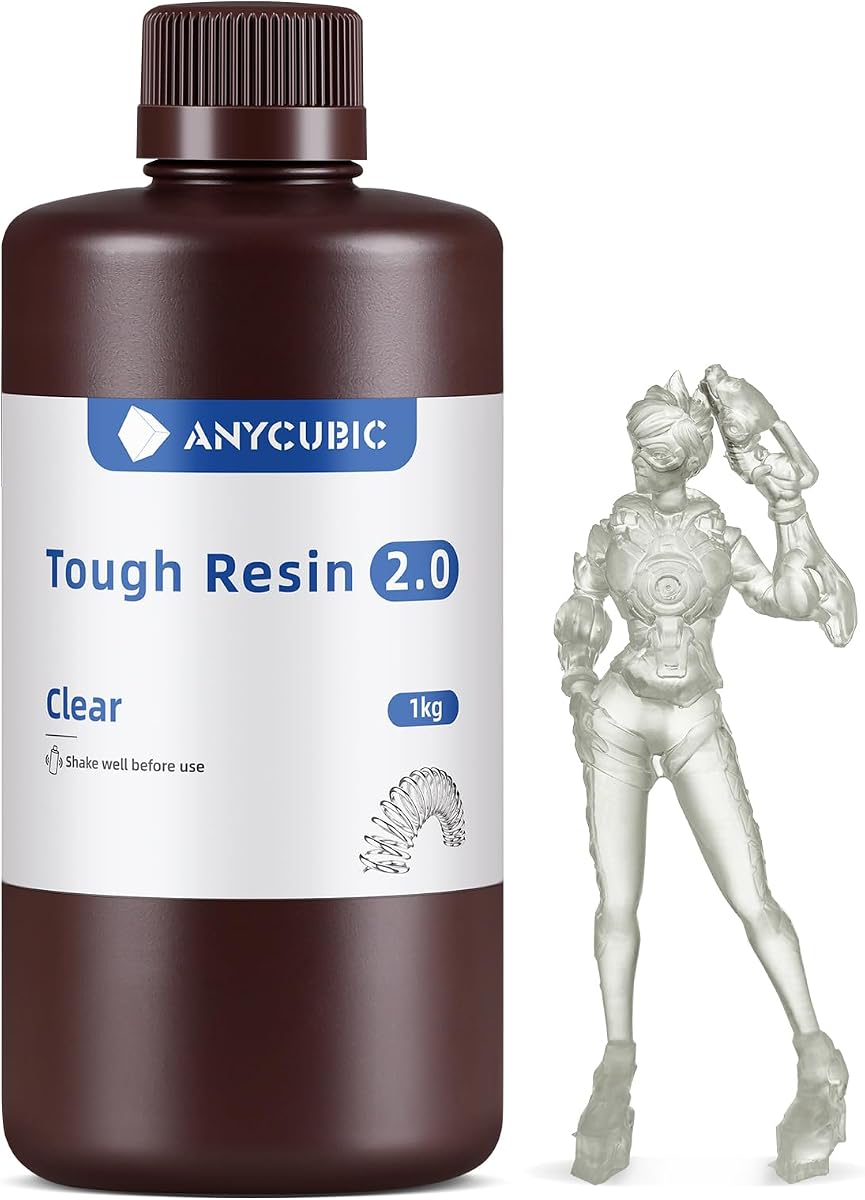
ANYCUBIC Tough Resin 2.0 Clear has achieved a significant enhancement in flexural strength, offering superior toughness to reduce breakage. Rated 4.6 out of 5, it delivers minimal odor and high precision for pleasant and accurate printing results in clear applications.
We may earn a commission when you buy through this link, at no additional cost to you.
This flexible tough resin offers exceptional strength and flexibility, resisting damage caused by cyclic vibrations. It ensures high-precision prints with minimal shrinkage, making it suitable for delicate components and thin models that need to remain intact under stress.
While the clear finish is useful, it may reveal imperfections or bubbles that colored versions can hide. The minimal odor design is a significant benefit for comfort during extended printing sessions. Users should verify printer compatibility for their specific setup.
Designers requiring transparent parts with high durability will appreciate this resin's balance of strength and clarity. Its versatility for industrial applications and compatibility with different equipment makes it a reliable choice for precision clear prototypes and functional parts.
The resin offers superior toughness significantly reducing the likelihood of breakage when printing delicate components and thin models.
Its composition is gentle on users drastically cutting down volatile organic compounds for a serene and pleasant printing environment.
We may earn a commission when you buy through this link, at no additional cost to you.
This flexible and upgraded tough resin features a 90A Shore hardness that simulates the toughness of rubber with both softness and strength. Rated 4.4 out of 5, it delivers crisp accurate prints with a low-odor formula ideal for technical applications.
We may earn a commission when you buy through this link, at no additional cost to you.
The product can be folded and bent repeatedly without breaking, offering strong tear resistance and good bending resistance. It is suitable for gaskets, protective cases, and ergonomic grips that need to stay flexible under repeated stress without wearing out or cracking.
Some users note that ventilation is recommended due to the low-odor formula not being zero-odor. The black color may limit options for those needing transparent or bright colors. However, the impact-durable nature makes it robust for frequently handled parts.
Makers, engineers, and designers needing reliable performance for prototypes or end-use parts will find this resin effective. It works great on most LCD and DLP printers handling tasks from shock-absorbing components to cosplay props with dependable toughness.
The resin delivers high elongation and excellent tear resistance making it the go-to choice for parts needing to stay flexible under repeated stress.
Say goodbye to cracked prints and broken models as this specialized formula keeps its cool under stress and bends where ordinary resins snap.
We may earn a commission when you buy through this link, at no additional cost to you.
Selecting the right flexible resin involves evaluating several technical factors to ensure compatibility with your printer and project needs.
Shore hardness measures the material's stiffness or flexibility. A lower number indicates a softer, more flexible rubber-like consistency while a higher number means a stiffer tough flexible part.
Choose Shore A values between 50 and 80 for rubber-like flexible parts and higher values for tough but still bendable components.
Elongation at break shows how much a material can stretch before breaking. Higher percentages mean the printed part can deform more without snapping under tension.
Look for resins with high elongation percentages to ensure your parts can withstand repeated bending or stretching cycles.
Impact resistance determines how well a printed part survives drops or shocks without cracking. High impact resistance is vital for protective cases and structural prototypes.
Select resins that explicitly mention high toughness or impact resistance to avoid brittle failures during testing.
Flexible resins often require specific curing times and wavelengths to balance flexibility and strength. Faster curing can improve productivity but may affect final mechanical properties.
Check the recommended curing times and printer wavelength compatibility to ensure your setup can handle the resin effectively.
Not all flexible resins work with every LCD or DLP printer. Verify that the resin is designed for your printer's screen type and UV wavelength for successful layer adhesion.
Ensure the resin is labeled as compatible with your specific LCD DLP or SLA printer model before purchasing.
Shrinkage affects the final dimensions and accuracy of printed parts. Low shrinkage resins help maintain precise tolerances especially for functional components.
Prioritize resins with low shrinkage rates to minimize deformation and ensure accurate fit for mechanical assemblies.
Flexible resins can vary in odor and chemical safety. Some emit strong smells or VOCs requiring ventilation while others are low-odor and safer for indoor use.
Choose low-odor and non-irritating resins if you are printing in enclosed spaces or need skin-safe materials for prototypes.
Your project goals determine the best resin type. Soft rubber-like parts need different properties than shock-absorbing or rigid flexible components.
Match the resin's properties to your application needs such as wearing, protective covers, or industrial prototypes for optimal results.
Shake the resin bottle thoroughly before each use to ensure uniform distribution of flexible components. Pour the resin slowly to avoid air bubbles which can weaken printed layers and compromise flexibility.
Follow the manufacturer's recommended print settings for exposure time and layer height to achieve proper curing and flexibility. Flexible resins may need slightly longer exposure than standard resins to prevent soft or under-cured prints.
Clean prints with isopropyl alcohol using gentle handling to prevent premature deformation before curing. After cleaning, post-cure under UV light to stabilize the mechanical properties and improve durability over time.
Most flexible resins are designed for LCD DLP and SLA printers using 365-405nm wavelengths. Always check the product specifications to confirm compatibility with your printer model.
Flexible resin requires post-curing under UV light to stabilize its mechanical properties. Follow recommended time and intensity settings for optimal strength and flexibility.
Some flexible resins can be mixed with other resins to enhance toughness or flexibility. Use the same color when blending to avoid unpredictable color changes.
Flexible resin typically lasts up to a year when stored in a cool dark place. Check expiration dates and seal bottles tightly to prevent premature curing.
Use gloves and a mask when handling flexible resin to avoid skin contact and inhalation of fumes. Ensure adequate ventilation during printing.
Insufficient exposure or incorrect settings can lead to poor layer adhesion. Adjust exposure times and bed height for your specific printer.
The top flexible resins for 3D printing offer a range of performance qualities from fast printing to high shock absorption. AnyCubic Ultra Tough and Siraya Tech Tenacious Flex stand out for overall durability and ease of use.
Prioritize resins with high elongation and impact resistance if your projects involve repeated stress or functional parts. Balancing hardness and flexibility ensures your prints meet both structural and aesthetic requirements.
Always verify current product listings and compatibility before purchase since formulations and availability can change. Selecting the right material today will improve your workflow and project outcomes in the long run.