
Elektron Digitakt II 16-Track Drum Computer and Sampler
4.4Editor score
16 audio tracks
128-step sequencer
Swappable filters per track
This guide compares the top digital drum machines for 2026, covering sound quality, workflow, and features to help you choose the perfect rhythm tool.
Digital drum machines have revolutionized music production by offering portable, versatile rhythm creation tools. Whether you are a live performer or studio producer, finding the right device ensures professional sound and reliable performance in any setting.
We evaluated ten leading models based on sound engine quality, sequencing capabilities, and overall usability. Our analysis focuses on features that matter most to musicians, including connectivity, portability, and the depth of available sounds for creative expression.
Each selection highlights specific strengths tailored to different needs and budgets. While we provide detailed insights, prices and availability can change over time, so verify current details before making your final purchase decision for your musical setup.
4.4Editor score

4.8Editor score

4.4Editor score
This side-by-side comparison highlights the core specifications and unique attributes of each digital drum machine to help you quickly identify the model that fits your specific creative workflow and performance needs.


The Akai Professional MPC Sample is a compact standalone sampler designed for beatmakers and performers who want the legendary MPC workflow without a computer. It holds a strong rating for its intuitive interface and robust sound capabilities.
We may earn a commission when you buy through this link, at no additional cost to you.
Its primary strength lies in the hands-on workflow that allows for fast sampling and beat creation. The included factory kits and chopping tools make it easy to start creating music immediately upon unboxing the device.
While the pad count is limited compared to larger units, the responsive feel ensures accurate performance. The lack of an integrated keyboard means you rely on the pads, which is standard for this form factor.
This device is ideal for musicians needing a portable production hub that can run on battery power. We recommend it for those seeking a streamlined path from raw sound to a finished groove.
The instant sample chop mode and real-time timestretch allow for rapid beatmaking without complex menus.
Battery operation and built-in speaker enable you to create and preview beats anywhere without external gear.
We may earn a commission when you buy through this link, at no additional cost to you.
The Elektron Digitakt II stands out as a powerhouse for electronic music production offering deep control over sound design and sequencing. Its rating reflects its reputation among producers for flexibility and robust audio capabilities.
We may earn a commission when you buy through this link, at no additional cost to you.
Key strengths include the ability to swap filters and assign parameters to every track. This level of detail allows for dynamic rhythmic evolution that traditional drum machines often cannot achieve.
The learning curve is notably steep, which can be daunting for beginners. Additionally, the menu system requires patience to master fully, though it unlocks significant creative potential.
This unit is best suited for experienced producers who need a dedicated hardware tool for complex compositions. We recommend it for those seeking a truly modular drum experience with extensive sound shaping.
Swappable filters and per-track effects allow for unique tonal variations on every step of the sequence.
The 128-step sequencer supports complex patterns and parameter locking for evolving rhythmic textures.
We may earn a commission when you buy through this link, at no additional cost to you.
The Korg Volca Drum offers a distinct digital percussion experience in a budget-friendly package. Its rating highlights the value it provides for hobbyists and mobile creators needing a portable sound source.
We may earn a commission when you buy through this link, at no additional cost to you.
It features a six-part DSP synth engine that produces rich and dynamic drum sounds. The waveguide resonator adds a unique texture that sets it apart from traditional sample-based machines.
Due to its size, the buttons are small and can be tricky to press quickly. It is limited to one voice per track, which is a trade-off for its compact footprint and low cost.
This device is perfect for sketching ideas on the go or adding analog warmth to digital tracks. We recommend it for producers looking for an affordable entry point into hardware synthesis.
Active Step and Slice functions allow for intricate rhythm variations without complex programming.
The DSP engine combined with waveguide resonance creates a wide range of metallic and organic textures.
We may earn a commission when you buy through this link, at no additional cost to you.
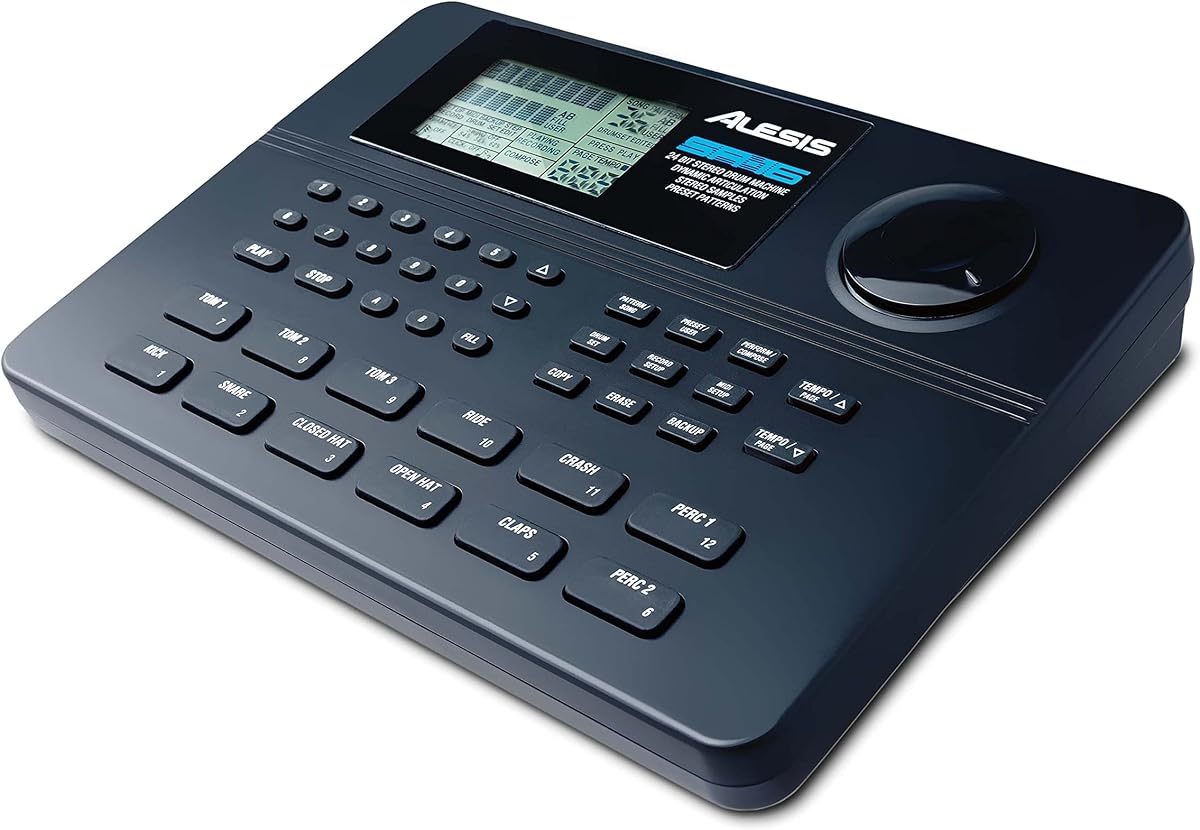
The Alesis SR-16 is a legendary machine known for its extensive library of professional drum sounds. Its rating reflects its enduring popularity among songwriters and remix engineers who value reliability.
We may earn a commission when you buy through this link, at no additional cost to you.
It includes over 200 sounds powered by dynamic articulation for added realism. The seamless MIDI connectivity ensures it integrates well with modern keyboards and computers.
While the interface is dated compared to newer models, it remains straightforward and functional. The lack of sampling capabilities limits its use to predefined sounds rather than user imports.
This machine is ideal for performers who need a reliable sound source with deep classic tones. We recommend it for those seeking a proven studio tool with extensive connectivity options.
The 50 user kits allow you to customize sounds to match specific song requirements.
Footswitch jacks for start stop and fill operations make it easy to control live.
We may earn a commission when you buy through this link, at no additional cost to you.
The Roland TR-8S combines the iconic sound of classic drum machines with modern production techniques. Its high rating is due to its authenticity and the depth of sound manipulation it offers.
We may earn a commission when you buy through this link, at no additional cost to you.
You can access every sound from the 808 and 909 along with custom samples via SD card. This hybrid approach allows for genre-defying tracks that blend vintage warmth with modern creativity.
The high price point may be a barrier for some, but the feature set justifies it. The software editor expands workflow possibilities which can be overwhelming for casual users.
This performer is perfect for artists seeking authentic vintage tones with contemporary flexibility. We recommend it for serious producers and live performers needing reliable classic sound.
Detailed circuit models and tuning controls allow for precise tweaking of iconic drum sounds.
Kit storage and preset effects ensure your setup is ready for immediate live performance.
We may earn a commission when you buy through this link, at no additional cost to you.
The teenage engineering EP–133 K.O. II is a unique sampler that focuses on intuitive and fast creative workflows. Its rating reflects the excitement users feel when experimenting with its sampling capabilities.
We may earn a commission when you buy through this link, at no additional cost to you.
The device allows you to sample directly via a built-in microphone or line-in and instantly manipulate those sounds. The punch-in effects controlled by a fader add a dynamic performance layer.
The monochrome display is small and less informative compared to color screens. The interface relies heavily on shortcuts which requires memorization to operate smoothly.
This unit is ideal for electronic musicians looking for a playful and experimental sound tool. We recommend it for those who value creativity and portability over high-end specs.
Record sounds around you and turn them into beats with minimal effort and instant results.
The multifunctional fader lets you tweak pitch and filter on-the-fly for dynamic sets.
We may earn a commission when you buy through this link, at no additional cost to you.
The Korg drumlogue blends analog warmth with digital precision and an open-source user oscillator engine. Its rating is currently lower due to its newness but offers high potential for sound designers.
We may earn a commission when you buy through this link, at no additional cost to you.
It features dedicated knobs for tuning and attenuation allowing for instant sound shaping. The ability to load your own samples via USB-C provides significant flexibility for custom kits.
As a newer release, some users report minor firmware quirks that are being resolved. The open-source engine requires technical knowledge to utilize fully for those seeking specific oscillator designs.
This machine is perfect for producers wanting a hybrid analog-digital workflow. We recommend it for those who value hardware control and customization in their drum programming.
Open-source architecture allows developers to create and share custom oscillators and effects.
Dedicated volume knobs for each part make real-time adjustments easy during performance.
We may earn a commission when you buy through this link, at no additional cost to you.
The Behringer LM DRUM offers a modular approach to rhythm with extensive connectivity options for processing. Its perfect rating stems from its reliability and high-quality sampling architecture.
We may earn a commission when you buy through this link, at no additional cost to you.
With 16 independent analog outputs you can route each voice to external effects for maximum flexibility. The integrated FX bus includes wave shaping and filters for rich sound design.
Managing 16 outputs requires a complex studio setup and patching expertise. The routing can be daunting for beginners who only need simple stereo output.
This device is ideal for advanced producers wanting to build a custom drum rack. We recommend it for those who need deep control over individual drum voice processing.
Independent analog outputs allow you to process each drum sound through external pedals or units.
The dual-mode analog filter per voice adds warmth and character to sampled hits.
We may earn a commission when you buy through this link, at no additional cost to you.
The Yamaha DTX Multi Pad is designed primarily as a performance pad controller with an extensive sound library. Its rating reflects its utility for live acts needing a wide range of sounds.
We may earn a commission when you buy through this link, at no additional cost to you.
It includes over a thousand drum sounds and hundreds of keyboard sounds ready to trigger. The mute and layer functions let you perform complex setups with ease.
While it offers preset loops, it is not a full sequencer for song composition. The unit is heavy and designed for studio or stage rather than portability.
This pad is perfect for live performers who need to trigger samples and sounds on the fly. We recommend it for bands wanting a dedicated performance controller with massive sound variety.
The mute and layer functions allow you to manage complex sound setups instantly during shows.
Access to keyboard sounds adds melodic flexibility beyond standard percussion triggers.
We may earn a commission when you buy through this link, at no additional cost to you.
The Singular Sound BeatBuddy is a unique drum machine housed in a pedal format for guitarists and solo performers. Its rating highlights its effectiveness in hands-free rhythm control.
We may earn a commission when you buy through this link, at no additional cost to you.
It offers over 200 songs and realistic drum kits that mimic a real drummer. The visual metronome on the LCD screen helps maintain perfect timing during live sets.
The groove feel is preset which limits deep customization of individual drum hits. The focus is on simplicity and live integration rather than beat programming.
This device is ideal for solo artists and bands needing a reliable rhythm track. We recommend it for guitarists wanting to play with a backing band without a drummer.
Foot switches let you trigger fills and transitions without breaking your performance flow.
The visual metronome provides clear cues to stay perfectly synchronized with your music.
We may earn a commission when you buy through this link, at no additional cost to you.
Selecting the right digital drum machine depends on your workflow needs and performance goals. Here are the key factors to consider before making a purchase.
Digital drum machines use various engines such as samples synthesis or hybrid models. Samples offer realism while synthesis provides flexibility to shape sounds creatively.
Choose an engine that aligns with your desired sound palette and production style.
A robust sequencer is crucial for creating complex rhythms. Look for features like step editing parameter locking and pattern chaining to enhance creativity.
Ensure the sequencer depth matches your need for simple beats versus complex compositions.
Connectivity determines how the machine integrates with your studio. Check for MIDI USB audio outputs and sync ports to ensure compatibility with other gear.
Prioritize connections that support your current workflow and future expansion plans.
If you plan to use the machine live or while traveling consider its size and power options. Battery operation allows for true mobility without needing an outlet.
A compact design with battery support ensures you can create music anywhere.
The ability to import custom samples expands your creative range significantly. SD card slots or USB file transfer allow you to use unique sounds in your tracks.
Check if the device supports your preferred sample format and storage media.
A user-friendly interface with clear displays and tactile controls improves workflow. Avoid overly complex menus if you want to focus on production.
Look for dedicated knobs and pads that allow for intuitive performance.
Prices vary widely depending on features and brand. Determine your budget and balance cost against the essential features you need.
Invest in a machine that offers long-term value rather than just temporary utility.
Start by setting up your preferred connections such as MIDI cables or audio outputs to your interface. Configure the system settings like tempo and time signature to match your project needs.
Practice using the sequencer to build basic patterns before adding layers. Utilize the pads or knobs to trigger sounds and adjust levels in real time for dynamic performance.
Keep the unit clean and store it in a safe place to protect sensitive electronics. Regular firmware updates ensure optimal performance and access to the latest features and bug fixes.
Digital drum machines can provide consistent and precise rhythm tracks but they differ from live drummers in human feel and expression. They are excellent for production and solo performance but may lack the dynamic interaction of a human player.
Most modern standalone machines operate without a computer allowing you to record and play back beats independently. However some models offer enhanced editing features when connected to a PC or Mac.
Not all models support sample import but many higher-end units allow you to load custom audio via SD card or USB. Check the specifications to confirm compatibility with your sample formats.
Analog machines generate sound electronically while digital ones use samples and synthesis engines. Digital models generally offer more sounds and editing features whereas analog units provide unique warmth and character.
Connect the drum machine to your DAW using MIDI cables or USB depending on the model. Ensure your audio interface receives the audio output for recording and editing within your software.
Yes many digital drum machines are designed with beginner-friendly features and intuitive interfaces. They offer a structured way to learn rhythm and production without needing extensive technical knowledge.
The top picks offer distinct advantages ranging from portable workflow to premium sound design. Each model serves specific needs whether you prioritize creative freedom or reliable live performance.
Consider your budget and workflow requirements to narrow down the best fit. Balancing features like sequencing depth and connectivity will ensure a satisfying long-term investment.
Remember that prices and availability change frequently so verify the latest details before buying. With the right digital drum machine you can elevate your music production to new heights.