
VIVOSUN AeroDrain D12
4.3Editor score
12L daily moisture removal
Vivosun smart app control
Caster wheels for mobility
Discover the top dehumidifier for grow tents to control moisture. We compare capacity, smart features, and noise levels for optimal plant health.
Maintaining the right humidity levels is critical for successful indoor gardening. A proper dehumidifier for grow tents prevents mold, reduces stress on plants, and ensures optimal growth cycles.
We evaluated ten leading models based on capacity, smart controls, energy efficiency, and noise output. Our analysis focuses on units designed specifically for enclosed grow spaces.
Each pick highlights key specifications, real-world performance, and ideal use cases. Please note that product details and pricing may change over time.
4.3Editor score

3.8Editor score
4.3Editor score
This side-by-side comparison highlights the key specifications and features of each model to help you find the perfect fit for your grow tent environment.


The AC IN HYDRONE 5 stands out as a highly specialized unit for plant environments. It achieves a rating of 3.8 stars among users seeking precision humidity management for smaller grow tents.
We may earn a commission when you buy through this link, at no additional cost to you.
Its proprietary PWM-controlled rotary motor allows for ten distinct drying levels. This granularity ensures you can fine-tune moisture removal without overshooting your target relative humidity levels.
While it supports smart apps and automation, full functionality often depends on external controllers. Users must be prepared to integrate additional hardware for the best experience.
Ideal for serious growers needing tight climate control, this unit offers unmatched precision in temperature ranges where standard models might struggle.
The PWM motor technology allows ten distinct drying levels for fine-tuned humidity control.
Compatible with outlet controllers for advanced automation and real-time data tracking.
We may earn a commission when you buy through this link, at no additional cost to you.
The VIVOSUN AeroDrain D12 combines high capacity with smart home features. Rated 4.3 stars, it is designed for grow tents up to 5×5 feet with robust moisture removal capabilities.
We may earn a commission when you buy through this link, at no additional cost to you.
Its compressor removes up to 12 liters of moisture daily. This makes it suitable for larger tents or environments where ambient humidity levels are consistently high.
Users should note that full smart features work best with other VIVOSUN devices. It may require ecosystem compatibility for seamless automation synchronization.
If you prioritize automated humidity control and have a medium-sized tent, this model offers a reliable and intelligent solution.
Seamlessly integrates with the Vivosun Smart Grow System for automated device synchronization.
High-efficiency compressor removes up to 12L of moisture daily for large tents.
We may earn a commission when you buy through this link, at no additional cost to you.
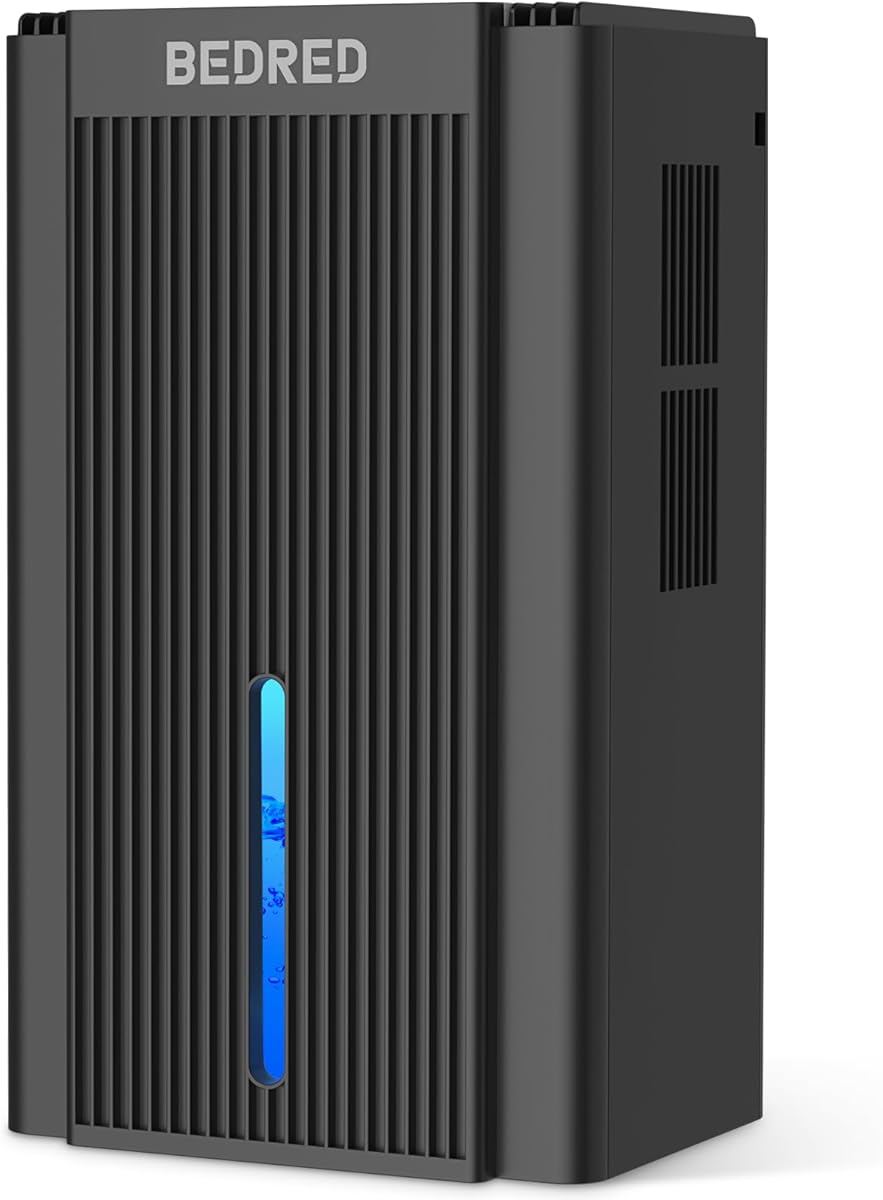
The BEDRED Dehumidifier is a compact unit using thermoelectric cooling technology. With a 4.3 star rating, it is designed for quiet environments where noise is a primary concern.
We may earn a commission when you buy through this link, at no additional cost to you.
It features an auto-shutoff function that powers down when the tank is full. This ensures safety and prevents water overflow without needing constant supervision.
While it handles smaller loads effectively, it is less powerful than compressor models. It works best for small grow areas or supplemental humidity control.
For budget-conscious growers needing a silent, safe unit for small spaces, this model provides excellent value and peace of mind.
Sleep mode creates a quiet sanctuary with lights off and noise faded to a whisper.
Intelligent auto-shutoff powers down when the water tank is full to prevent spills.
We may earn a commission when you buy through this link, at no additional cost to you.
This compact dehumidifier is designed for electrical boxes and very small grow spaces. It rates 3.0 stars, reflecting its niche application and specific installation needs.
We may earn a commission when you buy through this link, at no additional cost to you.
It features an external humidity sensor for more accurate air humidity measurement. This sensor helps maintain the optimum humidity level within your desired range automatically.
Users must note that it is not a high-capacity solution. It is best suited for storage or small enclosed units where standard units cannot fit.
If you need a dedicated unit for a tiny box or cabinet, this offers a specialized solution for moisture protection.
External professional grade humidity sensor provides more accurate air humidity measurement.
Compatible with both AC and DC power sources for versatile setup options.
We may earn a commission when you buy through this link, at no additional cost to you.
The MARS HYDRO unit removes up to 38 pints of moisture daily. With a 3.9 star rating, it is optimized for larger grow tents requiring significant dehumidification.
We may earn a commission when you buy through this link, at no additional cost to you.
Its unique design allows it to sit outside the tent with an included air duct. This channeling moisture out without introducing extra heat that might disrupt plant growth inside.
Users must ensure they have space for external placement. This setup adds complexity but keeps heat and noise outside the primary growing area.
If you need high capacity for a 4×4 or 5×5 tent, this unit provides the power to maintain optimal conditions.
Unique air duct design channels moisture out without introducing extra heat into the tent.
Set desired humidity levels and let the auto mode maintain a comfortable environment.
We may earn a commission when you buy through this link, at no additional cost to you.
This general-purpose unit works well for moderate humidity environments. It holds a 4.3 star rating and features ultra-quiet operation suitable for night-time use.
We may earn a commission when you buy through this link, at no additional cost to you.
It includes built-in safety protection that stops operation when the water tank is full. This allows safe daily use with minimal supervision and prevents spills.
While versatile, it lacks dedicated grow tent features like humidity VPD automation. It is a good backup option but not a specialized solution.
For small grows where noise and safety are priorities, this provides reliable moisture control at a reasonable price.
Low-noise sleep mode operating under 30 dB runs quietly through the night.
Built-in protection automatically stops operation when the water tank is full or improperly positioned.
We may earn a commission when you buy through this link, at no additional cost to you.
Designed specifically for small spaces like grow tents and storage cabinets, this unit has a compact profile. It rates 3.1 stars and is a niche option for tight environments.
We may earn a commission when you buy through this link, at no additional cost to you.
It operates efficiently on AC and DC power supplies, offering versatility for different electrical systems. Built-in temperature control helps maintain optimal humidity levels in your tight spaces.
Users must accept that its moisture removal capacity is low. It is best for minor humidity control rather than heavy dehumidification needs.
If you need a small, safe unit for a very specific confined area, this offers a practical and versatile solution.
Operates efficiently on AC/DC 85-265V power supplies for versatile use.
Small dehumidifier designed specifically for small spaces including grow tents.
We may earn a commission when you buy through this link, at no additional cost to you.
This compact unit is ideal for small rooms under 215 sq ft. With a 4.2 star rating, it offers high efficiency and customizable lighting features for personal spaces.
We may earn a commission when you buy through this link, at no additional cost to you.
It features an auto defrost function to ensure continuous dehumidification even in cold seasons. This extends product life and ensures operation in varying temperatures.
The capacity is low compared to larger models. It collects up to 11.8oz of water daily, making it better for small enclosed areas.
For tiny setups or auxiliary moisture control, this model provides efficiency and useful features like timers and defrost protection.
Intelligent auto defrost function ensures continuous dehumidification even in cold season.
Built-in timer offers flexible operation with continuous run mode or automatic shut-off.
We may earn a commission when you buy through this link, at no additional cost to you.
This model holds multiple international safety approvals including FCC and CE. It rates 4.2 stars and is designed to maintain balanced humidity levels gently and steadily.
We may earn a commission when you buy through this link, at no additional cost to you.
The auto-defrosting system activates in lower temperatures to prevent frost buildup. This ensures longer product life and efficient operation even in colder environments.
While reliable, the 44OZ tank limits how long it can run without emptying. It requires regular maintenance for continuous operation.
If safety certification and reliable low-temperature operation are important, this model offers peace of mind for your home and family.
Meets rigorous international standards with FCC, CE, UKCA, and RoHS approvals.
Auto-defrosting system activates to prevent frost buildup in lower temperatures.
We may earn a commission when you buy through this link, at no additional cost to you.
The Pro Breeze Mini uses thermoelectric cooling for whisper quiet operation. With a 4.0 star rating, it is perfect for rooms up to 250 sq ft where noise is a concern.
We may earn a commission when you buy through this link, at no additional cost to you.
It removes up to 18 oz of water daily with minimal energy consumption. This makes it an ideal solution to humidity in your home as energy prices rise.
Users should note that it does not work below 41°F. It also requires manual tank emptying every day or two depending on moisture levels.
For light-duty portable moisture removal, this model offers a quiet and cost-effective solution for small enclosed areas.
Built-in Thermo-Electric Cooling Technology operates without a compressor for whisper quiet operation.
Ideal solution to humidity in your home as energy prices rise with low running costs.
We may earn a commission when you buy through this link, at no additional cost to you.
Selecting the right dehumidifier requires balancing capacity, noise, and smart features to match your specific grow tent size and plant needs.
Capacity determines how much moisture the unit can remove daily. For grow tents, look for units that can handle the evaporation from watering and transpiration. A higher capacity ensures you maintain low humidity without constant intervention.
Match the daily removal capacity to your tent size. A 12L/day unit suits larger tents, while smaller units work for compact setups.
Smart controls allow you to set target humidity levels and automate operations via an app. This feature is crucial for maintaining consistent conditions without constant monitoring.
Prioritize models that integrate with controllers or smart home systems for seamless integration and real-time adjustments.
Grow tents are often placed in quiet home areas. Units with compressor technology may generate more noise than thermoelectric models. Check decibel ratings to ensure the unit does not disrupt sleep or work.
Look for specific sleep modes or quiet operation claims if the grow tent is near living spaces.
Easy installation saves time and effort. Features like tool-free setup and caster wheels make it easy to move the unit for cleaning or access to plants. Portable designs fit better into tight spaces.
Ensure the unit has handles or wheels if you plan to move it frequently for maintenance tasks.
Units with auto-shutoff prevent overflow when the tank is full. Continuous drainage options via hoses are preferred for larger tents to avoid frequent manual emptying.
Choose a model with auto-shutoff safety or a continuous hose connection based on your maintenance preferences.
Some dehumidifiers fail in cold environments. Ensure the unit can operate effectively in the temperature range of your grow space. Units designed for cold conditions prevent frost buildup.
Verify the operating temperature limits to ensure consistent performance throughout the seasons.
Dehumidifiers run for long hours. Energy-efficient models save money on electricity bills. Check power consumption ratings to ensure sustainable operation.
Compare daily energy costs to find a unit that balances performance with efficiency.
Place the unit on a flat surface outside the tent if it introduces heat. For internal units, ensure they are not directly blocking plant airways. This helps channel dry air effectively without disrupting plant growth.
Clean the filters regularly to maintain efficiency. Dust buildup reduces airflow and dehumidification power. Wash the filters under a faucet to remove trapped debris and ensure optimal performance.
Empty the water tank or connect a drainage hose as needed. Regular maintenance prevents mold growth and ensures the unit works efficiently. Check the auto-shutoff feature to avoid overflows.
For a 4×4 tent, a unit capable of removing around 12L/day or 38 pints/day is recommended. This capacity handles the moisture load from plants and watering effectively. Ensure the unit fits your space comfortably without blocking airflow.
Clean the filter every two weeks or when it appears dusty. Regular cleaning prevents mold buildup and maintains airflow efficiency. Wash it under a faucet and let it dry completely before reinstalling.
Yes, but dedicated models offer better controls for grow environments. Home units lack VPD automation and may generate too much heat. Ensure the unit does not disrupt plant growth with excessive temperature rise.
The ideal humidity ranges from 40% to 60% depending on the growth stage. Seedlings prefer higher humidity while flowering plants need lower levels. Use a dehumidifier to maintain this balance consistently.
Energy consumption varies by model and runtime. Units with high efficiency save money over time. Check daily energy costs and consider energy-saving modes to reduce bills.
Empty the water tank regularly and keep the unit clean. Mold thrives in stagnant water. Use the auto-shutoff feature to avoid overflows and clean the filter regularly to prevent spore buildup.
The AC IN HYDRONE 5 offers precision control while the VIVOSUN AeroDrain D12 provides smart integration. Both are excellent choices depending on your specific grow needs.
Prioritize capacity and automation features to ensure your plants thrive. Noise and mobility are also key factors for a comfortable growing experience.
Prices and availability change frequently. Check the current listings to find the best deal for your specific grow tent setup.