
Mini Micro N20 Gear Motor
4.6Editor score
Compact size for small builds
Full metal gearbox construction
Low voltage operation range
Discover the top 10 DC motors for robots compared by experts. We review torque, speed, and build quality to help you choose the right motor.
Choosing the right power source is critical for any robotic project. DC motors provide the torque and speed needed to move wheels, arms, and mechanisms efficiently. Whether you are building a simple car or a complex manipulator, selecting the appropriate motor ensures smooth operation and longevity.
We have evaluated ten high-quality DC motors suitable for robotics applications. Our comparison considers gear ratios, voltage ranges, shaft types, and overall durability. Each product offers unique features tailored to different project requirements, from hobbyist kits to industrial prototypes.
Each review highlights key specifications and practical applications for every motor. You will find details on installation, compatibility, and performance metrics. Please note that availability and pricing may vary over time, so verify current listings before making your final purchase decision.
4.6Editor score

4.7Editor score

4.6Editor score
This table provides a side-by-side comparison of all ten selected motors. Review the specifications to find the best match for your specific robot design and power requirements.



This motor set stands out as the top choice for serious robotics enthusiasts. It features an all-metal gearbox and a high-precision Hall encoder for accurate motion control. The robust construction ensures it handles demanding tasks with ease and reliability.
We may earn a commission when you buy through this link, at no additional cost to you.
The 1:90 gear ratio provides exceptional torque output suitable for heavy loads. The integrated encoder allows for precise real-time measurement of speed and angular position. This level of control is crucial for advanced motion control applications and smart vehicles.
While the price is higher than basic options, the performance justifies the investment. The wiring for the encoder adds a step to integration, but the benefits in control are significant. These trade-offs are acceptable for projects requiring precision.
Builders needing precise control should choose this motor. It is ideal for smart car competitions and advanced automation projects. The reliability and features make it a strong recommendation for serious hobbyists.
The AB-Phase Hall encoder outputs quadrature sine waves for real-time speed and position measurement.
Upgraded all-metal gears and shaft provide superior strength and longer service life compared to plastic alternatives.
We may earn a commission when you buy through this link, at no additional cost to you.
This motor is perfect for budget-conscious builders looking for quality. The metal gearbox offers durability often missing in plastic alternatives. It operates at low speeds suitable for controlled movements in small robot cars.
We may earn a commission when you buy through this link, at no additional cost to you.
Its compact design fits easily into tight spaces on a chassis. The D-type shaft ensures wheels stay securely attached during operation. The low voltage requirement makes it compatible with standard battery packs.
Users should note the low speed and torque limits. These are not suitable for heavy lifting or high-speed racing. However, for educational projects or light-duty tasks, it performs well within expectations.
We recommend this for small DIY car projects. It is an excellent starting point for robotics beginners. The value offered by this motor is hard to beat in its category.
The mini dimensions allow for integration into small chassis designs without bulk.
Full metal gearbox construction ensures longevity even with frequent use.
We may earn a commission when you buy through this link, at no additional cost to you.
This motor delivers industrial-level performance for demanding robotic tasks. The high torque output is capable of moving heavy rotating tables or machinery. It supports a wide voltage range for flexible power system design.
We may earn a commission when you buy through this link, at no additional cost to you.
The metal gears are built to withstand continuous heavy-duty operation. The D-shaft output allows for secure mechanical connections. The ability to change wiring connections provides easy control over rotation direction.
Its physical size is larger than hobby motors, requiring more space. The high voltage requirement may need specialized power supplies. These factors are acceptable given the substantial power it delivers.
We suggest this for heavy-duty projects or prototypes. It excels in applications needing significant torque. For high-performance needs, this motor offers unmatched value and reliability.
The 90kg.cm torque rating makes it suitable for heavy loads and rotating tables.
The wide voltage range allows integration into various power systems.
We may earn a commission when you buy through this link, at no additional cost to you.
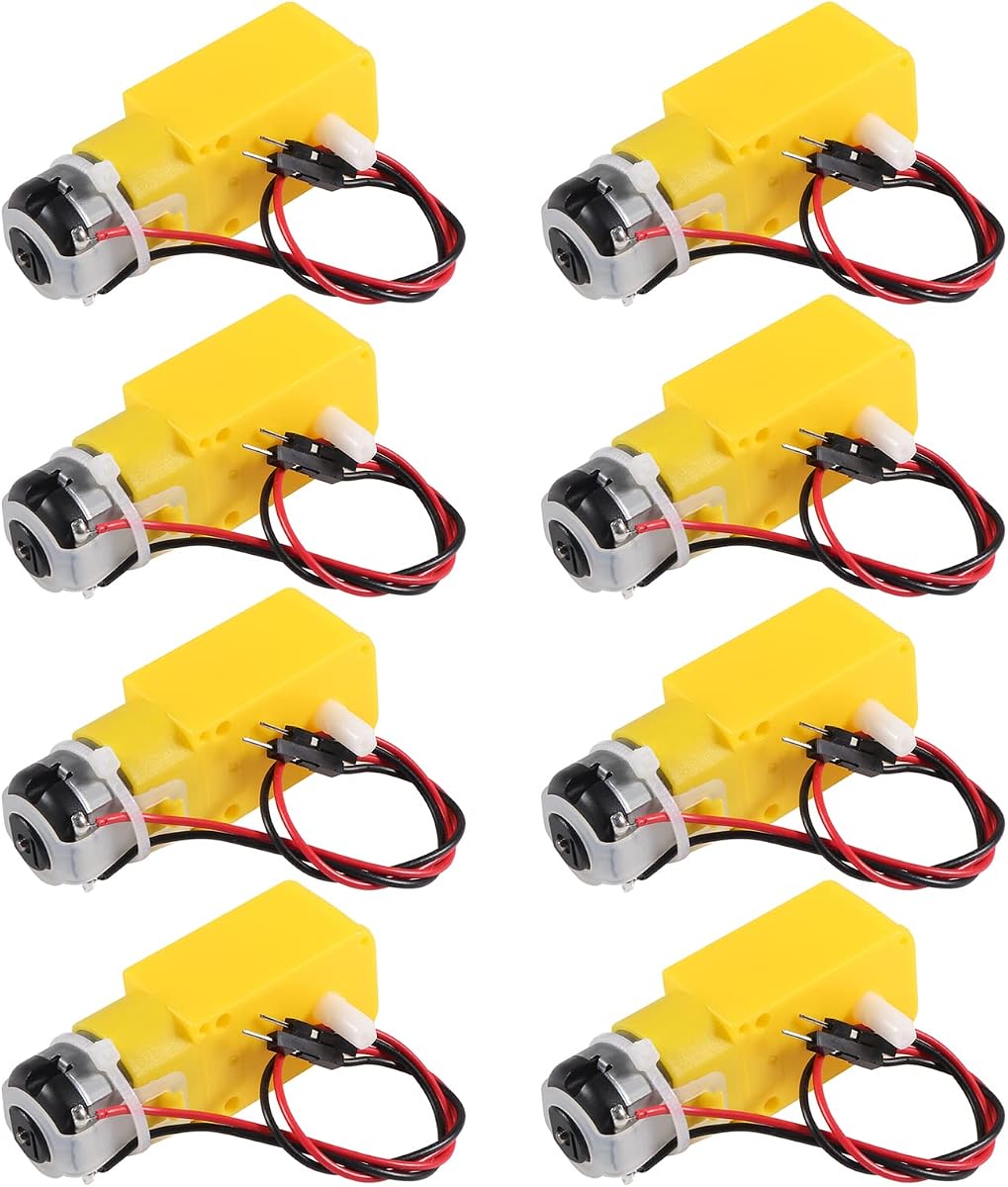
This motor set is designed for seamless integration with microcontrollers. The included wires with connectors simplify the setup process significantly. It comes in a pack of eight which is great for multiple robot builds.
We may earn a commission when you buy through this link, at no additional cost to you.
The 1:48 ratio offers a balance between speed and torque. It operates well at 3 to 6 volts for standard logic boards. The wires are long enough to reach terminal blocks or breadboards easily.
Users should expect basic performance compared to encoder motors. It lacks feedback for precise speed control. However, it is perfect for distance measurement and educational learning projects.
This is the ideal choice for school robotics classes. It provides excellent value for groups needing multiple units. The ease of use makes it a favorite for beginners.
The 2.54mm connectors allow for quick and reliable plug-in integration.
Eight motors and wheels offer a complete starting kit for teams.
We may earn a commission when you buy through this link, at no additional cost to you.
This package provides everything needed for a quick motor build. It includes the motor along with a mounting bracket and rubber tires. The fully enclosed structure protects internal components from dust and damage.
We may earn a commission when you buy through this link, at no additional cost to you.
High-precision materials ensure long-term operation without failure. The pure copper coils provide stable power delivery and low heat. Full metal gears reduce noise and extend the motor's operational lifespan significantly.
The kit is optimized for 12V systems which are common in robotics. The compact size helps reduce the overall weight of the robot. However, it does not offer an encoder for feedback control.
We recommend this for smart car models needing a complete setup. The included accessories save time on sourcing parts. It is a reliable choice for DIY model projects.
Includes motor, mounting bracket, and rubber tires for immediate use.
Fully enclosed structure reduces weight and protects internal parts.
We may earn a commission when you buy through this link, at no additional cost to you.
This motor offers excellent torque capabilities for its size. The 70:1 gear ratio ensures high power at low speeds. The metal mounting bracket simplifies attachment to robot chassis securely.
We may earn a commission when you buy through this link, at no additional cost to you.
The stall torque is exceptionally high allowing for heavy load tasks. The D-shaped shaft ensures reliable connections without slipping. It runs efficiently at 6V or 12V for versatile power needs.
It is slightly more expensive than basic hobby motors. The metal construction and bracket justify the cost for robust builds. It is better suited for projects needing high torque than simple cars.
We recommend this for balance cars or medical equipment prototypes. The high torque output supports challenging applications. It is a top choice for reliable performance.
Delivers 15kg.cm to 27kg.cm torque for demanding mechanical needs.
Included metal bracket kit ensures a solid attachment to your chassis.
We may earn a commission when you buy through this link, at no additional cost to you.
This motor is designed for powerful and quiet performance. The double-shaft configuration allows for versatile mounting options on both ends. It operates efficiently across a 6 to 12V range for standard RC batteries.
We may earn a commission when you buy through this link, at no additional cost to you.
Pure copper windings increase conductivity and torque by 30%. This provides reliable power for precision tasks and demanding applications. The D-shaped shaft prevents slipping during intense operation.
The metal gears ensure durability even under heavy use. The compact dimensions allow for easy integration into RC chassis. While rated for RC, it fits many DIY projects too.
We suggest this for DIY toys and smart car models. The double-shaft flexibility is a unique advantage. It is an excellent choice for hobbyists seeking reliability.
Strong magnetic configuration allows flexible connections on both ends of the shaft.
Pure copper winding boosts conductivity and torque for reliable performance.
We may earn a commission when you buy through this link, at no additional cost to you.
These miniature motors are perfect for high-speed applications. They spin at up to 16000 RPM providing rapid movement. The compact size fits into space-constrained designs easily.
We may earn a commission when you buy through this link, at no additional cost to you.
They come in a case pack of six for multiple projects. The wires are black and red for easy connection to power sources. They are ideal for fans, windmills, or brush-bots.
Without a gearbox the torque is very low. This limits their use to light-load applications. Adding a gear kit may be necessary for vehicle wheels.
We recommend this for hobbyists needing fast spinning parts. The high speed is unmatched in this price range. It is a great addition for solar or battery cars.
Achieves speeds up to 16000 RPM for fast-moving applications like fans.
Small 15x20mm dimensions allow fitting into tight mechanical spaces.
We may earn a commission when you buy through this link, at no additional cost to you.
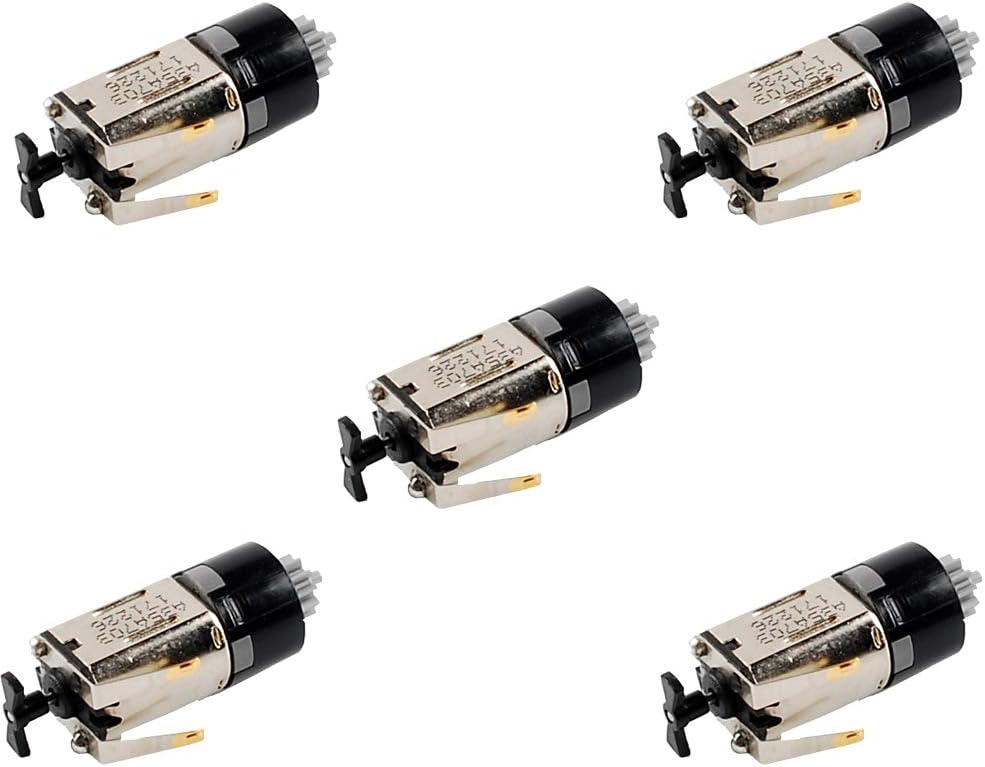
This motor uses a planetary reducer for high torque. It operates at low voltages from 3V to 5V easily. The 5-pack offers great value for teams building multiple units.
We may earn a commission when you buy through this link, at no additional cost to you.
The low speed is suitable for controlled movements. It draws low current which saves battery life. The planetary design reduces noise compared to spur gears.
Users should note the very limited speed range. It is not suitable for fast projects. However, for simple robotics tasks the reliability is strong.
We suggest this for battery-powered educational projects. The low voltage makes it safe for students. It is a practical choice for simple DIY builds.
High torque gearbox design ensures efficient power transfer at low speeds.
Efficient power usage extends battery life in portable projects.
We may earn a commission when you buy through this link, at no additional cost to you.
This motor is designed for compact upgrades in small projects. It fits well in RC cars and custom builds needing a quick replacement. The high speed output provides strong performance in a small size.
We may earn a commission when you buy through this link, at no additional cost to you.
It supports a 6 to 12V range for versatile power options. The low noise operation ensures a smooth experience during use. The shaft size is compatible with standard DIY couplers.
The small shaft diameter limits some heavy gear applications. It is best suited for light-duty tasks like toy cars. For heavy lifting consider a gear motor variant.
We recommend this for hobbyists repairing existing vehicles. Its compact size fits where larger motors cannot. It is a practical upgrade for small electric drills.
Delivers up to 12000 RPM for fast movement in small builds.
Compact form factor ensures minimal weight addition to your robot.
We may earn a commission when you buy through this link, at no additional cost to you.
Selecting the right motor depends on your project's specific power and control needs. Review these factors to ensure your robot performs reliably and efficiently.
Check the rated voltage of your motor against your power supply. Mismatched voltages can lead to poor performance or motor failure. Ensure your battery or power source matches the motor's input range.
Always verify voltage compatibility before purchase to avoid issues.
Torque determines the motor's ability to move loads while speed dictates movement rate. Higher gear ratios increase torque but reduce speed. Choose based on whether you need to lift weight or move quickly.
Balance torque and speed according to your specific application needs.
Gearboxes multiply torque and protect internal gears. Metal gears last longer and handle higher loads than plastic ones. Planetary or spur gears offer different noise and efficiency profiles.
Metal gearboxes are generally preferred for durability in heavy use.
The shaft must fit your wheels or gears securely. D-shaped shafts prevent slipping better than round shafts. Measure your required shaft diameter and length before ordering.
Correct shaft dimensions ensure a secure mechanical connection.
Encoders provide feedback on speed and position for precise control. They are essential for advanced robotics requiring accurate motion. If you do not need precise feedback a motor without an encoder is cheaper.
Use encoders for projects requiring exact speed or position control.
Secure mounting prevents vibration and misalignment. Some kits include brackets for easy attachment. Ensure the motor fits your chassis design before selecting.
Mounting brackets simplify installation and improve stability.
Efficient motors draw less current and run cooler. Copper windings improve conductivity and reduce heat. Consider battery life for portable robotic projects.
Look for efficient designs to extend operational time on battery.
Always verify wire connections match the voltage specifications. Reverse polarity may damage the motor or controller. Secure wires with heat shrink or tape to prevent shorts.
Monitor the motor temperature during operation. Overheating can reduce lifespan. Ensure proper ventilation or add heatsinks if running continuously.
Inspect gears and shafts regularly for wear. Lubricate gears sparingly to avoid dust buildup. Clean the motor housing to prevent dust entry.
Most hobby motors operate between 3V and 12V. Match the motor rating to your battery. Common options include 6V or 12V batteries. Exceeding voltage can burn out the motor. Always test at lower voltages first.
No. Encoders are only needed for precise speed or position control. Basic robots work fine without them. If you need accurate movement choose a motor with an encoder. This adds cost but improves control.
Use a motor driver like L298N to interface the motor. Connect motor wires to the driver and driver to Arduino. Ensure you share a common ground. Direct connection may damage the board.
A gear motor includes a gearbox to increase torque. Standard DC motors spin faster with less torque. Gear motors are better for moving weight. Choose based on your load requirements.
Ensure you are not stalling the motor under heavy load. Allow airflow around the motor body. Use a power source with sufficient current capacity. Overheating shortens motor life significantly.
No. DC motors require direct current. Use a DC power adapter or battery. Converting AC to DC requires a rectifier. Never connect a DC motor directly to an AC outlet.
Reverse the positive and negative wires on the motor. Some drivers have pins for this. Ensure you use a driver that supports direction control. This allows forward and reverse movement.
Stall torque is the max torque when the shaft stops rotating. It indicates the maximum lifting power. Do not hold the motor stalled for long periods. It can overheat quickly under load.
We reviewed ten top DC motors for robots covering budget to premium options. The TT Motor with Encoder leads for precision and the Mini N20 is great for cost. The Planet Gear Motor suits heavy industrial needs.
Prioritize torque, voltage, and mounting needs for your build. Ensure your power supply matches the motor's specifications. Adding an encoder will improve control but increases cost and complexity.
Always check current availability and specifications before buying. Prices and stock change regularly online. We hope this guide helps you select the perfect motor for your project.