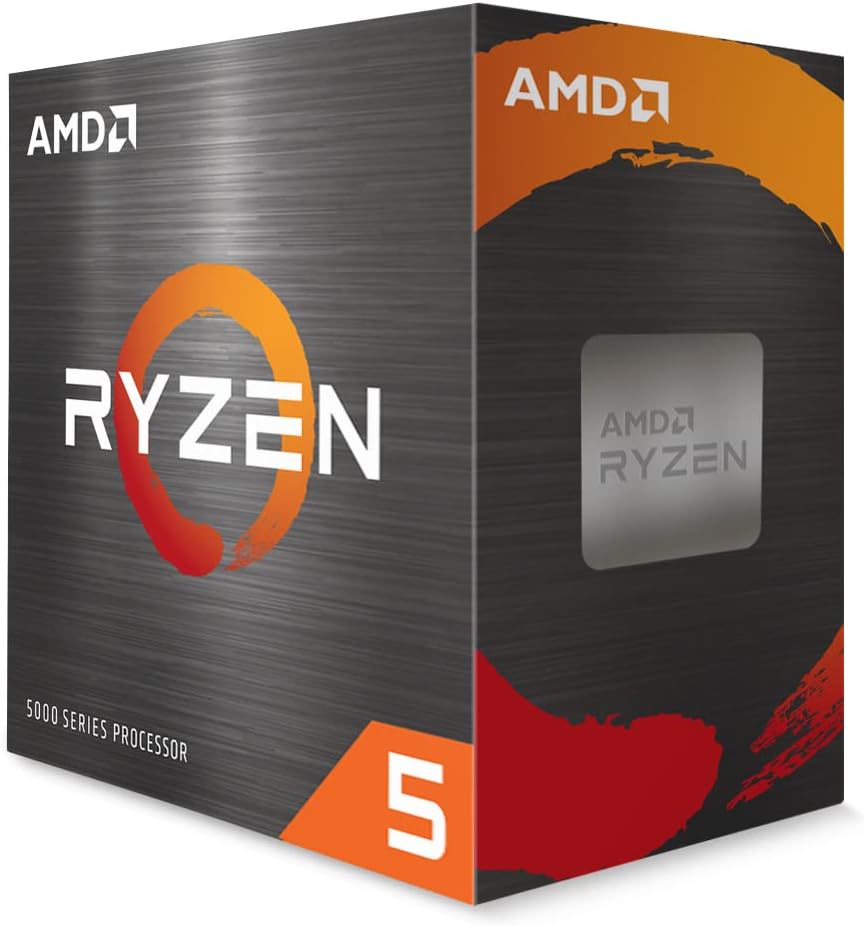
AMD Ryzen 5 5500
4.7Editor score
Six cores and twelve threads
Includes Wraith Stealth cooler
Supports DDR4 memory
This guide compares the top 10 CPUs for Excel and Data Analysis, evaluating core counts, cache, and boost clocks to help you choose the right processor.
Choosing the right CPU for Excel and Data Analysis is critical for professionals who rely on spreadsheets and large datasets daily. A powerful processor ensures smooth calculations, faster loading times, and efficient multitasking across complex workbooks.
We have compared ten leading desktop processors from Intel and AMD, focusing on core counts, thread capabilities, and cache sizes. Our analysis highlights models that excel in single-threaded performance and multi-core throughput for data tasks.
Each pick below shows key specifications and real-world performance insights to guide your decision. Prices and availability change frequently, so check current listings before purchasing to ensure you get the best value for your needs.
4.7Editor score

4.6Editor score

4.8Editor score
The following table provides a side-by-side comparison of all ten processors, detailing their core configurations, boost speeds, and compatibility to help you quickly identify the best fit for your workstation setup.


The Intel Core Ultra 9 285K stands out as the top choice for demanding data analysis tasks. With its 24 cores and up to 5.7 GHz boost, it handles complex Excel formulas and large datasets with ease.
We may earn a commission when you buy through this link, at no additional cost to you.
Its Performance Hybrid Architecture prioritizes critical workloads, ensuring that heavy calculations run smoothly without throttling. The 40MB cache reduces latency when accessing frequently used data, significantly improving spreadsheet responsiveness.
While it requires a compatible Intel 800 series motherboard and does not include a cooler, the performance gains justify the investment. Users should pair it with high-quality cooling to maintain optimal clock speeds.
This processor is ideal for professionals who need reliable speed for both single-threaded and multi-threaded tasks. It delivers consistent performance that streamlines data workflows and enhances productivity.
The hybrid core design ensures that background tasks do not interfere with heavy calculations, keeping your workflow uninterrupted.
PCIe 5.0 support prepares your system for next-generation storage and peripherals, extending the lifecycle of your investment.
We may earn a commission when you buy through this link, at no additional cost to you.
The AMD Ryzen 7 9800X3D leverages its huge L3 cache to deliver exceptional performance in tasks that rely on quick data access. While it has fewer cores, the cache minimizes latency during heavy Excel operations.
We may earn a commission when you buy through this link, at no additional cost to you.
Built on Zen 5 technology, this processor offers significant IPC improvements and better thermal performance than previous generations. The up to 5.2 GHz boost ensures snappy responses when opening or saving large files.
Its primary limitation is the 8-core count, which may limit performance in highly parallelized data processing. However, for most spreadsheet users, the cache advantage provides a noticeable speed boost.
This CPU is best suited for users who prioritize single-threaded performance and cache efficiency over raw core count. It delivers a smooth experience for daily data analysis and office tasks.
The 96MB L3 cache drastically reduces memory latency, making it perfect for datasets that fit within cache boundaries.
Zen 5 architecture ensures high performance per watt, keeping energy consumption and heat output manageable.
We may earn a commission when you buy through this link, at no additional cost to you.
The Intel Core i9 14900K offers a compelling mix of speed and core count, reaching up to 6.0 GHz boost. It handles complex Excel calculations and multitasking with remarkable ease.
We may earn a commission when you buy through this link, at no additional cost to you.
Its 24 cores and 32 threads allow for efficient handling of multiple large spreadsheets and background processes. Integrated graphics ensure basic display functionality without needing a dedicated GPU.
However, high power consumption and heat generation require robust cooling solutions. Users should ensure adequate airflow to maintain performance under sustained loads.
This processor is a great choice for those seeking top-tier speeds without moving to the latest platform. It provides excellent value for demanding data analysis workflows.
The 6.0 GHz boost ensures rapid responsiveness for any single-threaded calculation or macro execution.
With 32 threads, you can run multiple heavy applications simultaneously without performance degradation.
We may earn a commission when you buy through this link, at no additional cost to you.
The AMD Ryzen 5 9600X delivers solid performance for general data analysis tasks. Its 6 cores and 5.4 GHz boost clock provide ample power for most Excel workflows.
We may earn a commission when you buy through this link, at no additional cost to you.
Built on Zen 5 architecture, it offers excellent power efficiency and improved IPC compared to previous generations. The 38 MB cache ensures smooth access to frequently used data.
While it may struggle with highly parallelized tasks due to fewer cores, it remains efficient for standard spreadsheet operations. Users should purchase a separate cooler as none is included.
This CPU is ideal for users who want modern performance without breaking the budget. It balances speed and efficiency effectively for day-to-day data analysis.
Zen 5 ensures every watt counts, providing fast performance while keeping energy usage low.
Support for DDR5 memory helps reduce latency during large dataset loading and processing.
We may earn a commission when you buy through this link, at no additional cost to you.
The Intel Core Ultra 7 270K offers a balanced approach to high-end performance. With 24 cores and support for up to DDR5 7200 MT/s, it handles complex data tasks efficiently.
We may earn a commission when you buy through this link, at no additional cost to you.
Its unlocked status allows enthusiasts to fine-tune performance for specific workloads. The hybrid architecture ensures critical threads receive priority during heavy calculations.
While it shares the need for a new motherboard with the Ultra 9 model, it provides a cost-effective entry into the latest platform. Thermal management remains important to sustain boost clocks.
This processor is perfect for users seeking future-proof capabilities without the absolute top-tier price. It delivers reliable performance for diverse data analysis scenarios.
Support for 7200 MT/s DDR5 ensures rapid data transfer between CPU and memory during heavy usage.
LGA1851 socket readiness ensures compatibility with future Intel processors, extending system lifespan.
We may earn a commission when you buy through this link, at no additional cost to you.
The AMD Ryzen 9 9950X is a powerhouse for professionals working with massive datasets. Its 16 cores and 32 threads ensure that complex calculations complete quickly without bottlenecks.
We may earn a commission when you buy through this link, at no additional cost to you.
With an 80 MB cache and up to 5.7 GHz boost, it delivers exceptional responsiveness even in demanding scenarios. The Zen 5 architecture provides significant efficiency gains over previous models.
Due to its power and heat output, a liquid cooler is recommended for optimal performance. This ensures consistent speeds during prolonged heavy usage periods.
This CPU is ideal for data scientists and analysts who prioritize raw processing power. It offers the best in class performance for professional data workflows.
With 32 threads, you can parallelize data tasks effectively, reducing total processing time significantly.
Despite high performance, Zen 5 architecture maintains reasonable thermal output, aiding system stability.
We may earn a commission when you buy through this link, at no additional cost to you.
The Intel Core i7 12700KF provides excellent value for users needing solid performance without latest-gen costs. With 12 cores and up to 5.0 GHz, it handles most spreadsheet tasks smoothly.
We may earn a commission when you buy through this link, at no additional cost to you.
Its Intel 7 architecture improves performance per watt, keeping power consumption in check. The 25 MB cache offers good balance for everyday data processing.
Note that discrete graphics is required since this model lacks integrated graphics. Ensure your system has a GPU for display output.
This processor is ideal for budget-conscious professionals who still need reliable speed. It delivers consistent performance for standard Excel workflows.
Intel 7 architecture ensures efficient power usage, reducing overall system energy consumption.
8 performance cores combined with 4 efficiency cores provide excellent multitasking capability.
We may earn a commission when you buy through this link, at no additional cost to you.
The Intel Core i5 14400F is a budget-friendly option that still delivers solid performance. With 10 cores and hybrid architecture, it manages multiple spreadsheet tasks efficiently.
We may earn a commission when you buy through this link, at no additional cost to you.
Its 20MB cache and up to 4.7 GHz boost provide good responsiveness for typical data analysis. The included thermal solution makes building easier without extra expenses.
Note discrete graphics is required, so ensure a GPU is available. It supports both DDR4 and DDR5 memory for flexibility.
This CPU is perfect for small businesses or home offices needing reliable performance on a budget. It balances cost and capability effectively.
The included thermal solution reduces initial setup costs, making it a hassle-free upgrade.
Support for DDR4 and DDR5 allows cost-effective upgrades using existing memory kits.
We may earn a commission when you buy through this link, at no additional cost to you.
The AMD Ryzen 9 9900X offers an excellent balance between core count and clock speed. With 12 cores and up to 5.6 GHz boost, it handles complex data tasks efficiently.
We may earn a commission when you buy through this link, at no additional cost to you.
Its 76 MB cache ensures smooth data access, reducing bottlenecks during heavy calculations. Zen 5 architecture delivers high performance per watt, improving efficiency.
A separate cooler is required as none is included. Ensure adequate cooling to maintain boost clocks during prolonged usage.
This processor is ideal for users needing strong multitasking without the highest price point. It delivers reliable speed for diverse workloads.
12 cores provide ample headroom for simultaneous application usage without slowing down.
Up to 5.6 GHz ensures quick responses during intensive formula calculations.
We may earn a commission when you buy through this link, at no additional cost to you.
The AMD Ryzen 5 5500 is the perfect entry-level choice for basic data analysis needs. With 6 cores and 12 threads, it handles standard spreadsheet tasks efficiently.
We may earn a commission when you buy through this link, at no additional cost to you.
It includes the Wraith Stealth cooler, simplifying setup without extra costs. The AM4 platform ensures compatibility with many existing motherboards.
While single-thread performance is lower than newer models, it remains reliable for everyday office work. DDR4 support helps keep overall system costs down.
This CPU is ideal for budget builds or basic office environments. It provides solid performance without breaking the budget.
The bundled Wraith Stealth cooler ensures you can start using the processor immediately.
AM4 platform affordability allows you to allocate more budget to memory or storage.
We may earn a commission when you buy through this link, at no additional cost to you.
Selecting the right processor requires balancing core counts, clock speeds, and budget constraints to match your specific workflow demands.
Core count determines how many tasks your CPU can handle simultaneously. For data analysis, more cores allow faster processing of complex formulas and parallelized data loads.
Prioritize CPUs with at least 8 cores for smooth multitasking and efficient handling of large spreadsheets.
Clock speed, measured in GHz, affects how quickly individual calculations execute. High single-thread performance is crucial for responsive Excel formulas and quick load times.
Look for models with boost clocks exceeding 5.0 GHz for snappy performance in daily tasks.
L3 cache acts as high-speed memory for frequently accessed data, reducing latency during computations. Larger caches improve responsiveness when working with large datasets.
Choose processors with larger cache sizes to minimize wait times when loading complex workbooks.
Your CPU dictates the type of RAM your system can use. DDR5 offers higher bandwidth than DDR4, beneficial for data-heavy applications.
Ensure your CPU supports memory speeds that align with your performance needs and budget.
Newer CPUs often require specific motherboards and chipsets. Check compatibility to avoid costly hardware upgrades.
Consider platform longevity to ensure your system remains upgradeable for future needs.
High-performance processors draw more power and generate heat. Adequate cooling is essential to maintain performance.
Balance power efficiency with performance to keep energy costs and temperatures manageable.
Determine how much you can spend before selecting a CPU. Entry-level options may suffice for light tasks, while professionals need higher-end models.
Invest in the best value option that meets your performance thresholds without overspending.
Some processors come bundled with coolers, while others do not. Verify if a separate cooler is necessary for your build.
Ensure your cooling solution matches the CPU's thermal design power to maintain stability.
Ensure proper installation by aligning the CPU correctly within the motherboard socket and securing the cooler firmly to prevent overheating.
Regularly update your motherboard BIOS to maintain compatibility with new processors and optimize performance for data-intensive tasks.
Keep your system clean by periodically removing dust from vents and fans to prevent overheating and extend hardware lifespan.
Modern versions of Excel leverage multiple cores for certain operations like complex calculations and data refreshes. However, some functions remain single-threaded, so high clock speeds remain important.
While not mandatory, 64GB RAM helps significantly when handling massive datasets. It reduces the need to swap to disk storage, improving overall processing speed.
No, most Excel tasks do not require a dedicated GPU. Integrated graphics usually suffice unless you use specialized visualization tools or run multiple high-resolution displays.
Larger cache sizes reduce latency when accessing frequently used data, making calculations faster. This is particularly beneficial when working with large workbooks or complex models.
Both offer excellent performance. AM5 generally offers better power efficiency, while LGA1851 provides strong multi-core performance. Choose based on your specific workload needs.
It depends on your usage. High clock speeds benefit single-threaded tasks like basic formulas, while more cores help with multi-threaded operations and heavy multitasking.
The Intel Core Ultra 9 285K and AMD Ryzen 9 9950X stand out as top performers for professionals handling massive datasets and complex calculations.
For those balancing performance with affordability, models like the Ryzen 7 9800X3D or Core i7 12700KF offer excellent value without compromising speed.
Always check current pricing and availability before purchasing to ensure you secure the best deal for your specific hardware setup.