
Berkeley Varitronics Octopus 4G LTE
4.6Editor score
True RSRP measurements
No SIM card needed
Supports all carriers
Choosing the right Cellular Signal Meter for Antenna Aiming ensures precise alignment and optimal signal strength for your cellular booster or antenna installation. These tools provide real-time feedback to help you secure the strongest possible connection for your network setup.
Our team compared ten top-rated devices based on frequency coverage, measurement accuracy, portability, and user feedback. We evaluated their ability to deliver reliable readings across major cellular bands to help you make an informed decision for your specific needs.
Each pick highlights key features, pros, and cons to guide your selection process. Prices and availability may change frequently, so verify current details on the product page before purchasing to ensure you get the best value for your investment.
4.6Editor score

4.3Editor score

3.9Editor score
As an Amazon Associate we earn from qualifying purchases.
This side-by-side comparison highlights key specifications and capabilities across all ten selected signal meters. Use this table to quickly identify which device matches your frequency requirements and budget constraints.


The SureCall Five-Band RF Signal Meter is a top pick for anyone installing cellular boosters. It carries a 4.3 rating and delivers consistent performance across PCS, Cellular, AWS, and LTE bands.
We may earn a commission when you buy through this link, at no additional cost to you.
This device provides high receiving sensitivity at -110dBm and covers five distinct bands essential for US carriers. Its rechargeable design ensures you can work on installations without constantly swapping batteries.
While it does not offer advanced features like GPS mapping, its focused design makes it easy to use for antenna aiming. The controllable backlight is a thoughtful addition for working in dark enclosures.
Installers who need a dedicated tool for boosting systems should consider this meter. It balances cost and capability well, making it a solid choice for professional or serious DIY antenna aiming projects.
The five band support ensures compatibility with the primary frequencies used by US providers, giving you reliable feedback for alignment.
The built-in NiMH batteries provide several hours of operation, reducing downtime during complex installations in remote locations.
We may earn a commission when you buy through this link, at no additional cost to you.
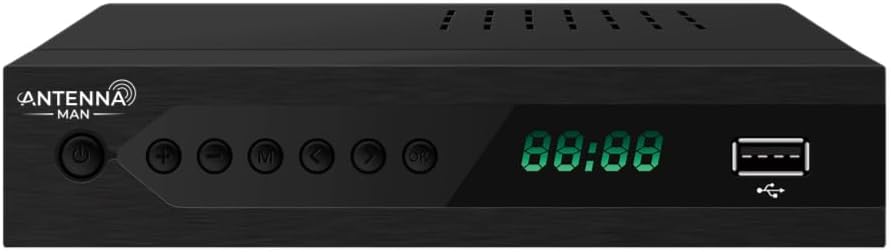
The Antenna Man Signal Meter offers an accessible entry point for testing signal strength. With a 3.8 rating, it provides basic functionality for users who need a simple way to check connectivity.
We may earn a commission when you buy through this link, at no additional cost to you.
This tool plugs directly into your system and displays real-time signal strength immediately. It is designed for ease of use, allowing you to adjust your antenna without complex calibration steps.
However, the rating suggests some users may encounter limitations or inconsistent results compared to higher-end meters. It is best suited for general over-the-air testing rather than precise cellular band alignment.
If you need a budget-friendly device for basic TV or radio antenna checks, this unit is worth exploring. Just confirm it meets your specific frequency requirements before purchase.
The plug-and-play design lets you see signal changes as you move the antenna, speeding up your initial setup process.
Built-in recording features allow you to capture signal data over time to analyze performance during different conditions.
We may earn a commission when you buy through this link, at no additional cost to you.
The Berkeley Varitronics Octopus 4G LTE is a high-end solution for precise cellular signal measurement. With a strong 4.6 rating, it is favored by professionals who need detailed technical data.
We may earn a commission when you buy through this link, at no additional cost to you.
This meter supports AT&T, Verizon, T-Mobile, and regional carriers without requiring a SIM card or phone. It measures True RSRP, RSRQ, and RSSI which are critical metrics for network optimization and EV site planning.
The premium cost may be a barrier for casual users, but the accuracy and lack of subscription needs make it a strong long-term investment. It is manufactured in the USA, adding to its reliability.
Engineers and installers working on EV charging stations or complex IoT deployments should consider this device. It offers the depth of data required for rigorous antenna aiming and network performance analysis.
True RSRP, RSRQ, and RSSI readings give you the exact data needed to optimize complex cellular networks for industrial use.
You do not need a SIM card or active phone line to use the device, simplifying field testing across different networks.
We may earn a commission when you buy through this link, at no additional cost to you.
The RF Explorer Pro Spectrum Analyzer offers a broad frequency range from 15MHz to 6.1GHz. While it lacks a public rating, its specifications suggest it is a powerful tool for advanced RF professionals.
We may earn a commission when you buy through this link, at no additional cost to you.
It features an 8-inch high-definition touchscreen that makes viewing complex spectrum data easy. The tracking generator and waterfall modes provide deep insight into signal behavior and interference patterns.
Due to its advanced features, it may be more than a typical installer needs, but it excels at detailed diagnostics. The five-hour battery life ensures it lasts through extended field work.
Engineers who need comprehensive spectrum analysis capabilities will find this unit valuable. It is well suited for troubleshooting complex RF issues and optimizing antenna performance in demanding environments.
The wide range allows you to analyze signals from low MHz up to 6GHz covering most cellular and wireless technologies.
An 8-inch HD display helps you see intricate spectrum details clearly, even in bright outdoor conditions.
We may earn a commission when you buy through this link, at no additional cost to you.
The NetAlly AirCheck G3 Pro Kit stands out with a perfect 5.0 rating. It is designed for testing Wi-Fi 6/6E and Bluetooth/BLE networks but also offers robust signal location features.
We may earn a commission when you buy through this link, at no additional cost to you.
This kit includes an external directional antenna and a tri-band spectrum analyzer which helps you locate physical access points and clients on multiple bands. It supports efficient site surveys with remote collaboration options.
While primarily built for Wi-Fi, its advanced spectrum analysis can aid in broader signal assessments. The centralized data management platform ensures your field test results are easy to organize and share.
For professionals managing complex wireless networks who need precise location detection, this kit is unmatched. It is a comprehensive solution for those who require high accuracy in signal mapping and troubleshooting.
Tri-band physical location detection helps you quickly find Wi-Fi access points and clients to simplify your survey workflow.
Remote engineers can collaborate with on-site techs using AirMapper Site Survey to solve problems without travel costs.
We may earn a commission when you buy through this link, at no additional cost to you.
The Extech 480836 RF EMF Strength Meter is a 4.3 rated device ideal for high frequency measurements. It is designed for measuring EMF levels from mobile phones, base stations, and microwave sources.
We may earn a commission when you buy through this link, at no additional cost to you.
Its non-directional isotropic probe with a triaxial measurement probe ensures accurate readings regardless of how you hold the meter. This makes it reliable for safety checks and general RF strength assessments.
The manual store and recall function allows you to save up to 99 sets of data which is helpful for tracking changes over time. However it may lack the specific cellular band details some installers need.
If your goal involves EMF safety or general high frequency testing, this meter is a solid choice. It provides trusted brand quality and straightforward operation for technical environments.
The three-channel isotropic probe captures signals from all directions ensuring reliable EMF measurements in various orientations.
Manual store and recall of up to 99 sets helps you track signal variations over time for detailed analysis.
We may earn a commission when you buy through this link, at no additional cost to you.
The MINI1300 Antenna Analyzer is a 4.4 rated compact device with a 4.3 inch touchscreen. It covers a wide frequency range from 0.1 to 1300MHz making it suitable for HF VHF and UHF bands.
We may earn a commission when you buy through this link, at no additional cost to you.
This analyzer offers single point and scanning modes as well as TDR for distance to fault analysis. It is easy to operate and carry which is perfect for on-the-go testing of antenna systems.
A noted limitation is that the firmware cannot be updated which may restrict future functionality improvements. Despite this, the current features are robust enough for many basic antenna tuning tasks.
For hobbyists or technicians working with broad frequency bands, this analyzer offers good value. Its portable design and intuitive interface make it a practical tool for general antenna maintenance.
A 4.3 inch TFT LCD touchscreen provides a clear view of SWR and frequency data during your testing sessions.
The Time Domain Reflectometry mode helps you locate faults in cables and antennas by measuring signal reflection.
We may earn a commission when you buy through this link, at no additional cost to you.
The SA6 6GHz Portable Spectrum Analyzer combines spectrum analysis and signal generation in one handheld unit. It supports a broad range from 35 to 6200MHz covering many wireless technologies.
We may earn a commission when you buy through this link, at no additional cost to you.
Its 3.2 inch color touchscreen makes operation simple even in field environments. The rechargeable battery provides three to four hours of use and USB connectivity allows for data logging.
The tracking generator supports frequency response measurements which is useful for testing filters and amplifiers. While it lacks a public rating, its specs suggest versatility for both hobbyists and technicians.
Engineers needing a portable tool for basic RF testing and troubleshooting will find this analyzer handy. It balances capability and convenience well for on-site analysis.
Built-in signal generator allows you to switch modes instantly for testing filters and amplifiers without extra gear.
Weighing only 380g, this analyzer is compact and easy to carry for on-site RF testing anywhere.
We may earn a commission when you buy through this link, at no additional cost to you.
The For Sa6 6GHz Handheld For Spectrum Analyzer offers a rugged and portable design for field use. It covers 35 to 6200MHz and includes an integrated tracking generator for component characterization.
We may earn a commission when you buy through this link, at no additional cost to you.
Its compact housing is designed for technicians and hobbyists working in tight spaces. Real-time spectral measurement with a 200 kHz resolution provides fast assessment of RF environments and repeater diagnostics.
The internal battery offers up to three hours of runtime which may be sufficient for short inspections. Accessories like cables and stylus are included to get you started immediately.
For maintenance teams needing a durable analyzer for quick onsite checks, this device is a practical choice. It combines essential features in a package built for daily field work.
Delivers stable output to characterize filters and amplifiers enabling SWR and return loss measurements with couplers.
A rugged compact design ensures the device withstands daily use in various field conditions.
We may earn a commission when you buy through this link, at no additional cost to you.
The Channel Master TV Antenna Signal Strength Meter is a budget friendly option for OTA antenna alignment. It supports all over-the-air ATSC frequencies within the USA and provides basic RF data.
We may earn a commission when you buy through this link, at no additional cost to you.
It features a color touch-screen display and shows both signal level and signal to noise ratio. A built-in rechargeable battery and carrying bag make it convenient for installers and homeowners.
While primarily designed for TV antennas, it offers a simple way to check signal quality during setup. The 3.9 rating suggests it is adequate for standard over-the-air reception needs.
For those installing indoor or outdoor TV antennas on a budget, this meter is a practical tool. It provides essential feedback to optimize antenna placement without a high cost.
A color touch-screen display lets you view RF levels and SNR in a bright easy-to-read format.
The kit includes a stylus pen and a protective carrying case to help you keep the device safe during transport.
We may earn a commission when you buy through this link, at no additional cost to you.
Selecting the right signal meter depends on your specific frequency needs and technical requirements.
Ensure the meter supports the specific bands you need such as PCS, AWS, or LTE for US carriers.
Choose devices that match the frequency range of your intended cellular or RF applications.
Look for meters with high sensitivity like -110dBm to detect weak signals effectively.
Precise measurements are essential for professional antenna aiming and network optimization.
Rechargeable batteries provide convenience for field work without frequent replacements.
Check battery runtime to ensure it lasts through your expected installation duration.
A clear display and simple controls help you interpret data quickly during setup.
Touchscreens or physical buttons should suit your preference for handling in the field.
Compact and lightweight designs are easier to carry to remote antenna locations.
Durable construction ensures the device withstands the physical demands of field work.
Confirm the device works with AT&T, Verizon, or T-Mobile as required for your project.
Some meters are carrier-agnostic while others focus on specific regional networks.
Advanced options like tracking generators or GPS heatmaps can enhance testing capabilities.
Decide if these tools are necessary based on the complexity of your installation.
Entry-level meters offer basic functionality for simple checks while professional tools cost more.
Balance your need for precision with your overall project budget for the best value.
Begin by ensuring the meter is fully charged or has fresh batteries before heading to the antenna site. Check that the device is set to the correct frequency band for your carrier.
Mount the antenna on its bracket and connect the signal meter to the line or hold it near the antenna element. Rotate the antenna slowly and watch the signal strength readings change.
Record the best signal position once you find the peak reading. Store the meter in a protective case and keep it dry to maintain its calibration and longevity.
A Cellular Signal Meter for Antenna Aiming is a device used to measure signal strength to help optimize antenna placement. It provides real-time feedback so you can align your antenna for the best possible connection.
Check your carrier's coverage map or use a mobile phone to see which bands are available in your area. Choose a meter that supports those specific bands to ensure compatibility and accurate readings.
No, TV signal meters are designed for ATSC frequencies which differ from cellular bands. Using a cellular-specific meter ensures you get accurate readings for your booster or mobile network setup.
Some advanced meters do not require a SIM card and work directly with RF signals. Others may need a phone or card to access network data so check the specifications before buying.
Battery life varies but most rechargeable meters provide between three to five hours of use. This duration is typically enough to complete most installation tasks without needing a recharge.
Factory calibration is usually sufficient for standard use. However, if you are doing precision work, consult the manual to see if periodic calibration is recommended for accuracy.
Place the antenna as high as possible away from obstructions like trees or buildings. Rotate it slowly while watching the meter to find the direction with the strongest peak reading.
Handheld meters offer mobility and ease of use for field installations. They allow you to move freely and test signals from different positions to find the optimal antenna spot.
We reviewed ten top options ranging from budget friendly tools to advanced professional analyzers. The SureCall and Berkeley Varitronics models lead the pack for their specific cellular support and accuracy.
Prioritize frequency coverage and measurement sensitivity when making your choice to ensure the device meets your technical needs. Consider battery life and portability for field work success.
Remember to check current prices and availability before purchasing as these details may change over time. The right meter will make your antenna aiming projects faster and more reliable.