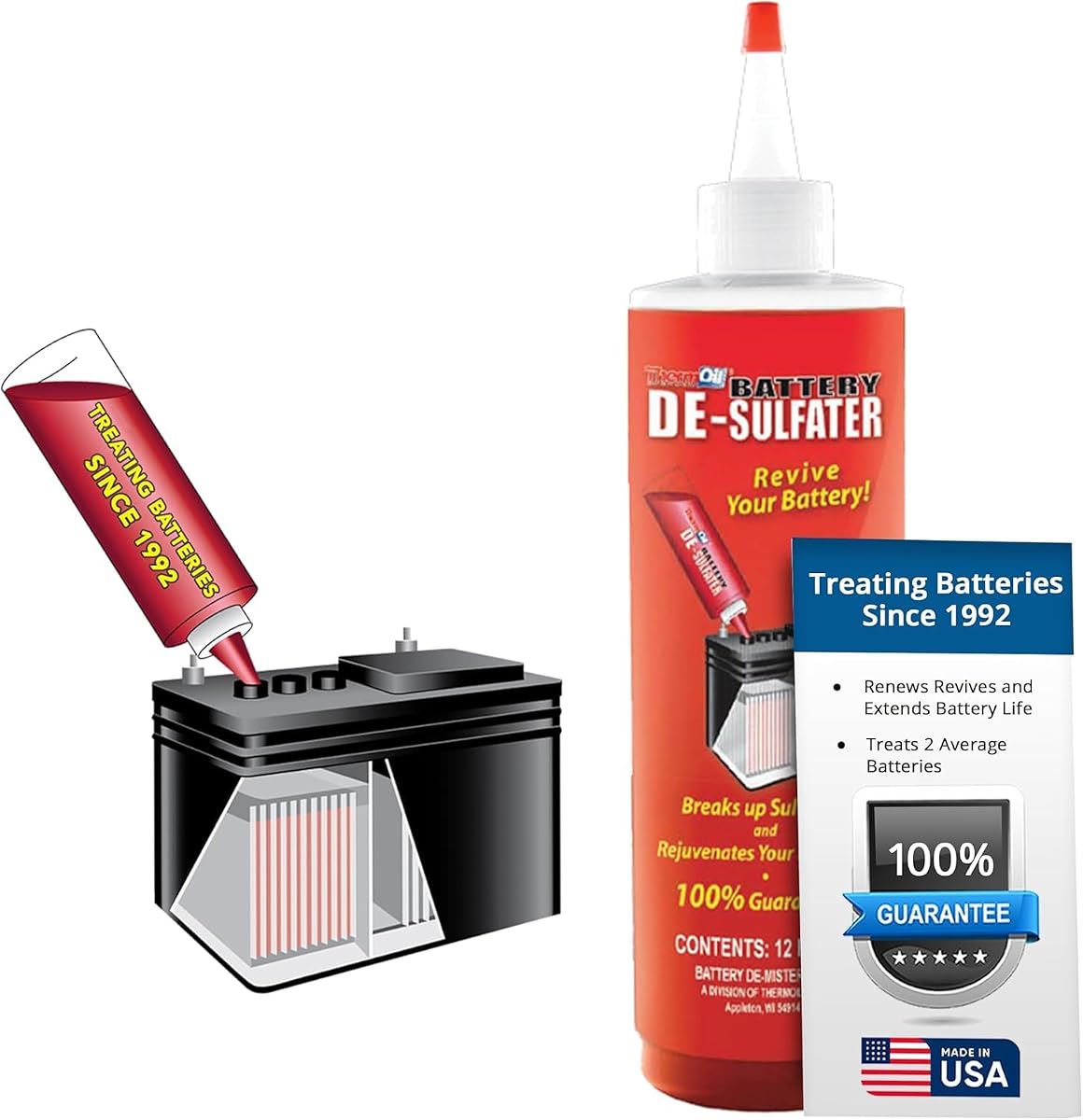
DeSulfater Battery Care Solution 12oz.
3.8Editor score
No Epsom salts formula
Reduces internal heating
Easy electrolyte additive
This guide compares the top Battery Restorer and Desulfator solutions for lead acid batteries, evaluating additives and pulse devices to extend life and
Choosing the right Battery Restorer and Desulfator can save you money on expensive replacements. These products target sulfation, a common cause of battery failure in lead acid systems used across many vehicles.
We compared ten leading options based on user feedback, technical specs, and compatibility. Our analysis covers both chemical additives and electronic pulse devices designed to rejuvenate worn batteries effectively.
Each pick highlights key strengths and ideal use cases for your needs. Prices and availability change frequently, so verify current details before purchasing to ensure you get the best value today.
3.8Editor score

4.1Editor score

3.8Editor score
This table provides a side-by-side view of all ten products, highlighting key specifications and unique features to help you decide which restoration method fits your specific battery needs best.


This professional battery desulfator stands out by using high frequency low current pulses to dissolve sulfate buildup. It works across a broad voltage range from 12V to 72V, making it suitable for many applications including cars and solar systems.
We may earn a commission when you buy through this link, at no additional cost to you.
The device sends intelligent pulses during charging or standby to break down lead sulfate crystals. It features smart low voltage cutoffs and reverse polarity protection, ensuring safe operation for long periods without overheating or damaging the battery.
While it is effective at restoring capacity, it requires patience as improvements may take several weeks to appear. It is also not a standalone charger so you must pair it with a charging cycle for best results.
Buyers looking to maintain various battery types should choose this unit for its versatility and safety features. It is ideal for those who need a reliable long term solution to extend battery life and improve performance.
The pulse technology effectively prevents sulfation buildup, allowing batteries to hold charge longer and perform near new condition.
Built in fuses and voltage cutoffs protect your battery from damage during the restoration process.
We may earn a commission when you buy through this link, at no additional cost to you.
This additive targets sulfation to rejuvenate weak lead acid batteries across many vehicle types. It is formulated to be safe while removing harmful buildup that reduces charge capacity and lifespan.
We may earn a commission when you buy through this link, at no additional cost to you.
Users find it works by improving the chemical balance inside the battery. It can be used for cars golf carts and ATVs to restore performance and reduce the need for costly new replacements.
The product is effective but relies on chemical action so it may not work on damaged or dry cells. It is a budget friendly option but requires proper application for best results.
Choose this if you need an affordable liquid solution to boost capacity in older batteries. It offers a gentle restoration process that protects internal components while delivering long lasting performance.
The formula improves internal chemistry to enhance overall battery efficiency and storage potential.
Using this additive can significantly reduce expenses by extending the life of existing batteries.
We may earn a commission when you buy through this link, at no additional cost to you.
Thermoil DeSulfater offers a reliable non acid solution for maintaining lead acid batteries. It breaks down corrosion without using Epsom salts, making it a safer option for regular care.
We may earn a commission when you buy through this link, at no additional cost to you.
This additive enhances performance by reducing internal resistance and heating. It is designed for ease of use, simply added as an electrolyte additive to rejuvenate your battery without special tools.
While it is a smaller size it provides a high quality formula backed by a guarantee. It may require consistent application to maintain results over time compared to larger bottles.
This is the perfect entry level choice for users wanting a safe and simple treatment. It delivers peace of mind with a non hazardous formula that protects your battery effectively.
Unlike cheap desulfators, this formula avoids Epsom salts for better battery health and efficiency.
The non-hazardous formula ensures safe handling for all lead-acid batteries without risk of damage.
We may earn a commission when you buy through this link, at no additional cost to you.
This larger 64oz bottle provides ample solution for maintaining multiple lead acid batteries. It uses a non acid formula to enhance performance without the risks associated with harsh chemicals.
We may earn a commission when you buy through this link, at no additional cost to you.
By reducing internal resistance by up to 50 percent it helps batteries deliver power more efficiently. The guarantee ensures reliability for users who need a safe and trusted solution.
While the 64oz size is convenient for bulk use it may not work on all battery types. Patience is needed as results appear gradually over regular charging cycles.
Choose this if you have several batteries needing maintenance and prefer a non acidic option. The larger size offers value and peace of mind with its high quality formulation.
Breaking down sulfation reduces resistance, allowing for better power efficiency and internal cooling.
The non-acid formula ensures safe handling and long-term preservation of battery integrity.
We may earn a commission when you buy through this link, at no additional cost to you.
This premium gallon size solution is designed for fleet operators and those managing multiple batteries. It is manufactured in the USA using a non toxic formula that is safe to handle in any environment.
We may earn a commission when you buy through this link, at no additional cost to you.
The chemical process penetrates battery cells to dissolve hardened sulfate buildup. It is effective for golf carts and forklifts, restoring charge capacity after regular charging cycles.
While it treats many batteries, it cannot revive completely dead or frozen cells. Users must apply the correct dose per cell to ensure optimal results across their battery bank.
Choose this for professional maintenance needs where quantity and safety are key. The one gallon size provides excellent value for fleets looking to extend battery life safely.
Produced and bottled in the USA ensuring high quality standards for your battery maintenance needs.
The non toxic formula allows safe handling without special protective gear for all users.
We may earn a commission when you buy through this link, at no additional cost to you.
This device uses automatic pulse technology to maintain lead acid batteries with minimal effort. It connects easily to terminals to dissolve sulfate crystals and restore capacity over time.
We may earn a commission when you buy through this link, at no additional cost to you.
It works with various battery types including deep cycle and marine options. The continuous maintenance mode helps prevent future buildup, keeping batteries in good condition for extended periods.
While effective it is not a full charger so it relies on external charging for power. Users must ensure the battery is in good condition before connecting for best results.
Choose this for hassle-free long term maintenance of your battery bank. It simplifies the process of keeping batteries healthy without complex wiring or settings.
Pulse technology automatically reconditions batteries through controlled charging cycles for consistent results.
Simple connection to battery terminals allows for immediate and continuous maintenance without setup.
We may earn a commission when you buy through this link, at no additional cost to you.
This one gallon solution is optimized for golf cart fleets and service professionals. It breaks down lead sulfate to restore capacity in flooded lead acid batteries effectively.
We may earn a commission when you buy through this link, at no additional cost to you.
Users can treat multiple batteries with one bottle, making it cost effective for maintenance. The USA made formula meets high standards for quality and safety.
It requires up to 10 days of regular charging for full effects. It works best on batteries that still accept a charge, not those that are completely dead.
Select this for professional golf cart maintenance where volume and quality matter. It is a reliable tool to keep fleet batteries performing at peak levels.
The one gallon size treats 3 to 6 batteries, ideal for golf courses or fleets.
Designed specifically for flooded lead acid batteries that still accept a charge.
We may earn a commission when you buy through this link, at no additional cost to you.
This unit supports high capacity batteries up to 400AH with a high frequency peak pulse. It auto-sets voltage for 12V to 48V systems, simplifying the maintenance process.
We may earn a commission when you buy through this link, at no additional cost to you.
The device helps prevent lead sulfate sticking and gradually decomposes crystals to extend battery life. It is compatible with chargers for continuous operation without interference.
Note that it works best when the battery voltage is above 11.5V. You must ensure the battery is not deeply discharged before connecting for the device to function correctly.
Choose this for large capacity batteries needing robust restoration power. The auto setting feature makes it convenient for varied systems with high amp requirements.
Supports up to 400AH for larger batteries that need more power for restoration.
The device automatically recognizes voltage to ensure correct settings without manual input.
We may earn a commission when you buy through this link, at no additional cost to you.
This refill solution cleans deposits and restores battery characteristics for various applications. It has a high rating for versatility across motorcycles, boats, and other lead acid devices.
We may earn a commission when you buy through this link, at no additional cost to you.
Users apply it directly to the cells without emptying existing liquid. It helps enhance energy and allows for normal discharge after a short recharge cycle.
While effective on lead acid, it does not work on gel or frozen batteries. It requires a short recharge time to activate the full benefits of the solution.
Choose this for quick maintenance across multiple battery types. Its simple application and high rating make it a practical choice for routine restoration needs.
Works on motorcycles trucks airplanes and boats, making it a versatile solution for many needs.
Keep the original liquid in the battery and add the full amount for best results.
We may earn a commission when you buy through this link, at no additional cost to you.
This desulfator offers a high rating for extending battery life effectively. It supports up to 200AH with an auto pulse feature that simplifies operation for users.
We may earn a commission when you buy through this link, at no additional cost to you.
The 2A regenerator power helps dissolve crystals without complex setup. It connects automatically to terminals and recognizes voltage to avoid manual adjustments.
It is designed for lead acid batteries that still hold some charge. Users must check voltage before connecting to ensure the device works correctly.
Choose this for reliable mid-range maintenance with minimal hassle. The high rating and easy connection make it a top pick for general battery care.
With a 4.4 rating, this desulfator is highly regarded for extending battery life effectively.
High frequency peak pulses prevent crystal buildup for sustained performance.
We may earn a commission when you buy through this link, at no additional cost to you.
Selecting the right restorer depends on your battery type and desired maintenance level. Understanding the difference between chemical and pulse devices is key to making an informed choice.
Ensure the product matches your battery chemistry such as AGM Gel or Flooded. Some additives work only on specific types while pulse devices often cover a wider range.
Check the product specs to confirm it supports your specific battery technology before purchasing.
Pulse devices often support various voltages from 12V to 72V. Select a unit that covers your system's voltage to ensure proper operation.
Verify the voltage limits to avoid connecting incompatible devices that may not function correctly.
Chemical additives come in sizes from 12oz to gallons. Larger bottles offer better value for fleets while smaller sizes suit single vehicles.
Choose a size that matches the number of batteries you need to maintain regularly.
Automatic pulse devices require simple terminal connections while chemical additives need cell access. Consider your comfort level with handling battery electrolytes.
Look for products with clear instructions to simplify the restoration process.
Products with non toxic formulas or built-in fuses reduce risks during maintenance. Safety is essential when working with lead acid batteries.
Prioritize items that highlight safe handling and protection mechanisms for your battery.
Some solutions show improvements in days while others take weeks. Understand the expected timeline before starting the restoration process.
Choose a solution that fits your schedule for maintenance and recovery.
Look for established brands with positive feedback for reliability. Proven track records ensure you get a functional product that delivers as promised.
Check user reviews to verify the brand’s claims before buying.
Balance the product cost against potential savings from avoiding replacements. Investing in quality can lead to long term maintenance benefits.
Calculate the number of batteries you need to treat to find the best value.
For chemical additives, ensure the battery is in good condition and not frozen. Add the solution directly into each cell according to the instructions and avoid overfilling.
For pulse devices, connect red to positive and black to negative terminals securely. Ensure the voltage is within range before connecting the device to start the process.
Regular maintenance after using the restorer helps keep results. Monitor charge cycles and apply further treatment if capacity begins to drop again.
Sulfation forms lead sulfate crystals on plates during discharge, reducing capacity over time. It blocks chemical reactions and makes it hard for the battery to hold a charge.
Most restorers require the battery to still accept a charge. They cannot revive completely dead or damaged cells without any electrical function remaining.
Results vary from a few days to weeks depending on the method and battery condition. Pulse devices often show gradual improvement over several weeks.
Many modern formulas are non toxic and safe without protective gear. Always check the label to confirm safety and proper handling instructions.
Some pulse devices support AGM, but many liquid additives work only on flooded cells. Verify the specific compatibility before applying any product.
A restorer repairs chemical or internal buildup to restore capacity. A charger provides energy to replenish voltage, often working alongside a restorer.
The top picks offer reliable ways to extend the life of lead acid batteries. Pulse devices provide advanced maintenance while chemical additives offer simple solutions.
Prioritize compatibility with your battery type and voltage to ensure effective results. Safety and ease of use should also guide your selection process.
Prices and availability vary, so check current listings before purchasing. Finding the right restorer today can save money on replacements tomorrow.