
Pyle Premium Direct Injection Audio Box
4.5Editor score
Passive DI Unit
Hum Eliminator Feature
Input Attenuator Included
A quality bass direct box ensures your instrument signals reach the mixing console with clarity and minimal noise. It transforms high impedance outputs into balanced low impedance signals suitable for long cable runs and professional audio systems.
We evaluated ten top-rated models based on their transformer quality, construction durability, and ease of use. Our analysis includes passive and active designs suitable for various budgets and performance environments from small venues to large stages.
Each selection highlights unique strengths such as ground lift switches, pad attenuation, and stereo capabilities. Please note that availability and pricing may fluctuate over time so verify current details before purchasing your next audio interface tool.
4.5Editor score

4.8Editor score
4.8Editor score
As an Amazon Associate we earn from qualifying purchases.
The following table provides a side-by-side overview of key specifications and features for each selected model to help you identify the right fit for your specific audio routing needs.




This model serves as an accessible entry point for musicians needing basic impedance matching. It carries a strong rating from users who appreciate its straightforward design and cost effectiveness for casual setups.
We may earn a commission when you buy through this link, at no additional cost to you.
The unit features a standard 1/4 inch connector that accepts signals from guitars and basses. It includes a hum eliminator function which helps reduce unwanted noise when connecting unbalanced sources to balanced mixers.
While it lacks advanced features like pad switches, the attenuator helps manage signal levels for different instruments. The detachable power cord option adds flexibility for live sound applications where power access varies.
This box is ideal for hobbyists or home studios starting to explore professional audio routing. It offers the core functionality needed to connect instruments to PA systems without requiring external power sources.
Its price point makes it an attractive choice for those testing DI boxes before investing in higher end gear.
Beyond bass guitars it supports keyboards and line outputs allowing for diverse signal routing tasks.
We may earn a commission when you buy through this link, at no additional cost to you.
The PDC21 model emphasizes durability with an all steel chassis designed for frequent use. It maintains the core benefits of the previous model while adding structural robustness for touring or daily studio use.
We may earn a commission when you buy through this link, at no additional cost to you.
Users report that this unit effectively connects unbalanced signals from various sources to main PA systems. The hum eliminator capability is highlighted as a key benefit for reducing buzz in noisy environments.
One unique feature is its ability to power up to ten effects pedals which adds value for guitarists and bassists. This integration reduces the need for separate power supplies in compact pedalboard setups.
It stands out for musicians who need a sturdy tool that handles daily rigors without breaking the bank. The steel build ensures longevity while the simple interface keeps operation straightforward during live performances.
The all steel chassis provides extra protection against physical impacts common in mobile performance scenarios.
Ability to power multiple effects pedals streamlines setup by reducing cable clutter and external power needs.
We may earn a commission when you buy through this link, at no additional cost to you.
Radial is well known in professional audio for producing reliable passive direct boxes. This model features a custom transformer and rugged I-beam construction that ensures it can withstand heavy stage use over time.
We may earn a commission when you buy through this link, at no additional cost to you.
The passive design means it does not require external power which simplifies signal flow and reduces potential points of failure. It is engineered to handle high level signals without distortion providing a clean sound for mixing.
While it lacks some modern extras like ground lift switches visible on the outside the internal engineering prioritizes signal integrity. Musicians appreciate the consistent performance it delivers across different venues and recording environments.
This choice is recommended for professionals who prioritize sound quality and durability above all else. It represents a significant step up in build quality from entry level alternatives and justifies its position in the mid range market.
The custom transformer ensures low noise and high fidelity signal transfer essential for professional recording.
Internal structural design provides exceptional resistance to physical stress and vibration damage.
We may earn a commission when you buy through this link, at no additional cost to you.
This model earns top marks for balancing professional performance with an economical price point. It uses Whirlwind's TRHL transformer which is riveted to the chassis for enhanced durability and consistent sound quality.
We may earn a commission when you buy through this link, at no additional cost to you.
The IMP 2 converts instrument level unbalanced signals to balanced mic level signals ideal for long cable runs. Users praise its compact footprint which saves space on crowded stage monitors and rack setups.
Although it lacks some premium features like external switches its core performance remains reliable. The riveted construction ensures it can handle touring conditions without failing or developing unwanted noise over time.
It is an excellent choice for musicians who need a workhorse unit that performs consistently without breaking the bank. This model offers the best combination of build quality and audio fidelity for its price range.
Riveting the transformer to the chassis prevents internal movement that can cause noise or failure.
The in line transformer design ensures a clean conversion from instrument to mic level signals.
We may earn a commission when you buy through this link, at no additional cost to you.
The PDC22 distinguishes itself by offering two channels within a compact chassis. This feature allows for connecting two instruments simultaneously which is useful for keyboardists or players with multiple pickups.
We may earn a commission when you buy through this link, at no additional cost to you.
Constructed with a durable steel chassis it matches the durability expectations of its single channel counterparts. The hum eliminator and attenuator features provide essential tools for managing signal levels and noise in live settings.
While it maintains the basic control scheme of the Pyle series the dual channel capability adds significant utility. It is a smart choice for those who need more input flexibility without upgrading to a high end rack system.
This unit fits well in home studios where multiple sources need to be connected quickly. Its straightforward design means setup is fast and the steel build ensures it lasts through regular use.
Having two inputs on one box simplifies routing for musicians using multiple instruments or amps.
Built in attenuator and hum elimination help maintain clean audio across various input sources.
We may earn a commission when you buy through this link, at no additional cost to you.
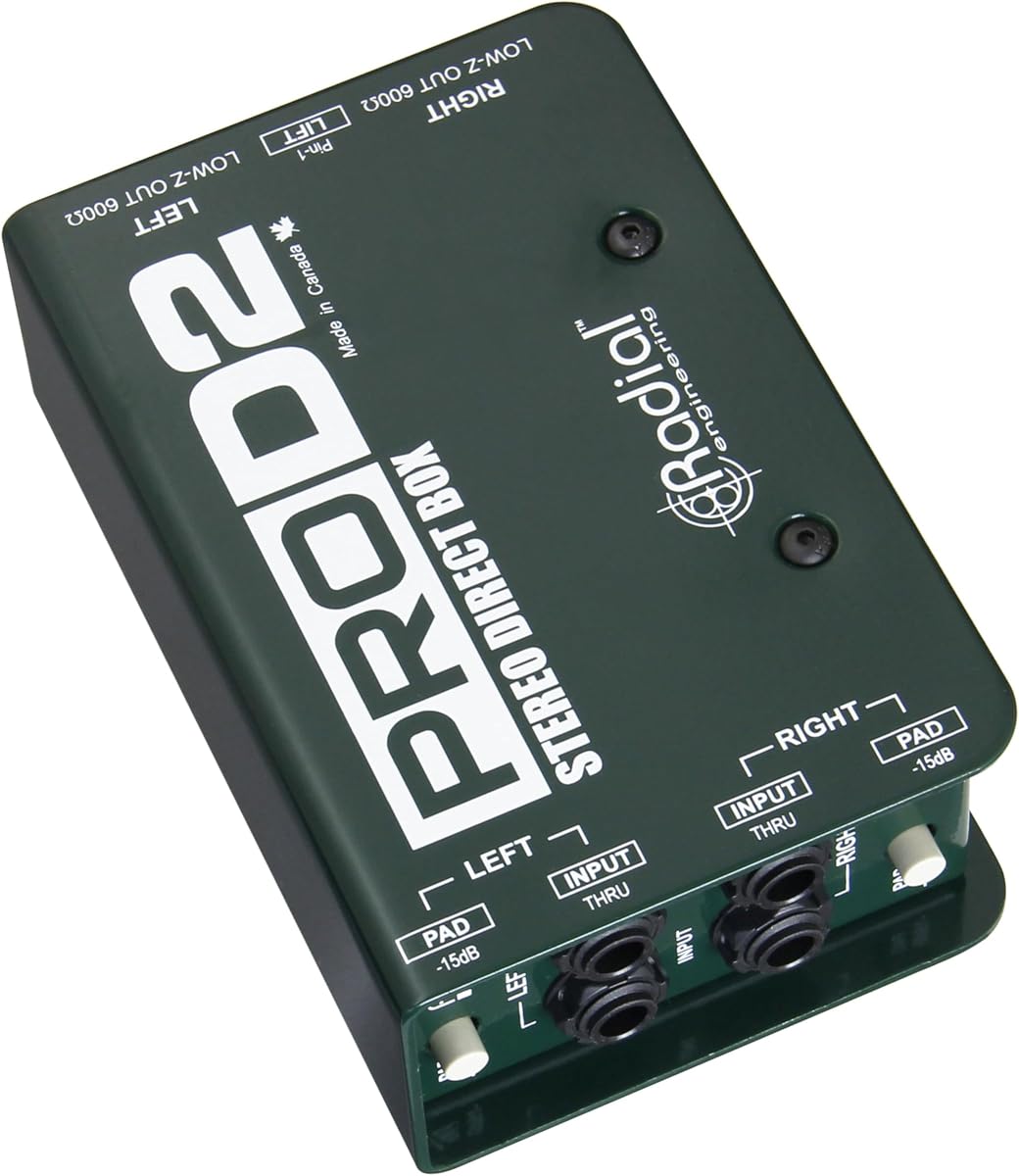
For musicians requiring stereo output the ProD2 offers top tier performance with isolation transformers. It is designed to handle complex setups such as stereo keyboards or dual guitar rigs without cross talk.
We may earn a commission when you buy through this link, at no additional cost to you.
The inclusion of a 15dB pad and lift switch provides control over signal levels and ground loops. These features are essential for managing high input levels from line sources or preventing hum in difficult environments.
The passive design ensures it remains reliable even if power fails during a show. Its construction is robust enough to withstand the rigors of touring while maintaining high fidelity audio reproduction.
This box is the clear choice for professional setups where stereo integrity and durability are non negotiable. While the cost is higher the versatility and quality justify the investment for serious touring musicians.
Isolation transformers on both channels prevent ground loops and maintain separation for stereo signals.
Built in pad and lift switches offer immediate control over signal levels and noise issues.
We may earn a commission when you buy through this link, at no additional cost to you.
The DB2 offers a cost effective solution for stereo input needs with dual passive channels. It includes a signal attenuation switch with multiple settings to prevent overload from various instrument types.
We may earn a commission when you buy through this link, at no additional cost to you.
Built with a scratch resistant and rust proof design it is ready for touring and heavy use. The ground lift switch ensures that noise interference is minimized which is critical for clean recording sessions.
This model is particularly useful for synth players or those using dual outputs from a single instrument. The XLR balanced outputs provide the necessary integrity for long cable runs to the mixing console.
It represents a strong contender for those needing stereo capabilities without the premium price of top brands. The durable build and useful attenuation options make it a practical choice for modern digital and analog setups.
Three attenuation settings allow for precise control to match different instrument output levels accurately.
The scratch and rust proof finish ensures the unit looks good and works well over time.
We may earn a commission when you buy through this link, at no additional cost to you.
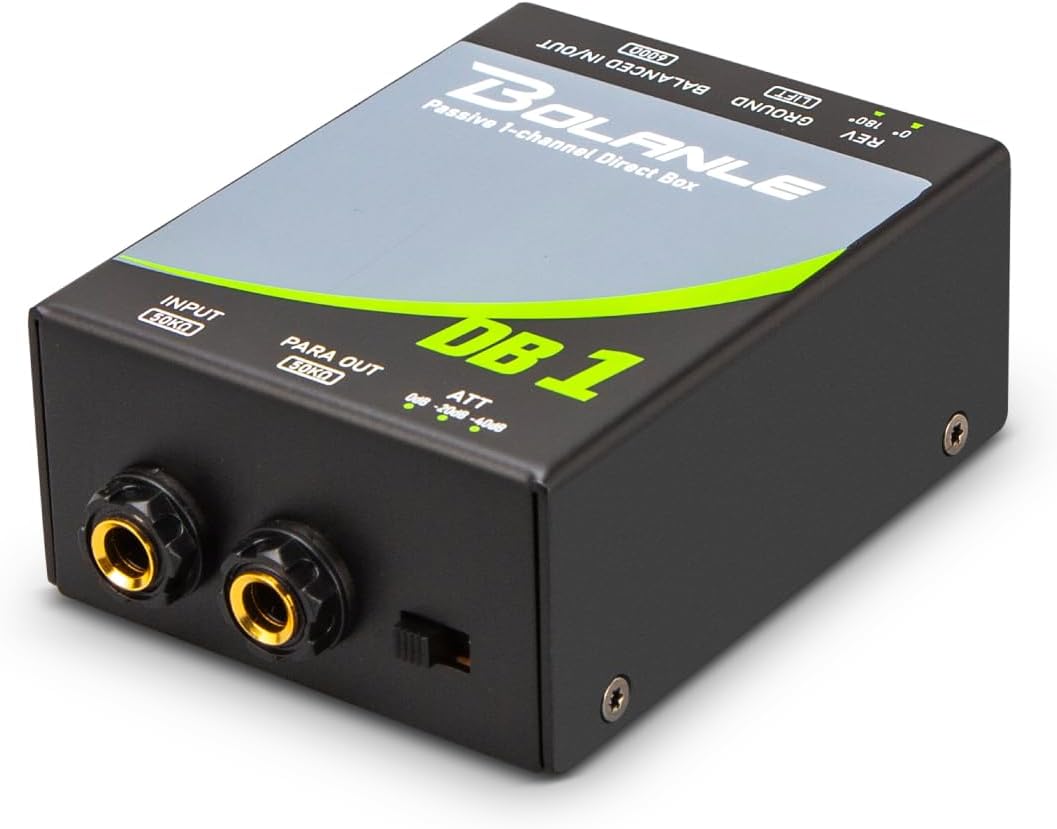
This mono unit focuses on pure signal conversion without the need for external power. It includes a parallel output which allows you to send the signal to an amp and a mixer simultaneously.
We may earn a commission when you buy through this link, at no additional cost to you.
The built in feedback eliminator and hum eliminator help maintain a clear sound during live performances. This is particularly beneficial for bassists who often deal with ground loop issues in large venues.
Its road ready design is built to withstand frequent gigs and tours with reliable performance. The signal attenuation switch adds flexibility for handling different input levels from various instruments.
For players needing a straightforward mono solution this box delivers excellent value. The combination of durability and basic features makes it a reliable tool for both studio and stage applications.
Sending signal to both amp and mixer simplifies setup for live performances and recording.
Integrated hum and feedback eliminators ensure a clean signal path in noisy environments.
We may earn a commission when you buy through this link, at no additional cost to you.
The J22 stands out for its unique triple power options including phantom power battery and USB. This ensures you can always power the unit regardless of the venue or available power sources.
We may earn a commission when you buy through this link, at no additional cost to you.
It is an active stereo DI box which provides better fidelity for modern instruments like high output pickups or digital keyboards. The dual XLR outputs maintain full stereo separation without signal loss or mono summing.
Designed to be compact and road ready it fits easily into gig bags and can be mounted on mic stands. The metal housing withstands the physical demands of touring while protecting the internal electronics.
This box is ideal for keyboard players and active instrument users who need reliable power and stereo output. Its flexibility and feature set offer premium performance at a price point accessible to working musicians.
Three power options prevent failure during shows if phantom power or batteries are unavailable.
Active circuitry ensures low impedance balanced outputs that preserve high quality stereo signals.
We may earn a commission when you buy through this link, at no additional cost to you.
This active box relies on phantom power to deliver high resolution audio signals to your console. It features a -15dB pad which makes it suitable for high output passive basses and instruments.
We may earn a commission when you buy through this link, at no additional cost to you.
The compact design allows it to fit into tight spaces on pedalboards or rack mounts without obstruction. It is built to handle the demands of professional environments providing a clean and transparent signal path.
Unlike battery operated models this unit depends on your mixer for power which simplifies battery management but requires phantom capability. The build quality is consistent with Radial standards ensuring durability and performance.
For professionals who already have a phantom powered setup this box is a reliable and efficient choice. It offers excellent sound quality in a small package making it a great addition to any live or studio toolkit.
Relying on phantom power eliminates the need for batteries and ensures consistent operation.
Active design provides high resolution output ideal for capturing detail in modern instrument signals.
We may earn a commission when you buy through this link, at no additional cost to you.
Selecting the right direct box depends on your specific instrument, venue size, and recording needs. Understanding key features helps you make a choice that ensures clean signal transmission.
Passive boxes use transformers and require no power, making them reliable and simple. Active boxes use circuitry and require power to boost signal strength and handle high impedance sources.
Choose passive for simple setups and active for high output instruments or digital keyboards.
Mono boxes handle a single instrument connection, while stereo boxes manage two inputs or outputs. Stereo is essential for maintaining width in keyboard or dual instrument setups.
Select stereo if you need to preserve left and right channel separation.
A ground lift switch disconnects the ground pin to eliminate hum and noise caused by ground loops. This is a critical feature for venues with complex electrical systems.
Look for models with a dedicated ground lift switch for quiet performance.
Pads reduce input signal levels to prevent clipping and distortion from hot signals. Common values include 10dB or 15dB depending on the manufacturer design.
Ensure the box has a pad if you use high output pickups or processors.
Metal chassis offer superior durability compared to plastic options especially for touring. Look for steel or ruggedized housing to withstand physical impacts.
Prioritize metal construction for any box that will leave the studio.
Standard connections include 1/4 inch inputs and XLR outputs for balanced cables. Some models also provide parallel outputs for amps or other monitoring devices.
Verify that connector types match your existing cables and equipment.
Active models may use batteries, USB, or phantom power. Multiple power sources ensure you never run out of juice during a gig.
Check power requirements before buying active models to ensure compatibility.
Budget options provide basic functionality while premium units offer better components and durability. Consider how often you will use the box to justify the cost.
Invest in quality if you perform live regularly to avoid equipment failures.
Connect your instrument to the input using a standard instrument cable. Use a balanced XLR cable to connect the output to the mixing console for optimal signal integrity.
If you notice humming or buzzing engage the ground lift switch to eliminate interference. Adjust the pad if the signal is too hot and causing distortion on the input meter.
Store the unit in a padded case when not in use to protect the chassis and connectors. Regularly inspect cables and connectors for wear to maintain reliable performance over time.
Yes, a direct box is essential to convert your bass signal to a balanced low impedance format. This allows for long cable runs without noise and connects properly to mixing consoles.
Passive boxes use transformers and need no power, while active boxes use electronics and require power. Active boxes are better for high impedance or line level sources.
Yes, active stereo direct boxes are ideal for synthesizers to preserve stereo output and manage impedance. Ensure your DI supports stereo inputs if your synth has two outputs.
Hum is often caused by ground loops which can be fixed with a ground lift switch. Ensure all equipment is properly grounded and cables are in good condition.
Use a 1/4 inch instrument cable for the input and a balanced XLR cable for the output. Balanced cables help reduce noise over long distances.
Generally no, direct boxes are designed for instrument or line level signals. Microphones should connect directly to a mixer or audio interface preamp.
High quality transformers in passive boxes can add warmth, while active boxes aim for transparency. The impact depends on the specific model and its components.
You need a pad if your signal is clipping or distorting when plugged into the mixer. Use the attenuation switch to reduce the level to a healthy range.
We have reviewed ten top rated options ranging from budget friendly models to professional stereo units. Each choice offers unique features suited to different musicians and environments.
Prioritize build quality and signal integrity to ensure your instrument sounds its best in any setting. Active units provide extra flexibility for modern digital gear while passive units offer reliability.
Remember that prices and availability can change so always check the latest product details before purchasing. A suitable direct box is a critical investment for any serious bass player.