
ESP32-S3-Nano Microcontroller
5.0Editor score
Integrated 8MB PSRAM
Arduino and MicroPython Compatible
Onboard Wi-Fi and Bluetooth
This guide compares the top Arduino Nano ESP32 boards and compatible ESP32 modules for IoT wireless connectivity and embedded development projects in October
The Arduino Nano ESP32 represents a significant leap in embedded development, offering powerful dual-core processing with built-in wireless connectivity for modern IoT applications.
We evaluated ten top-rated boards based on performance, connectivity features, ease of use, and community support to help you choose the right platform for your next project.
Each selection highlights unique strengths from official Arduino releases to third-party alternatives, ensuring you find the perfect balance of power and flexibility for your specific needs.
5.0Editor score

4.6Editor score

4.8Editor score
This side-by-side comparison highlights the key specifications and unique features of each board to help you quickly identify which model best fits your project requirements.


This official Arduino board sets the standard for modern ESP32 development with its robust feature set and reliable software support for diverse projects.
We may earn a commission when you buy through this link, at no additional cost to you.
Its dual-core ESP32-S3 processor delivers exceptional speed for AI and machine learning tasks while maintaining low power consumption for battery devices.
While it costs slightly more than generic alternatives, the official support and stable libraries justify the investment for professional and educational use.
Ideal for makers seeking a balance of power and ease of use, this board is perfect for smart home systems and complex IoT prototypes.
The board supports both Wi-Fi and Bluetooth 5.0, allowing seamless integration with cloud platforms and mobile devices for real-time data monitoring.
Whether you prefer C++ in Arduino IDE or Python via MicroPython, this board adapts to your workflow, making it accessible for beginners and experts alike.
We may earn a commission when you buy through this link, at no additional cost to you.
This compact board offers incredible value by packing high-end specs into an accessible package that rivals more expensive official models.
We may earn a commission when you buy through this link, at no additional cost to you.
With 8MB of PSRAM and support for both Arduino and MicroPython, it handles complex applications without breaking the bank for hobbyists.
The main trade-off is relying on community documentation rather than official Arduino resources, but the active user base compensates well.
Perfect for students and hobbyists on a tight budget who need reliable performance for smart sensors, custom keyboards, or wireless controllers.
Despite its low price point, the board delivers top-tier processing speed and memory capacity, making it ideal for resource-intensive IoT tasks.
HID support allows the board to act as a USB keyboard or mouse, opening up possibilities for macro pads and custom input devices.
We may earn a commission when you buy through this link, at no additional cost to you.
This board pushes the boundaries of embedded computing with RISC-V architecture and interfaces designed for video and AI applications.
We may earn a commission when you buy through this link, at no additional cost to you.
Its powerful image processing capabilities make it uniquely suited for projects involving cameras, displays, and real-time visual analysis tasks.
The complexity and specialized features might overwhelm casual users, but for industrial or advanced prototypes, it offers unmatched versatility.
Engineers looking to build smart cameras, industrial monitors, or high-performance edge AI devices will find this board incredibly powerful and adaptable.
Integrated MIPI interfaces and hardware codecs enable efficient handling of high-resolution video streams and image processing tasks.
Secure boot, flash encryption, and cryptographic accelerators ensure your connected devices are protected against unauthorized access and tampering.
We may earn a commission when you buy through this link, at no additional cost to you.
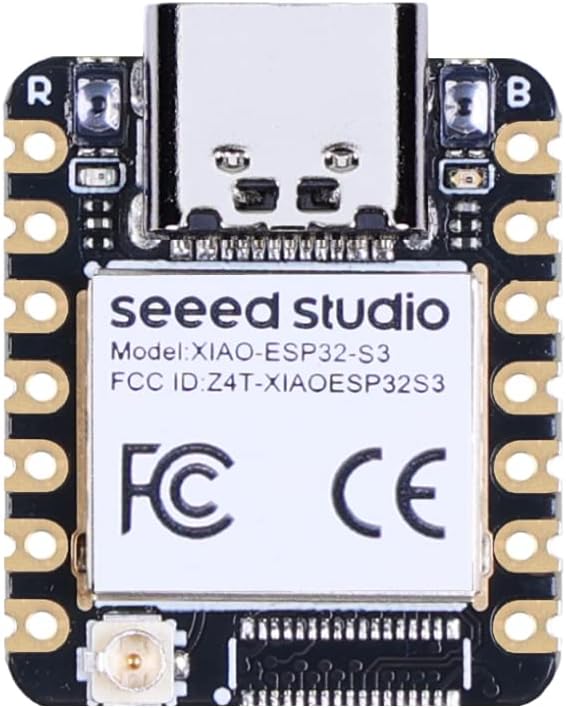
Designed for portable and wearable projects, this tiny board packs significant capability into a form factor that fits easily into small cases.
We may earn a commission when you buy through this link, at no additional cost to you.
Its power efficiency and battery charging features make it perfect for long-running sensor nodes that operate wirelessly on battery power.
While the small size limits the number of available input/output pins, it excels in applications where space is the primary constraint.
Wearable developers and those building compact IoT sensors will appreciate the balance of power, size, and ease of integration.
The compact footprint and efficient power system enable integration into wearable tech, remote sensors, and handheld gadgets effortlessly.
Support for external antennas via U.FL connectors ensures reliable Wi-Fi and Bluetooth signal strength even in challenging environments.
We may earn a commission when you buy through this link, at no additional cost to you.
Sold in a value pack, this board offers a practical solution for developers needing multiple units for prototyping or production runs.
We may earn a commission when you buy through this link, at no additional cost to you.
The castellated edges allow direct soldering onto custom carrier boards, making it a flexible choice for building custom hardware designs.
Without an onboard USB port, it requires external programming headers, which adds a slight complexity to initial setup and testing.
Hardware developers and manufacturers looking to produce multiple identical devices will find this compact module both cost-effective and reliable.
The module design allows you to embed the ESP32-S3 directly into your PCB, saving space and simplifying production processes.
Flexible clock and power supply settings help optimize energy usage across different scenarios for battery-operated applications.
We may earn a commission when you buy through this link, at no additional cost to you.
This comprehensive kit removes the guesswork for newcomers by providing everything needed to start building smart devices immediately.
We may earn a commission when you buy through this link, at no additional cost to you.
Detailed tutorials and clear circuit diagrams guide users through complex concepts without needing prior electronics experience or knowledge.
While the included board uses an older Bluetooth version, the educational value and component variety make it an excellent entry point.
Students, hobbyists, and educators looking for a ready-to-go learning solution will find this kit an invaluable resource for skill building.
With over thirty different modules and projects, the kit covers a wide range of applications from basic sensors to interactive gadgets.
The tutorials break down complex ideas into manageable steps, making it easy for anyone to start creating and learning.
We may earn a commission when you buy through this link, at no additional cost to you.
Focusing on secure IoT connectivity, this board includes hardware-level encryption to protect data in cloud-based applications effectively.
We may earn a commission when you buy through this link, at no additional cost to you.
The secure element ensures that communication between your device and the cloud remains private and resistant to potential attacks.
While it lacks the raw speed of newer ESP32 chips, its security features make it a top choice for sensitive or commercial projects.
Developers prioritizing data privacy and secure communications will find this board offers a robust foundation for trustworthy IoT systems.
The ATECC608A Secure Element provides strong cryptographic capabilities ensuring your projects maintain high standards of data protection.
Built-in Wi-Fi and Bluetooth allow seamless connections to IoT platforms, enabling remote monitoring and control without extra hardware.
We may earn a commission when you buy through this link, at no additional cost to you.
This classic development board remains a popular choice due to its widespread compatibility with countless tutorials and existing projects.
We may earn a commission when you buy through this link, at no additional cost to you.
Its dual-core processor and reliable wireless connectivity make it a solid performer for a wide variety of standard IoT applications.
While it uses an older Bluetooth version, its extensive documentation and mature ecosystem make it a safe bet for many developers.
Anyone seeking a proven, well-supported platform for general IoT tasks will find this board offers the stability needed to build confidently.
Thousands of libraries and examples are optimized for this board, ensuring you can find help and code for almost any project idea.
Integrated RF amplifiers and filters ensure strong signal quality for reliable communication over long distances and in noisy environments.
We may earn a commission when you buy through this link, at no additional cost to you.
Offering three boards in one package, this option is excellent for teams or projects requiring multiple devices for distributed sensor networks.
We may earn a commission when you buy through this link, at no additional cost to you.
The inclusion of a USB-C port modernizes the interface, simplifying charging and data transfer compared to older micro-USB models.
Over-the-air update support allows you to fix bugs or add features to deployed devices without physical access to every unit.
Groups or schools looking to equip multiple students or prototyping stations with reliable hardware will find this bulk pack highly practical.
OTA support lets you deploy firmware changes wirelessly, saving time and effort when managing a network of connected devices.
Purchasing a set of three boards reduces the cost per unit, making it easier to experiment with multi-device IoT architectures.
We may earn a commission when you buy through this link, at no additional cost to you.
This board stands out by combining two powerful microcontrollers, offering the best of both worlds in processing and connectivity.
We may earn a commission when you buy through this link, at no additional cost to you.
The integrated 12-bit DAC and CAN bus make it exceptionally versatile for applications needing precise analog output and industrial communication.
Its larger size and higher power consumption may not suit all projects, but the feature richness compensates for these limitations in many cases.
Developers working on industrial automation or projects needing both analog precision and wireless control will appreciate this unique hybrid design.
CAN bus support enables reliable real-time communication in automotive or industrial settings where robust data transfer is critical.
The built-in LED matrix allows for instant visual feedback and status displays without requiring external components or wiring.
We may earn a commission when you buy through this link, at no additional cost to you.
Selecting the right board requires balancing performance needs, connectivity options, and project constraints to ensure optimal results.
The core of any embedded device is its microcontroller. For simple tasks, standard dual-core processors suffice. However, if you plan to run machine learning models or process high-resolution images, look for boards with additional RAM or advanced instruction sets like RISC-V.
Higher clock speeds and more memory ensure your applications run smoothly without lag during complex computations or heavy data processing.
Wi-Fi and Bluetooth are essential for modern IoT projects. Check if the board supports the latest standards like Bluetooth 5.0 for better range and efficiency. Some boards also offer additional modules for long-range communication if your project needs it.
Ensure the wireless features match your communication needs to avoid bottlenecks when connecting multiple devices or sending frequent updates.
Battery-powered projects rely heavily on efficient power management. Look for features like deep sleep modes, automatic clock scaling, and integrated battery charging circuits to extend device lifespan.
Boards with low power consumption are critical for remote sensors that need to operate for months or years without human intervention.
Official Arduino boards come with extensive support, libraries, and community resources. Third-party boards may save money but could lack comprehensive documentation or require more troubleshooting when encountering errors.
Consider your comfort level with debugging and documentation when choosing between official and third-party solutions for your projects.
Your project might need specific interfaces like analog pins, PWM outputs, or serial communication. Ensure the board has enough GPIO pins and the right types of connectors to match your peripherals.
Check for specialized features like DACs or CAN buses if your application requires precise signal generation or industrial protocol support.
The size and shape of the board matter for compact projects. Some boards are designed specifically for wearables or tight spaces, while others provide standard headers for breadboard prototyping.
Choose a board that fits physically within your enclosure and offers the right mounting style for your specific hardware setup.
Different boards support different programming languages and environments. While most support C++, some offer native Python support which can speed up development and make code easier to read for beginners.
Verify that your preferred development environment is supported to streamline your workflow and avoid compatibility issues during coding.
Prices vary widely based on features and brand. If you need multiple units, consider bulk packages that offer better value. Balance the cost against the features needed to avoid overspending on unused capabilities.
Evaluate long-term costs including accessories and development tools to ensure the overall investment fits your project budget.
Start by connecting the board to your computer via USB-C to ensure it receives adequate power and allows for code uploading. Install the latest drivers if your system does not recognize the device automatically.
Use the Arduino IDE or MicroPython environment to write your code. Ensure you select the correct board type in your IDE settings to avoid compilation errors and ensure proper functionality.
Handle the board with care to avoid static damage. Store unused boards in anti-static bags and keep them away from extreme temperatures to maintain their performance and longevity over time.
Most modern ESP32 boards support MicroPython, but you may need to flash the firmware manually. Check the board documentation to confirm compatibility and follow the flashing guide for your specific model.
The ESP32-S3 offers improved performance, more memory, and native USB support compared to the original ESP32. It also adds features like vector instructions that help with AI and machine learning tasks.
No, all the boards in this guide have built-in Wi-Fi and Bluetooth capabilities. You do not need to add extra modules unless you require specialized communication protocols like LoRa or Zigbee.
The Seeed Studio XIAO ESP32S3 is ideal due to its small size and efficient power management features. It supports deep sleep modes that drastically reduce energy consumption during inactive periods.
Yes, boards like the Arduino Nano ESP32 and ESP32-P4-NANO have enough RAM and specialized instructions to run lightweight machine learning models locally without needing cloud processing.
You can update firmware using the Arduino IDE upload function or Over-the-Air updates if the board supports it. Follow the official documentation for the specific update procedure and tools.
The Arduino Nano ESP32 and its competitors offer powerful solutions for modern IoT development with varying strengths in performance and connectivity.
Prioritize the board that aligns with your specific project needs such as power efficiency, processing power, or ease of use to ensure success.
Always verify current availability and support resources before purchasing to match your long-term development goals and requirements.