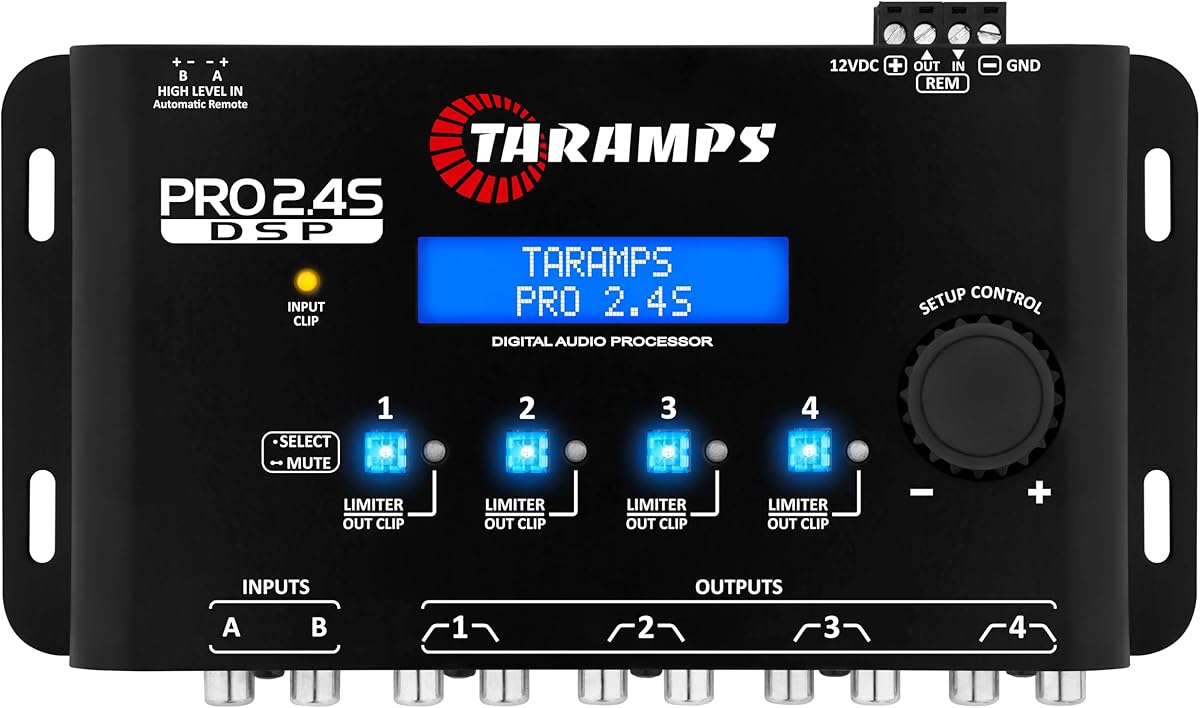
Taramps PRO 2.4S Car Audio DSP Equalizer 4 Channel
4.6Editor score
Affordable pricing
Active crossover filters
Anti-pop system included
This guide compares the top ten digital signal processor dsp for car audio systems to help you choose the right unit for your vehicle setup.
Finding the right digital signal processor dsp for car audio can transform your listening experience. These units allow precise control over sound stages and frequencies. A good processor ensures clarity and balance across all speakers in your vehicle.
We evaluated ten top models based on features, compatibility, and user feedback. Our list includes options for beginners and advanced audiophiles alike. Each product offers unique capabilities for tuning your car audio system effectively.
Every pick highlights key strengths and ideal use cases for different setups. Prices and availability may change so verify details before purchasing. Use this guide to find the perfect match for your audio goals.
4.6Editor score
4.6Editor score

4.6Editor score
Below is a side by side comparison of all ten featured processors. This table helps you quickly identify key specs and capabilities for each model.




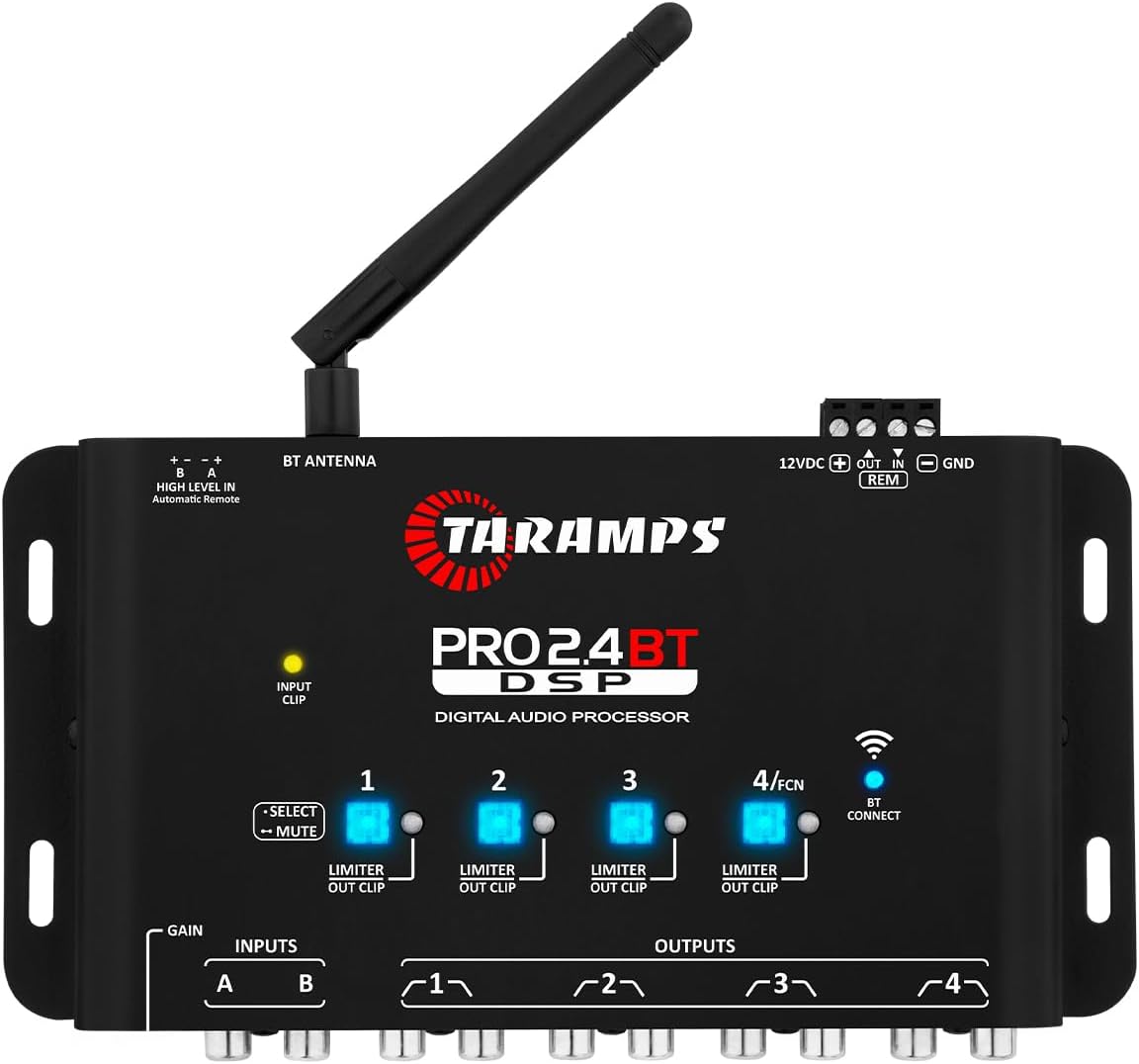
The Taramps Pro 2.4 BT stands out as a top choice for modern car audio tuning. It boasts a 4.6 rating from users who appreciate its advanced features and ease of use.
We may earn a commission when you buy through this link, at no additional cost to you.
Its Bluetooth 5.4 BLE connectivity allows you to tweak every parameter directly from your smartphone. This includes 15-band graphic EQ, parametric adjustments, and delay settings without needing a laptop.
While powerful, the unit relies on the app for full configuration which may take time to master. However the intuitive interface and preset sharing tools make the learning curve manageable for most.
This processor is ideal for enthusiasts who want professional results without the complexity of traditional laptop-based DSPs. It bridges the gap between DIY and pro installations effectively.
The dedicated app provides real time access to all settings via a stable Bluetooth connection. This makes fine tuning on the fly much easier than wired solutions.
High level inputs mean you can connect directly to factory harnesses without extra converters. This preserves signal quality while allowing full aftermarket control.
We may earn a commission when you buy through this link, at no additional cost to you.
The PRV AUDIO DSP 2.4X offers a classic approach to digital audio processing with a physical interface. Users rate it highly for its straightforward operation and robust feature set.
We may earn a commission when you buy through this link, at no additional cost to you.
It features a clear LCD screen that displays adjustments in real time. This allows you to make changes on the bench or in the car without relying on external devices.
The lack of Bluetooth means you cannot tune remotely from a phone. However the included remote relay and sequencer functionality add value for system automation and integration.
If you prefer tactile controls and don't need wireless app control this model delivers solid performance. It is a great choice for straightforward system upgrades.
The built in LCD provides immediate visual confirmation of your settings. This helps ensure accuracy when making precise adjustments during installation.
The sequencer allows for sequential triggering of other components. This simplifies wiring complex setups with multiple amplifiers or accessories.
We may earn a commission when you buy through this link, at no additional cost to you.
For those needing more outputs the PRV AUDIO DSP 2.8X expands the capabilities of the 2.4X model. It maintains the same interface logic while supporting an 8 channel setup.
We may earn a commission when you buy through this link, at no additional cost to you.
This unit excels in complex multi component systems where you need independent crossover control for more speakers. The physical interface ensures reliability even in harsh environments.
It lacks the advanced parametric depth of higher end models but covers most standard audio needs. The sequencer and remote relay remain useful tools for integration.
Buyers seeking an 8 channel solution without breaking the bank will find this appealing. It balances cost and functionality well for serious car audio projects.
Eight independent outputs allow for complex multi way active crossovers. This is essential for setups with multiple mid ranges and tweeters.
Using the same interface as the 2.4X makes transitioning easy. You benefit from familiarity while gaining extra processing power.
We may earn a commission when you buy through this link, at no additional cost to you.
This unit is designed for users who want to keep factory head units while upgrading speakers. It features built in speaker wire conversion and presets for PRV drivers.
We may earn a commission when you buy through this link, at no additional cost to you.
The high level input makes connecting to factory radios seamless without extra harnesses. Bluetooth app control adds modern convenience to the tuning process.
Some users report a steeper learning curve compared to other models. The interface can be intricate when setting up specific crossover points for drivers.
If you have a factory infotainment system and want to upgrade components this DSP handles the transition. It simplifies the integration process significantly.
The high level input accepts factory speaker wires directly. This eliminates the need for external line output converters.
Pre loaded crossover presets match specific PRV speakers. This saves time when setting up new components.
We may earn a commission when you buy through this link, at no additional cost to you.
The Taramps PRO 2.4S offers essential DSP features at an accessible price point. It is highly rated for reliability and clean signal processing capabilities.
We may earn a commission when you buy through this link, at no additional cost to you.
Key features include an integrated anti pop system and limiter to protect your equipment. RCA and high level inputs provide flexible connectivity options.
While it lacks Bluetooth control the wired connection ensures stable settings. This makes it a reliable choice for permanent installations.
Budget conscious buyers looking for core DSP functionality will appreciate this model. It delivers professional quality sound processing without the premium price tag.
Built in clip indicators and limiters prevent amplifier damage. This ensures your components last longer.
You get active crossovers and EQ at a fraction of the cost of complex units. This balances value and performance.
We may earn a commission when you buy through this link, at no additional cost to you.
This processor is built for audiophiles demanding the highest fidelity. With 32-bit 96kHz processing it ensures lossless sound transmission through your system.
We may earn a commission when you buy through this link, at no additional cost to you.
The 79-band equalizer offers unparalleled precision in tuning your audio profile. Combined with app control it provides deep customization for complex setups.
The advanced crossover options allow for detailed management of frequency distribution across eight channels. This supports multi amplifier configurations effectively.
While it comes at a higher price it justifies the cost for serious enthusiasts. It delivers professional grade audio performance in a versatile package.
The 32-bit 96kHz architecture ensures high resolution audio handling. This minimizes digital artifacts and distortion.
Seventy nine bands allow for surgical adjustments of specific frequencies. This helps eliminate resonance issues accurately.
We may earn a commission when you buy through this link, at no additional cost to you.
The Taramps PRO 2.8S Black brings 8 channel power with dynamic processing features. It is ideal for high performance systems needing precise timing control.
We may earn a commission when you buy through this link, at no additional cost to you.
Its dynamic DSP mode allows adjustment of peak and RMS limiters. This helps manage output levels effectively for different listening environments.
The auto turn-on feature simplifies integration with factory radios. You avoid needing extra wiring triggers for power management.
Those wanting extensive channel options and dynamic tuning will find this valuable. It provides a solid foundation for powerful car audio builds.
Adjustable peak and RMS limiters protect amplifiers. This helps maintain sound quality at high volumes.
Precise delay controls align sound stages across all speakers. This improves imaging and clarity.
We may earn a commission when you buy through this link, at no additional cost to you.
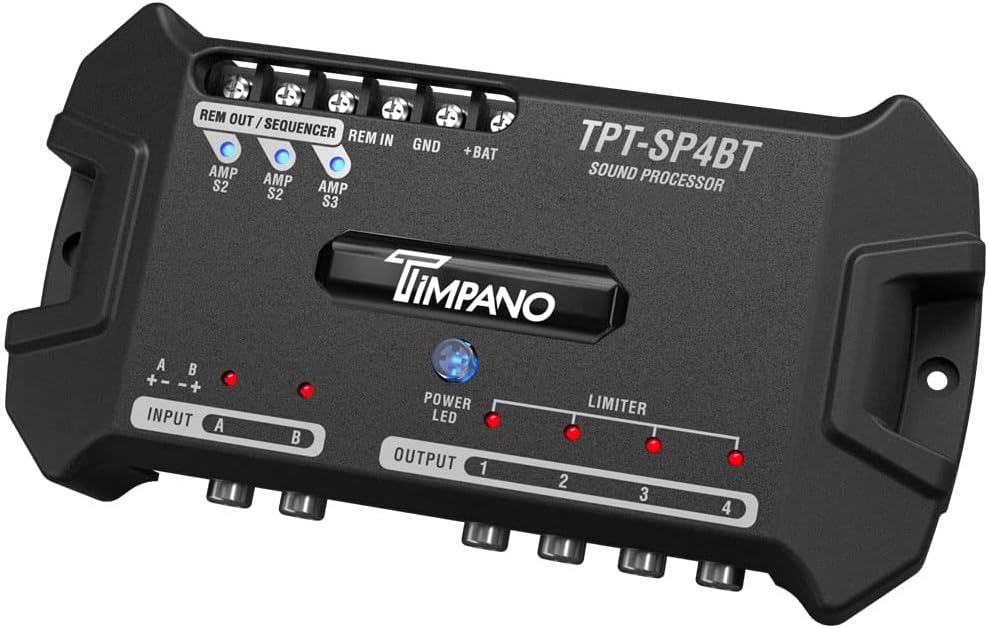
This DSP stands out for its built-in voltmeter feature. It allows you to monitor battery voltage directly which helps ensure system health.
We may earn a commission when you buy through this link, at no additional cost to you.
Bluetooth control offers convenient tuning via smartphone. The app includes tools like frequency sweeps and pink noise for precise alignment.
While limited to four outputs it covers most standard installations. The remote relay feature supports adding subwoofers or amplifiers automatically.
It is a smart choice for those monitoring electrical loads while tuning. The diagnostic tools simplify the setup process significantly.
Voltage meter helps detect electrical issues before they affect audio. This protects your head unit from fluctuations.
Frequency sweep and pink noise allow precise speaker testing. This aids in accurate crossover placement.
We may earn a commission when you buy through this link, at no additional cost to you.
The Dayton Audio DSP-408 bridges home and automotive audio needs. It offers eight outputs with parametric EQ for precise control.
We may earn a commission when you buy through this link, at no additional cost to you.
Setup relies on a graphical interface software connecting to a PC. This allows for deep customization and saving multiple presets easily.
Lack of Bluetooth means you must use a wired connection for adjustments. However the software offers detailed routing and mixing options.
It is suitable for those wanting a versatile unit for both environments. The parametric EQ provides flexibility for complex tuning.
A dedicated GUI on a computer manages all settings. This provides a detailed view of your audio chain.
Designed for both car and home audio setups. This adds value for users with multiple projects.
We may earn a commission when you buy through this link, at no additional cost to you.
This unit introduces a unique floating mode for flexible audio stream handling. It also includes subharmonic bass generation for deeper low end.
We may earn a commission when you buy through this link, at no additional cost to you.
The combination of RCA and high inputs allows versatile connections. You can switch between sources without extra hardware.
The remote sequencer enables complex system activation. This supports automatic power management for components.
It is a specialized choice for advanced audio enthusiasts. The unique features offer capabilities not found in standard DSPs.
Allows different audio flows and resources. This expands configuration options for unique systems.
Generates low frequencies to enhance subwoofer output. This adds depth to your sound.
We may earn a commission when you buy through this link, at no additional cost to you.
Selecting a digital signal processor dsp for car audio requires understanding your vehicle's audio needs and system complexity. This guide outlines key factors to consider.
Channel count determines how many speakers or amplifiers you can control independently. For basic setups four outputs often suffice. However complex systems with multiple drivers need eight channels for active crossovers. Ensure the DSP supports your specific speaker configuration.
Choose a unit with enough outputs to match your speaker layout. This ensures each driver receives tailored signal processing.
Modern DSPs often use Bluetooth or Wi-Fi for control via smartphone apps. This removes the need for a laptop during tuning. Wired interfaces offer stability but less convenience. Consider if you prefer tactile buttons or digital interfaces.
Select a control method that fits your installation workflow. Bluetooth offers flexibility while wired connections ensure reliability.
Check if the unit supports high level inputs for factory radios. RCA inputs are standard for aftermarket head units. Some units handle both without extra converters. This simplifies integration and maintains signal quality.
Verify input types match your current head unit. High level inputs reduce the need for external wiring harnesses.
The number of equalizer bands impacts your ability to tweak sound profiles. Basic units offer 10 to 15 bands while premium ones offer over 70. Parametric EQ allows precise frequency shaping. Ensure the EQ meets your tuning preferences.
More EQ bands provide finer control over your audio. Choose based on how detailed you want your tuning to be.
Advanced crossovers allow for HPF and LPF filters with multiple slope options. This manages which frequencies reach each speaker. Some units support advanced filters like Linkwitz-Riley. Check filter depth for your speaker needs.
Robust crossover filters protect speakers from unwanted frequencies. Select options that match your system requirements.
DSPs typically run on vehicle power but input voltage tolerance varies. Units handling higher voltage ensure better signal integrity. Look for gain controls to match output levels. This prevents distortion from input clipping.
Ensure the unit can handle your signal voltage. Proper gain matching prevents audio quality loss.
Built-in presets simplify setup for common configurations. Some allow saving custom profiles for different driving modes. This is useful for systems with multiple drivers. Check memory depth and export options.
Presets save time during initial configuration. Choose units with good storage for multiple setups.
Reputable brands often provide better software updates and documentation. User communities can assist with complex tuning. Check for warranty coverage and support availability. Reliable brands reduce troubleshooting issues.
Choose a brand with strong support channels. Good documentation ensures easier implementation.
Install the DSP in a dry, ventilated location to prevent heat buildup. Secure it tightly to avoid movement during driving. Connect all speaker wires securely to prevent signal loss. Use proper gauges to maintain performance.
Calibrate your system using the app or software on a laptop. Use microphones for accurate frequency response measurements. Adjust delays first to align speakers. Then set EQ to match your listening preferences.
Regularly check connections for corrosion or looseness. Update firmware if supported by the manufacturer. Avoid exposing the unit to moisture or extreme heat. Proper care extends the lifespan of your DSP.
A DSP is essential for complex systems with multiple speakers and amplifiers. It corrects timing and frequency issues that standard receivers cannot. For basic upgrades it may not be necessary but it improves sound quality significantly. It is recommended for serious audio enthusiasts.
A DSP corrects time alignment so sound from all speakers reaches your ears simultaneously. It also allows precise equalization to balance frequencies. This results in a focused soundstage and clearer audio. It reduces distortion by managing signal levels effectively.
Yes many modern DSPs include high level inputs for factory radios. This allows direct connection to speaker wires without extra converters. Some units even handle factory amplifier bypass for cleaner signal. Always check input specifications before purchasing.
A 4-channel DSP supports four speaker outputs ideal for basic setups. An 8-channel unit supports more speakers or complex crossovers. This allows for independent tweeters and mid ranges. Choose based on the number of drivers in your system.
Many units use smartphone apps via Bluetooth for tuning. Some require PC software for detailed settings. Check if app control is available for your model. Laptop dependency varies by manufacturer and price point.
Entry-level DSPs start around $50 while premium units exceed $150. Cost depends on features like channel count and control options. Mid-range units offer a balance of performance and price. Choose based on your budget and needs.
Yes DSPs are replaceable components. Ensure wiring harnesses are accessible for future upgrades. Most units use standard connections. Plan cabling for easy removal if you plan to upgrade later.
A DSP processes audio signals but does not amplify them. It requires separate amplifiers to power speakers. Some units integrate pre-amp outputs. Ensure you have compatible amps for your setup.
We highlighted ten top digital signal processor dsp for car audio options for November 2026. From budget units to premium 8-channel processors each offers unique benefits.
Prioritize features like channel count and input types to match your system. Wireless control adds convenience but wired setups ensure stability.
Prices fluctuate often so check current listings before buying. Use this guide to find the perfect match for your audio goals.