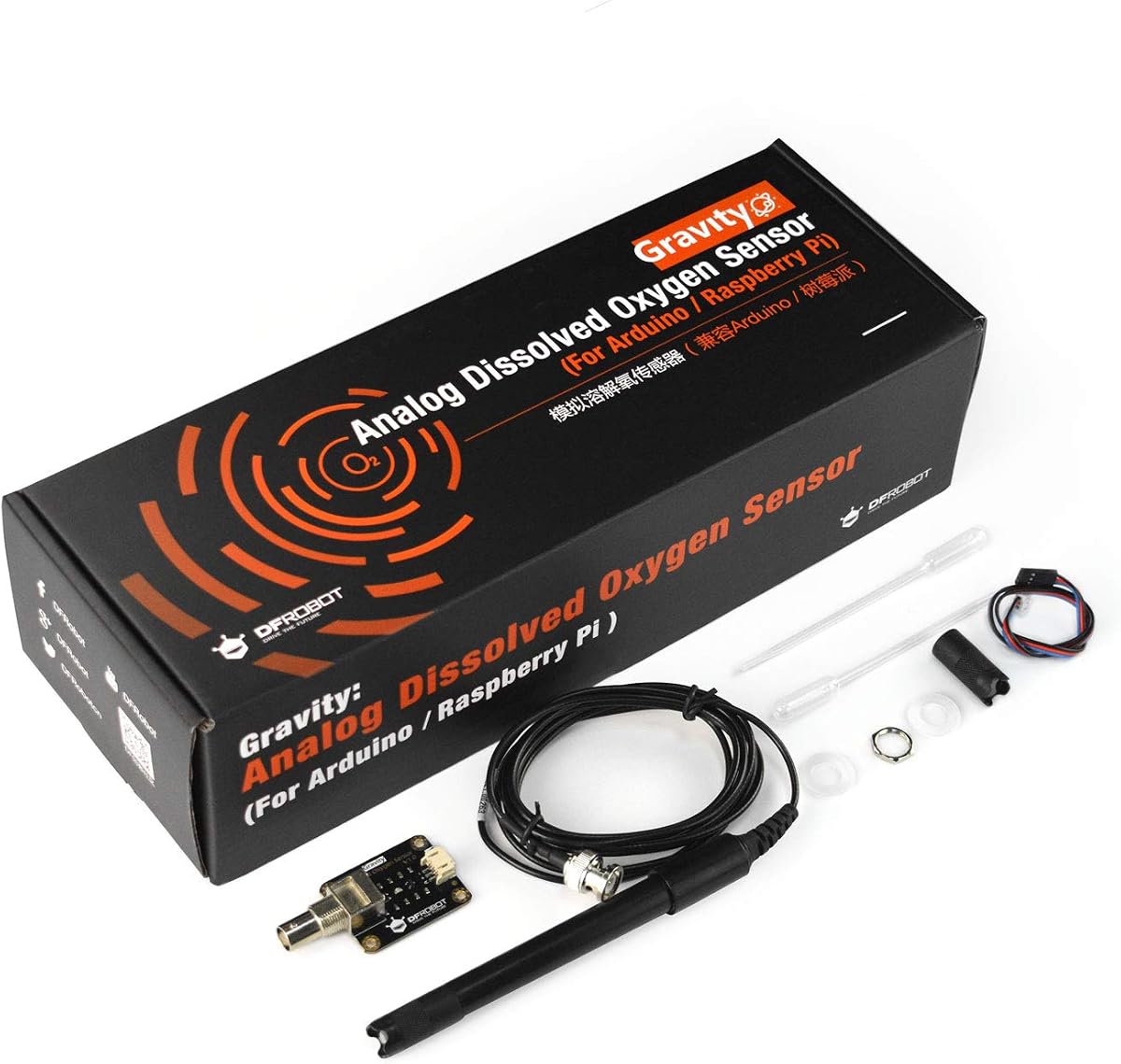
Gravity: Analog Dissolved Oxygen Sensor Kit
4.4Editor score
No polarization required
3.3V to 5V compatible
Includes spare membrane cap
This guide compares the top dissolved oxygen sensors for water quality monitoring across aquaculture, hydroponics, research, and industrial settings to help
Dissolved oxygen sensors are critical tools for maintaining healthy aquatic environments and ensuring accurate water quality analysis. Whether you manage an aquaculture facility, monitor a hydroponic system, or conduct environmental research, selecting the right sensor ensures reliable data and healthy ecosystems.
We evaluated ten top-rated dissolved oxygen sensors based on accuracy, ease of use, durability, and compatibility with various monitoring systems. Our analysis includes galvanic and optical probes, handheld meters, and kits designed for both hobbyists and professional applications.
Each pick highlights key specifications, strengths, and limitations to help you find the best match for your needs. Keep in mind that product availability and pricing may change over time, so always verify current details before making a purchase decision.
4.4Editor score
4.4Editor score

4.8Editor score
The following comparison table outlines the key specifications and features of each dissolved oxygen sensor to help you evaluate which model aligns best with your monitoring requirements and budget constraints.


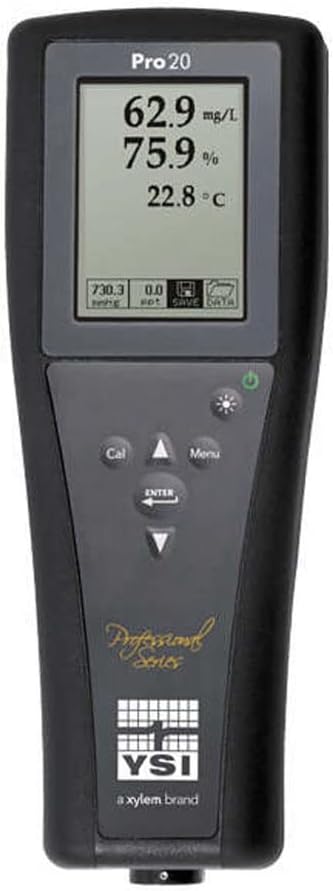
The YSI 6050020 Pro20 Handheld Dissolved Oxygen Meter stands out as a top choice for professionals requiring reliable and efficient monitoring. With a solid rating of 4.4 stars, it offers a robust design tailored for field use and laboratory applications alike.
We may earn a commission when you buy through this link, at no additional cost to you.
Its standout feature is the One Touch Cal function, which allows users to perform dissolved oxygen calibration within just three seconds. This speed significantly reduces downtime during testing sessions. The meter also stores up to 50 data sets, eliminating the need for manual note-taking during extended fieldwork.
While the meter only version does not include a probe, its ergonomic design and backlit display make it easy to read in low-light conditions. The automatic barometric pressure compensation ensures accuracy across varying altitudes, which is critical for environmental monitoring.
This meter is best suited for professionals and serious hobbyists who already have compatible probes or need a durable handheld unit for precise measurements. Its combination of speed, data management, and display quality makes it a leading choice in its category.
The One Touch Cal feature allows for quick calibration within three seconds, streamlining the testing process and maximizing efficiency during field operations.
Storing 50 data sets directly on the device removes the hassle of manual logging and ensures you have a reliable record for later analysis.
We may earn a commission when you buy through this link, at no additional cost to you.
The Gravity Analog Dissolved Oxygen Sensor Kit is an excellent budget-friendly option for makers and IoT enthusiasts. With a 4.4-star rating, it provides instant readings without the need for polarization, making it ideal for intermittent power supplies and low-power water quality monitoring systems.
We may earn a commission when you buy through this link, at no additional cost to you.
Its galvanic probe allows for measurements at any time without pre-heating. The signal converter board features hardware filtering to output smooth analog voltage. This simplifies integration with Arduino, ESP32, and Raspberry Pi setups, requiring only an ADC module for use.
While the kit includes a spare membrane cap to extend usage, users should note that the filling solution is not included due to shipping limitations. Preparation requires local purchase or following instructions to ensure proper function. The open-source documentation supports quick calibration.
This kit is perfect for students, hobbyists, and developers building custom water monitoring projects. It balances cost, ease of integration, and reliability better than most alternatives in the low-cost sector. It is highly recommended for DIY aquaculture and hydroponics IoT projects.
The galvanic probe eliminates polarization time, allowing for immediate measurements whenever power is available, which is crucial for intermittent monitoring systems.
Integrated hardware filtering ensures the signal converter outputs smooth analog voltage without jitter, reducing the need for complex software processing.
We may earn a commission when you buy through this link, at no additional cost to you.
The Apera Instruments AI480 DO850 kit represents the premium end of dissolved oxygen testing. With a high rating of 4.8 stars, it utilizes state-of-the-art optical sensor technology to deliver reliable results with minimal maintenance compared to traditional probes.
We may earn a commission when you buy through this link, at no additional cost to you.
The optical sensor does not require solution refills or frequent membrane changes, saving time and resources over the long term. It comes with a 10 ft probe, making it easy to measure samples at various depths without moving the meter itself.
Its IP67 waterproof and dust-proof structure ensures durability in harsh environments, whether on a boat or in a wet lab. Easy auto-calibration for air and zero-oxygen adds convenience. The rugged carrying case protects the meter and accessories during transport.
This kit is ideal for professionals and labs that demand high accuracy and low maintenance. While the cost is higher, the savings in consumables and labor justify the investment. It is strongly recommended for users seeking a modern, hassle-free testing experience.
State-of-the-art optical sensor technology enables reliable measurements without the need for solution refills or frequent membrane changes.
IP67 waterproof and dust-proof construction makes this meter suitable for use in harsh environments, ensuring longevity in challenging conditions.
We may earn a commission when you buy through this link, at no additional cost to you.
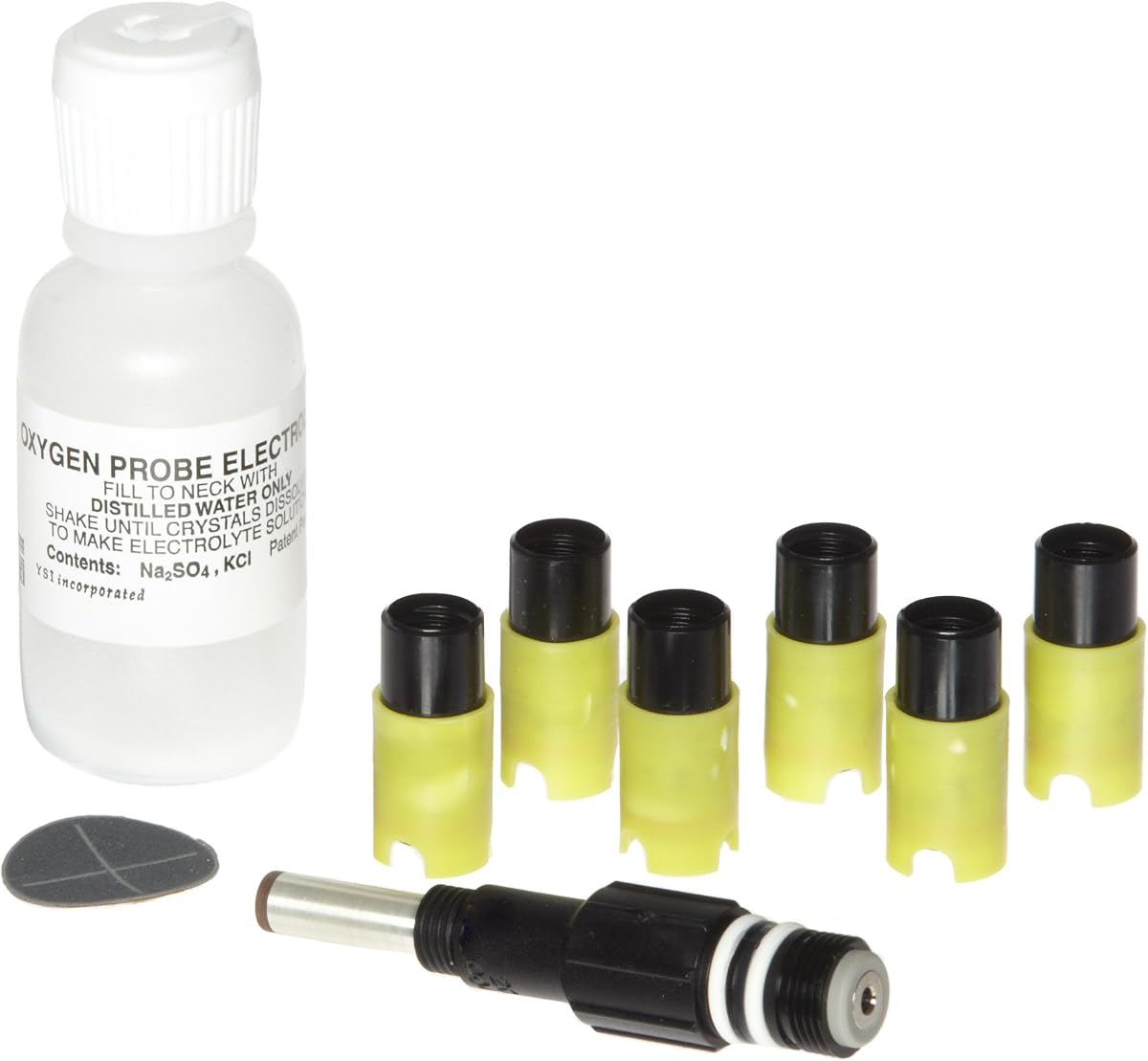
The YSI-605202 Pro Series Galvanic Dissolved Oxygen Sensor is a reliable component for existing YSI handheld meters. With an impressive 4.8-star rating, it is designed for ease of replacement and simple maintenance tasks in the field.
We may earn a commission when you buy through this link, at no additional cost to you.
The sensor features a user-replaceable design that requires no tools for installation. It uses convenient screw-on cap membranes, making changes straightforward. The package includes six membrane caps and a bottle of solution, ensuring you are prepared for regular upkeep.
While this is a sensor-only item, its compatibility with YSI Pro Series meters makes it a valuable accessory for maintaining measurement accuracy. The galvanic probe technology avoids the need for polarization, allowing for quicker setup times during critical monitoring.
This sensor is best for professionals who already own YSI meters and need dependable replacement parts. Its high rating reflects quality construction and performance. It is a great choice for ensuring continuity in professional water quality analysis workflows.
The sensor design allows for user-replacement without tools, making it easy to swap out parts in the field whenever necessary.
Comes with six membrane caps and a bottle of solution to ensure you have everything needed for immediate sensor maintenance and setup.
We may earn a commission when you buy through this link, at no additional cost to you.
The YSI 6900 ProDSS ODO Optical Dissolved Oxygen Sensor is a specialized component for professional monitoring systems. While it lacks a user rating, it is part of YSI's advanced ProDSS family, known for reliable water quality analysis in demanding environments.
We may earn a commission when you buy through this link, at no additional cost to you.
This sensor utilizes optical technology to measure dissolved oxygen levels. It offers high precision and durability, making it suitable for continuous monitoring. It is designed specifically for integration with YSI ProDSS meters, ensuring seamless communication and data collection.
Optical sensors generally require less maintenance than polarographic ones, as they do not need frequent membrane changes or electrolyte refills. This can reduce operational costs over time. The sensor's construction is built to withstand harsh conditions encountered in field deployments.
This sensor is intended for professionals using YSI ProDSS systems who require high accuracy and reliability. It complements multi-parameter instruments well. If you are upgrading your existing setup, this optical probe provides a modern, low-maintenance solution for oxygen monitoring.
Optical technology provides high precision measurements without the maintenance needs of traditional polarographic probes, ensuring long-term stability.
Designed specifically for YSI ProDSS instruments, this sensor ensures seamless data collection and compatibility with advanced water quality monitors.
We may earn a commission when you buy through this link, at no additional cost to you.
The Dissolved Oxygen Meter with ATC offers an extended measurement range that suits a wide variety of applications. Rated at 4.3 stars, it features a 0-40 mg/L range, surpassing standard limits, which is useful for industrial uses and diverse aquatic environments.
We may earn a commission when you buy through this link, at no additional cost to you.
Automatic Temperature Compensation (ATC) ensures precise results between 0 and 50 Celsius. The kit includes probe covers and anaerobic water calibration powder, making setup convenient. The LCD screen provides clear readings, though it does not have a backlight for low-light use.
This meter is practical for users who need a simple, reliable tool for ponds, pools, or aquariums. The auto power-off feature helps preserve battery life during storage. Its complete package reduces the need to buy extra accessories immediately.
Ideal for general water quality checks and routine monitoring, this meter balances functionality and affordability. It is a solid choice for hobbyists and small-scale professionals. Consider it for scenarios where a broader measurement range is essential for accurate readings.
The extended 0-40 mg/L range supports a wide variety of applications beyond standard aquarium needs, including industrial water analysis.
Includes electrode filling fluid and anaerobic water powder to ensure you can calibrate immediately upon receiving the device.
We may earn a commission when you buy through this link, at no additional cost to you.
The Dissolved Oxygen Meter for Pond is designed for users who need to monitor oxygen in small bodies of water. While it has a 3.6-star rating, it offers practical features like a 3.6-foot cable and a backlit display for easy reading in dim light.
We may earn a commission when you buy through this link, at no additional cost to you.
It supports 2-point calibration and includes a zero-oxygen water solution, electrolyte bottles, and multiple membranes. This comprehensive kit ensures you can maintain accuracy over time. The 5-minute auto shutoff helps extend battery life during storage or idle periods.
Hydroponic growers can use this tester to check nutrient solutions for healthy root systems. It is also suitable for home aquariums and koi ponds. The two units of measurement (mg/L and %) provide flexibility in interpreting data for different species requirements.
This meter is a good option for small-scale pond owners and hobbyists needing an affordable entry point. While it may not match premium accuracy, its convenience features are beneficial. It is best for users prioritizing ease of use and complete accessories.
Perfect for monitoring dissolved oxygen in hydroponic nutrient solutions to ensure plant roots receive adequate oxygen for healthy growth.
The backlit display allows for readings even in dimly lit environments, making field work easier during early morning or evening checks.
We may earn a commission when you buy through this link, at no additional cost to you.
This Dissolved Oxygen Meter with IRDA Port stands out for its extensive connectivity and memory options. Rated at 4.0 stars, it features an 11.48-foot cable and stores 99 data sets, making it suitable for professionals requiring detailed logs of field conditions.
We may earn a commission when you buy through this link, at no additional cost to you.
The meter measures dissolved oxygen, temperature, salinity, and barometric pressure, offering multi-parameter analysis in one device. The IRDA port allows for data transfer to external devices, though compatibility may vary with modern systems. A stability indicator ensures accurate readings before recording.
It includes a Clark-type electrode with a 12-month life and a carrying case, providing a complete solution for field work. The battery life options and auto power-off features support long-term usage. It supports both manual and automatic temperature compensation.
This unit is ideal for environmental researchers and aquaculture technicians who need detailed tracking and multi-variable data. While the IRDA port may be dated, the memory and measurement range are highly functional. It is a strong candidate for field applications requiring versatility.
Measures dissolved oxygen, temperature, salinity, and barometric pressure, providing a comprehensive view of water quality parameters in one device.
Stores 99 data sets directly on the meter, eliminating the need for external logging during extended field surveys or monitoring sessions.
We may earn a commission when you buy through this link, at no additional cost to you.
The Milwaukee MW600 LED Economy Portable Dissolved Oxygen Meter is designed for educational and general water analysis needs. With a 4.2-star rating, it offers a 0.1 mg/L resolution and manual two-point calibration, making it reliable for classroom demonstrations and basic field testing.
We may earn a commission when you buy through this link, at no additional cost to you.
It includes a polarographic probe with a 3-meter cable and screw-on cap membrane, ensuring ease of replacement and durability. The automatic temperature compensation between 0 and 30 Celsius helps maintain accuracy without constant manual adjustment. The LCD screen is clear and easy to read.
This meter is suitable for users who need a budget-friendly tool with solid accuracy. While it requires manual calibration, this process ensures control over the measurement baseline. The portable design allows for use in diverse environments, from lakes to industrial sites.
Ideal for schools and basic water testing projects, this meter delivers consistent results at an accessible price. It is a great option for users who value reliability and portability. Consider it for educational settings or light industrial analysis.
Designed for educational applications, this meter provides reliable data and easy-to-use features that help students understand water quality principles.
The screw-on cap membrane design makes replacement straightforward, reducing downtime during critical fieldwork or laboratory exercises.
We may earn a commission when you buy through this link, at no additional cost to you.
The YSI-605203 Pro Series Polarographic Dissolved Oxygen Sensor is a classic choice for laboratories needing reliable polarographic technology. With a 4.6-star rating, it serves as a dependable replacement for existing YSI systems, offering consistent performance in controlled environments.
We may earn a commission when you buy through this link, at no additional cost to you.
Its compact and lightweight design makes it easy to handle and store. The sensor is packaged securely and is ideal for bench-top applications. It is part of the Pro Series line, known for durability and accuracy in professional water quality analysis.
While polarographic sensors require periodic maintenance and calibration, they are well understood by many technicians. This sensor provides a cost-effective way to maintain your lab's equipment without upgrading to newer optical systems. It is a standard choice for general research.
This sensor is best suited for labs that already use YSI meters and need a reliable replacement. It ensures continuity in data collection and meets standard analytical requirements. If you rely on traditional polarographic technology, this sensor is a strong candidate.
As part of YSI's Pro Series, this sensor is known for its durability and accuracy in professional water quality analysis and research applications.
Designed to work with existing YSI meter systems, ensuring that users can maintain their current workflow without significant changes or upgrades.
We may earn a commission when you buy through this link, at no additional cost to you.
Selecting the right dissolved oxygen sensor involves evaluating several key factors to ensure accuracy, durability, and ease of use in your specific application.
Dissolved oxygen sensors generally fall into galvanic, polarographic, or optical categories. Galvanic and polarographic sensors use electrochemical reactions and require membrane changes and electrolyte refills. Optical sensors use luminescence and typically require less maintenance but can be more expensive initially.
Choose optical sensors for minimal maintenance and galvanic or polarographic for cost-effective traditional solutions.
Ensure the sensor's range covers your expected dissolved oxygen levels. Most standard sensors measure up to 20 mg/L, but industrial or extreme conditions may require extended ranges up to 40 mg/L or higher. Check the resolution and accuracy specifications for your needs.
Select a range that comfortably exceeds your operational limits to avoid saturating the sensor during peak conditions.
Response time determines how quickly the sensor stabilizes to a reading. For real-time monitoring in aquaculture, a fast response time is critical. Look for sensors that stabilize in 90 seconds or less to ensure timely adjustments to environmental conditions.
Prioritize fast response times for systems requiring immediate feedback to maintain water quality.
Calibration is essential for maintaining accuracy. Sensors with one-touch or automatic calibration reduce the risk of human error. Check if the device requires zero-point and air-saturation calibration or if it offers simplified protocols like single-point calibration.
Opt for meters with streamlined calibration features to save time and ensure consistent accuracy.
If using a standalone probe, verify it is compatible with your existing meter or system. For IoT projects, ensure the sensor interfaces well with controllers like Arduino or Raspberry Pi. Compatibility affects the overall setup cost and complexity.
Confirm compatibility with your monitoring equipment before purchasing to avoid additional adapters or interfaces.
Field use often exposes equipment to harsh environments. Look for sensors with rugged construction and waterproof ratings like IP67. This ensures reliability during outdoor measurements or submersion in water bodies without risking damage to the electronics.
Choose durable, waterproof units for field or outdoor monitoring to extend equipment lifespan.
Advanced models offer data storage, Bluetooth connectivity, or IRDA ports for logging measurements. This capability is useful for compliance, reporting, or long-term trend analysis. Consider whether you need to export data to computers or cloud platforms.
Prioritize data management features if you need to track trends or report results regularly.
Maintenance varies significantly between sensor types. Optical sensors may need only periodic cleaning, while electrochemical sensors require membrane changes and electrolyte refills. Assess the cost and frequency of maintenance to determine long-term operational expenses.
Evaluate maintenance needs to align with your budget and operational capacity for upkeep.
Start by calibrating the sensor before each use to ensure accurate readings. For electrochemical sensors, prepare the calibration solutions and allow the probe to stabilize. For optical sensors, follow the manufacturer's instructions for air and zero-point calibration.
During measurements, immerse the probe fully in the water sample and avoid air bubbles on the membrane. Gently stir the sensor to ensure proper water flow across the surface, which helps stabilize readings faster and improves accuracy.
After use, rinse the probe with distilled water and store it according to the manufacturer's guidelines. Clean membranes regularly and replace them when worn to prevent drift. Keep the electrode in a humid environment or storage solution to prolong its lifespan.
A dissolved oxygen sensor is a device used to measure the amount of oxygen dissolved in a liquid. It is commonly used in water quality monitoring, aquaculture, and environmental research to ensure aquatic life receives adequate oxygen levels.
It is recommended to calibrate a dissolved oxygen sensor before every use or at least once a week for regular monitoring. Frequent calibration ensures the readings remain accurate and compensates for any drift or environmental changes.
Dissolved oxygen is vital for the survival of aquatic organisms such as fish and plants. Low levels can lead to stress or death in aquatic life, while high levels indicate good water quality and ecosystem health.
Optical sensors use luminescence and require minimal maintenance, while galvanic sensors use electrochemical reactions and need regular membrane changes. Optical sensors are generally faster and easier to maintain, whereas galvanic sensors are often more affordable.
Many modern dissolved oxygen sensors are designed to work in both freshwater and saltwater. However, you must set the salinity compensation or ensure the device supports saltwater environments to achieve accurate readings.
The lifespan varies by sensor type and usage. Electrochemical sensors may require membrane changes every few months, while optical sensors can last years with proper care. Regular maintenance helps extend the overall life of the sensor.
Common causes include dirty membranes, improper calibration, or air bubbles on the probe. Temperature variations and low water flow can also affect accuracy. Ensure the sensor is clean and calibrated regularly for reliable results.
Some advanced dissolved oxygen meters offer Bluetooth connectivity that allows you to pair them with smartphones. This enables real-time monitoring and data logging on mobile apps, making it easier to track changes remotely.
The top three picks for dissolved oxygen sensors highlight the best options across different needs: the YSI 6050020 Pro20 for overall performance, the Gravity Analog Kit for budget-conscious IoT projects, and the Apera Instruments AI480 for premium optical technology.
When choosing, prioritize features that match your specific application, such as calibration speed, maintenance needs, and connectivity. Ensure the sensor provides the accuracy and durability required for your water quality monitoring tasks.
Remember that availability and pricing can change over time. Always check the current product details and reviews before making a final purchase to ensure you are getting the best value and performance for your requirements.