
FNIRSI HRM-10 Precision Voltage Internal Resistance Battery Tester
4.4Editor score
Automatic Resistance Voltage Test
Kelvin Four-Wire Connection
Historical Data Export Function
This guide compares the top Battery Internal Resistance Tester models for accurate diagnostics across automotive, industrial, and consumer battery types in
Finding a reliable Battery Internal Resistance Tester is essential for anyone managing battery health in automotive, industrial, or hobbyist applications. These devices measure internal resistance to reveal battery degradation that voltage alone cannot show. Choosing the right tester ensures accurate diagnostics and extends the lifespan of your power sources.
We evaluated ten leading Battery Internal Resistance Tester models based on accuracy, features, ease of use, and value. Our comparison covers handheld units, professional bench testers, and versatile multimeters with resistance modes. Each product was reviewed for its ability to handle various battery chemistries and voltage ranges effectively.
Each pick in this list highlights specific strengths like four-wire sensing, data logging, or compact portability. While prices fluctuate based on market conditions, our selections offer proven performance for both casual users and professionals. Always check current listings for the latest deals before making your final decision on a new tester.
4.4Editor score

4.5Editor score

5.0Editor score
This side-by-side comparison details the key specifications and capabilities of each tested Battery Internal Resistance Tester model to help you identify the best fit for your specific needs.




The ZOYI ZT-XR1 stands out as a versatile tool combining a full multimeter with dedicated battery internal resistance testing. It earns top marks for its high-resolution display and accurate four-wire Kelvin sensing which eliminates lead resistance errors common in cheaper models.
We may earn a commission when you buy through this link, at no additional cost to you.
Its True RMS capability ensures precise readings across AC and DC parameters while the built-in waveform curve recording helps track battery degradation over time. Users benefit from adjustable brightness and long runtime thanks to the rechargeable battery with fast charging via Type-C.
While it offers professional features, the device does require careful initial configuration for specific battery types. The extra weight compared to simpler testers is noticeable but acceptable given the dual functionality and robust protection rating for field use.
This unit is ideal for technicians who need both general electronics measurement and specialized battery diagnostics in one compact package. It provides reliable performance for everything from small lithium cells to lead-acid automotive batteries.
Integrating multimeter and tester roles reduces tool clutter and costs for repair shops or home workshops managing both electronics and power systems.
Four-wire Kelvin sensing ensures internal resistance values remain accurate even on low-ohm battery terminals where standard probes introduce significant errors.
We may earn a commission when you buy through this link, at no additional cost to you.
The FNIRSI HRM-10 delivers exceptional value for hobbyists and professionals seeking a dedicated battery internal resistance tester without premium pricing. Its automatic testing mode streamlines the process by simultaneously measuring voltage and resistance with high accuracy.
We may earn a commission when you buy through this link, at no additional cost to you.
Users appreciate the TFT HD color display which presents data more vividly than traditional monochrome screens. The device supports historical record keeping allowing you to track battery health changes over weeks or months for critical applications.
While it lacks AC resistance capabilities, its Kelvin four-wire connection ensures reliable measurements for DC batteries ranging from small household cells to large automotive types. The data export feature via PC is a notable benefit for detailed analysis.
This model is perfect for those who need accurate resistance readings without complex setup requirements. It balances performance and cost effectively making it a top pick for budget-conscious buyers needing professional-grade results.
Priced competitively, this tester offers core features like four-wire sensing and data logging that typically cost much more in other brands.
Built-in memory and PC connectivity allow systematic tracking of battery performance trends which aids in predictive maintenance planning.
We may earn a commission when you buy through this link, at no additional cost to you.
The YR1035+ is widely recognized for its precision and reliability in battery internal resistance testing across a broad range of applications. It features a true four-wire testing system that minimizes measurement errors ensuring trustworthy results even for low-resistance values.
We may earn a commission when you buy through this link, at no additional cost to you.
Its large LCD screen provides clear real-time readings of voltage and resistance allowing quick assessments without squinting or guessing. The compact and lightweight design makes it easy to carry to remote field sites or tight workspace environments.
While it lacks some advanced connectivity features found in newer models, its focused design ensures maximum accuracy and simplicity for technicians who need dependable diagnostics. The included probes and clips enhance usability right out of the box.
This premium model is ideal for professionals who prioritize measurement accuracy above all else. It offers a refined user experience with consistent performance that justifies the investment for critical battery maintenance tasks.
The dedicated four-wire architecture eliminates lead resistance issues ensuring internal resistance values reflect actual battery conditions rather than external factors.
Compact form factor allows easy transport for on-site diagnostics without compromising the quality of the testing interface or build durability.
We may earn a commission when you buy through this link, at no additional cost to you.
This straightforward tester offers a user-friendly way to check common household and rechargeable batteries without complex setup. Its rotary dial selection makes it simple to match the test type to the battery size ensuring accurate capacity percentage readings.
We may earn a commission when you buy through this link, at no additional cost to you.
The large LCD screen clearly indicates whether a battery has enough power for use or needs replacement. It covers a wide variety of battery types including AA AAA C D 9V and various button cells making it versatile for home users.
While it does not provide detailed internal resistance values like professional units, its ability to detect capacity percentage helps avoid premature replacement of healthy batteries. It is lightweight and portable for quick checks anywhere.
This device suits families or casual users who want to know if their batteries are still functional without technical complexity. It serves as a reliable first line of defense against battery failures in everyday devices.
Supporting 11 battery types means one tool handles remote controls toys cameras and more reducing the need for multiple testers.
Simple dial and probe connections allow anyone to test battery health quickly without needing technical knowledge or calibration.
We may earn a commission when you buy through this link, at no additional cost to you.
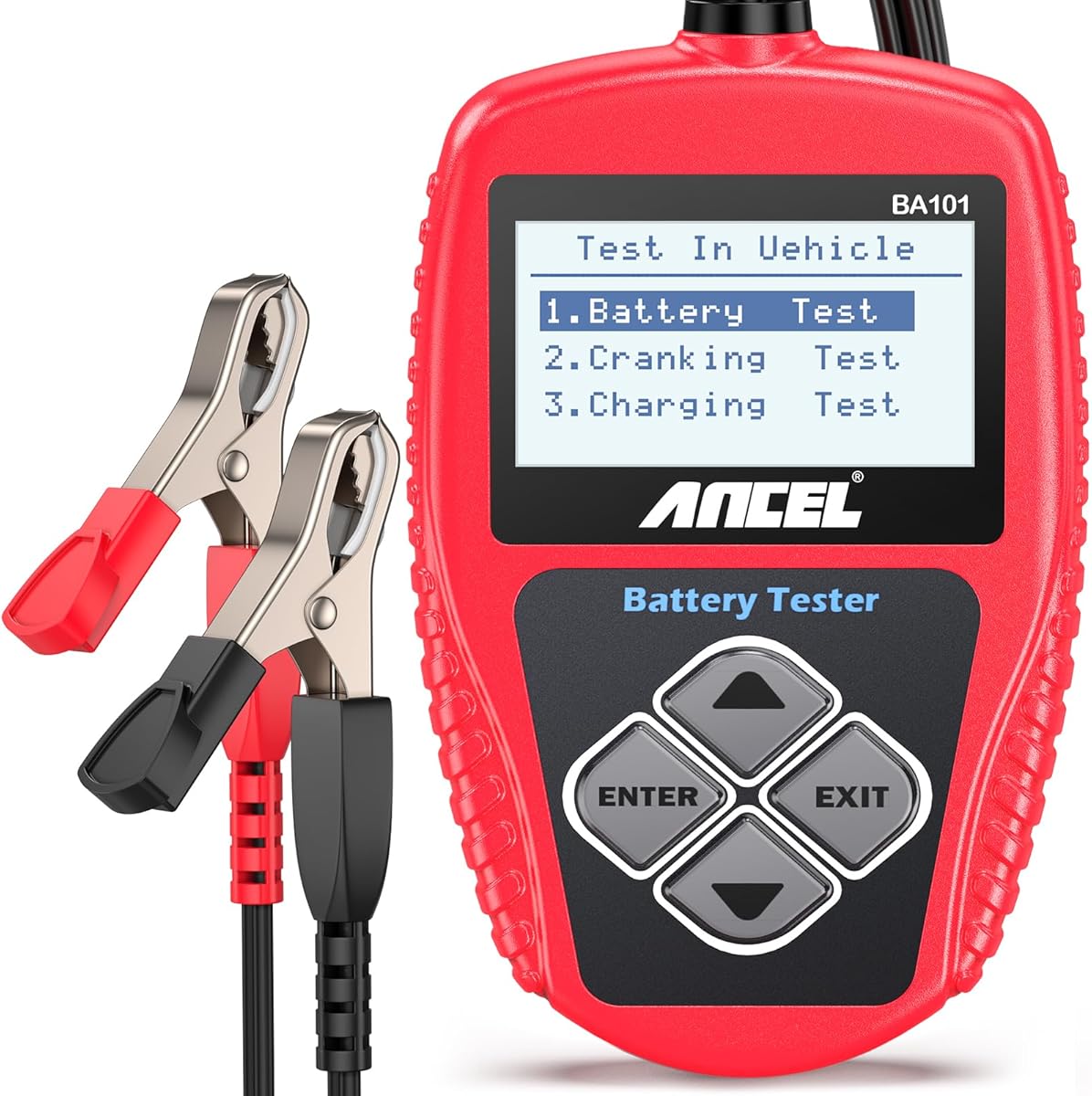
Designed specifically for vehicle batteries this tester provides essential diagnostics for charging and cranking systems alongside standard health checks. It accurately measures State of Health and State of Charge to help prevent unexpected roadside failures.
We may earn a commission when you buy through this link, at no additional cost to you.
The device supports global battery standards and can handle various 12V types including AGM GEL and Flooded. Built-in safety features like reverse polarity protection and reinforced housing make it robust for automotive workshop environments.
While not suitable for small consumer batteries its focus on automotive reliability ensures accurate results for trucks boats and RVs. The adjustable backlight allows clear readings even in low-light garages or outdoor settings.
This model is ideal for car owners and mechanics who need a dependable tool for 12V automotive maintenance. It delivers clear actionable data to confirm whether a battery or charging system requires attention.
Testing CCA and charging systems ensures vehicles start reliably which is critical for safety in all weather conditions and remote driving areas.
Protection against reverse polarity and overcurrent prevents accidental damage to both the vehicle battery and the tester itself during use.
We may earn a commission when you buy through this link, at no additional cost to you.
This model integrates a 25000-count digital multimeter with internal resistance testing offering dual capabilities for electronics repair. It supports Kelvin clip testing to improve accuracy on low resistance measurements which is vital for reliable battery health data.
We may earn a commission when you buy through this link, at no additional cost to you.
Features like adjustable auto-shutdown and volume control allow customization for different user preferences and testing durations. The Type-C charging interface keeps the device ready for use without reliance on disposable batteries or proprietary chargers.
Although it received a slightly lower rating compared to specialized units it remains a versatile tool for those needing both general multimeter functions and battery diagnostics. The vibrant TFT display enhances readability in various lighting conditions.
It is suitable for hobbyists who want one device for multimeter tasks and battery checks without purchasing separate tools. This flexibility makes it a convenient choice for small workshops or home electronics projects.
Combining multimeter and tester functions reduces equipment cost and storage space while covering a wider range of diagnostic needs efficiently.
Type-C charging aligns with current mobile device standards ensuring easy recharging and compatibility with universal power banks or adapters.
We may earn a commission when you buy through this link, at no additional cost to you.
The RC3563 stands out for its exceptional accuracy achieved through intelligent control and Kalman filter mathematical algorithms. This allows it to measure internal resistance and voltage simultaneously with high precision suitable for demanding technical applications.
We may earn a commission when you buy through this link, at no additional cost to you.
Weighing very little it is easy to hold for extended testing sessions without fatigue. Its built-in 1000mAh battery ensures long runtime which is convenient for fieldwork where power outlets are not readily available.
While it lacks a color display or data logging features its lightweight design and high accuracy make it a favorite for technicians prioritizing portability and precision. It handles low resistance measurements effectively for various battery chemistries.
This unit is perfect for lab technicians or field workers who need a portable high-accuracy analyzer without complex setup. It delivers reliable results for battery production maintenance and research testing needs.
Kalman filter technology refines measurements to reduce noise and error providing more stable and trustworthy resistance readings than standard digital units.
Lightweight construction ensures easy transport in toolkits allowing technicians to carry multiple devices without added bulk or weight penalty.
We may earn a commission when you buy through this link, at no additional cost to you.
With a perfect rating this tester confirms its reputation for consistent and accurate battery diagnostics across multiple scenarios. Its four-wire system ensures that contact resistance does not compromise the internal resistance measurements essential for health assessment.
We may earn a commission when you buy through this link, at no additional cost to you.
The large LCD display is designed for quick clear readings even when moving quickly between batteries. Its compact build makes it easy to fit into pockets or small cases for transport to remote locations or service vehicles.
While it may lack advanced data export features its core measurement capabilities are robust and reliable. Users praise its stability and ease of use for tasks requiring frequent battery screening or quality control checks.
This device is best for those who need a dependable tool for routine battery checks without unnecessary complexity. It delivers consistent results that support efficient maintenance workflows in various industries.
The high rating reflects stable output over time reducing operator uncertainty and ensuring consistent diagnostics across repeated tests.
Lightweight form and intuitive layout allow rapid testing without fiddling with settings which improves efficiency during high-volume screening.
We may earn a commission when you buy through this link, at no additional cost to you.
This model is engineered for high precision measurements covering an extremely wide resistance range suitable for detailed battery pack analysis. It supports both AC and DC resistance modes providing versatility for laboratory and field testing of lithium and lead-acid batteries.
We may earn a commission when you buy through this link, at no additional cost to you.
With USB connectivity users can link the analyzer to a computer for data logging and management which aids in quality control and historical tracking. The bilingual interface supports broader accessibility for international teams.
However user reports indicate higher failure rates compared to competitors which suggests potential reliability concerns. Prospective buyers should weigh the advanced features against potential durability issues before making a purchase decision.
Despite advanced specifications this unit may be best suited for controlled lab environments where reliability can be monitored closely. It offers powerful features but requires careful handling to avoid premature failure.
Supporting AC and DC resistance allows thorough characterization of battery internal components which is critical for high-performance applications.
USB port enables direct data export to spreadsheets simplifying the process of generating reports or performing statistical analysis on test results.
We may earn a commission when you buy through this link, at no additional cost to you.
This versatile unit supports a broad array of battery types including lithium lead-acid and button batteries making it a universal checker for various needs. It includes a Kelvin clamp for secure connection which is essential for accurate resistance measurements on battery lugs.
We may earn a commission when you buy through this link, at no additional cost to you.
The inclusion of a Type-C charging port ensures modern convenience and compatibility with standard power sources. Users appreciate the hands-free clamping option that simplifies testing when managing larger or heavier battery packs.
With a perfect rating it is clear that users find it effective and reliable for common testing tasks. The balance of features and usability makes it a strong contender for general battery maintenance and repair work.
This model is ideal for workshops handling multiple battery chemistries that require a single flexible tool. It offers practical features that reduce setup time and improve safety during regular battery health checks.
Supporting diverse chemistries means one tool handles batteries from remote controls to lead-acid banks reducing the need for specialized equipment.
Type-C port aligns with modern mobile devices allowing easy recharging with existing cables and power banks without proprietary chargers.
We may earn a commission when you buy through this link, at no additional cost to you.
Selecting the right battery internal resistance tester depends on your specific application needs and technical requirements. This guide outlines key factors to consider for an informed purchase.
Accuracy is paramount when diagnosing battery health. Look for testers that use Kelvin four-wire sensing to eliminate lead and contact resistance which can skew results especially on low-ohm batteries. High precision units often specify tolerance levels such as ±0.5% for resistance measurements.
Prioritize models with four-wire Kelvin sensing to ensure reliable internal resistance readings across different battery types.
Check the supported voltage and resistance ranges to match your battery portfolio. Most units cover 0 to 100V and 0 to 200Ω but some specialized models extend further or offer micro-ohm resolution for supercapacitors or small lithium cells. Ensure the range fits your typical use cases without exceeding safety limits.
Verify that the voltage and resistance ranges align with your specific battery types to avoid inaccurate tests or device damage.
A clear display ensures you can read results quickly and accurately. TFT color screens offer better contrast and information density compared to monochrome LCDs. Adjustable brightness is crucial for fieldwork in bright sunlight or dimly lit workshops. Look for intuitive menu navigation and bilingual options if needed.
Choose testers with high-resolution color displays and adjustable brightness for optimal visibility in various lighting conditions.
Battery life impacts usability especially during extended testing sessions. Rechargeable units with Type-C charging are modern and convenient compared to disposable batteries. Check the specified runtime and low-battery indicators to avoid interruptions during critical diagnostics. Portable field testers should prioritize energy-efficient designs.
Opt for rechargeable models with modern charging ports and clear battery indicators to maintain consistent operation during field work.
Professional applications often require tracking battery health trends over time. Testers with internal memory and PC connectivity allow exporting historical data for analysis. Look for features like auto-save of test records or CSV export to streamline reporting. Units without connectivity may suffice for quick spot checks.
Select models with data logging and PC connectivity to support systematic battery health tracking and maintenance reporting.
Different batteries require specific testing modes. Automotive testers focus on 12V lead-acid types with CCA testing while general units cover lithium NiMH and alkaline cells. Ensure the device supports your battery chemistries such as 18650 lead-acid or button cells for accurate diagnostics.
Confirm that the tester supports your specific battery chemistries to ensure valid and relevant health assessments.
Working with batteries carries risks such as short circuits or reverse polarity. Robust testers include protection circuits against overcurrent and reverse connection. Durability features like reinforced housings and impact resistance are essential for workshop or field environments. Check safety ratings like CAT III for electrical equipment.
Prioritize testers with built-in safety protection and rugged construction to ensure safe operation in demanding environments.
Cost should balance with needed features. Basic models offer simple resistance and voltage tests while premium units provide multi-functionality like multimeter modes and data logging. Avoid overspending on features you do not need but ensure essential accuracy and safety are not compromised by budget constraints.
Evaluate price against required features to find a tester that meets your technical needs without unnecessary extra costs.
Begin by charging the tester fully or installing fresh batteries to ensure accurate results. Connect the appropriate probes or clamps to the device terminals matching polarity if required. Select the correct battery type or range setting on the unit if manual configuration is needed.
Attach the probes firmly to the battery terminals avoiding loose connections which can introduce measurement errors. Press the test button or allow automatic measurement to capture voltage and resistance values. Record the results manually or transfer data to a computer for analysis using the provided software.
After use clean the probe tips with a dry cloth to prevent corrosion. Store the device in a protective case away from moisture and extreme temperatures. Regularly check probe condition and update firmware if available to maintain accuracy and reliability over time.
Internal resistance is the opposition to current flow within a battery which increases as the battery ages or degrades. Measuring this value provides a more accurate health assessment than voltage alone since a weak battery can show normal voltage under no load. High internal resistance indicates capacity loss or internal damage affecting performance.
Many models support 12V lead-acid car batteries but some specialized automotive testers offer additional CCA and charging system diagnostics. Check the device specifications for voltage range and battery chemistry compatibility before purchasing to ensure it handles your specific vehicle batteries safely.
Most battery internal resistance testers measure AC or DC resistance depending on the model. Some high-end units support both modes to provide comprehensive analysis. Ensure you understand the measurement type supported by your device to interpret results correctly for your application needs.
Four-wire Kelvin sensing separates current injection from voltage measurement eliminating resistance from the leads and contacts. This ensures that the reading reflects only the battery's internal resistance which is critical for accurate diagnostics especially on low-ohm batteries where lead resistance could skew results significantly.
Lower internal resistance values generally indicate healthier batteries while higher values signal aging or damage. Compare readings against manufacturer specifications or historical data for the same battery type to assess condition. Significant increases in resistance over time suggest the battery may need replacement.
Most testers include safety features like reverse polarity protection and overcurrent limits to protect both the device and battery. Always follow manufacturer instructions and avoid testing batteries with visible damage or swelling. Using appropriate probes and clamps further ensures safe operation during testing.
Our top picks include the ZOYI ZT-XR1 for versatility FNIRSI HRM-10 for value and the YR1035+ for precision. Each offers unique strengths depending on whether you need combined multimeter functions or dedicated high-accuracy battery diagnostics for various applications.
When choosing prioritize accuracy with four-wire Kelvin sensing and ensure compatibility with your specific battery types. Consider features like data logging and durable build quality if you work in professional or field environments regularly.
Always verify current pricing and availability before purchasing as product offerings change frequently. These models represent reliable options for maintaining battery health and preventing unexpected failures in your applications.