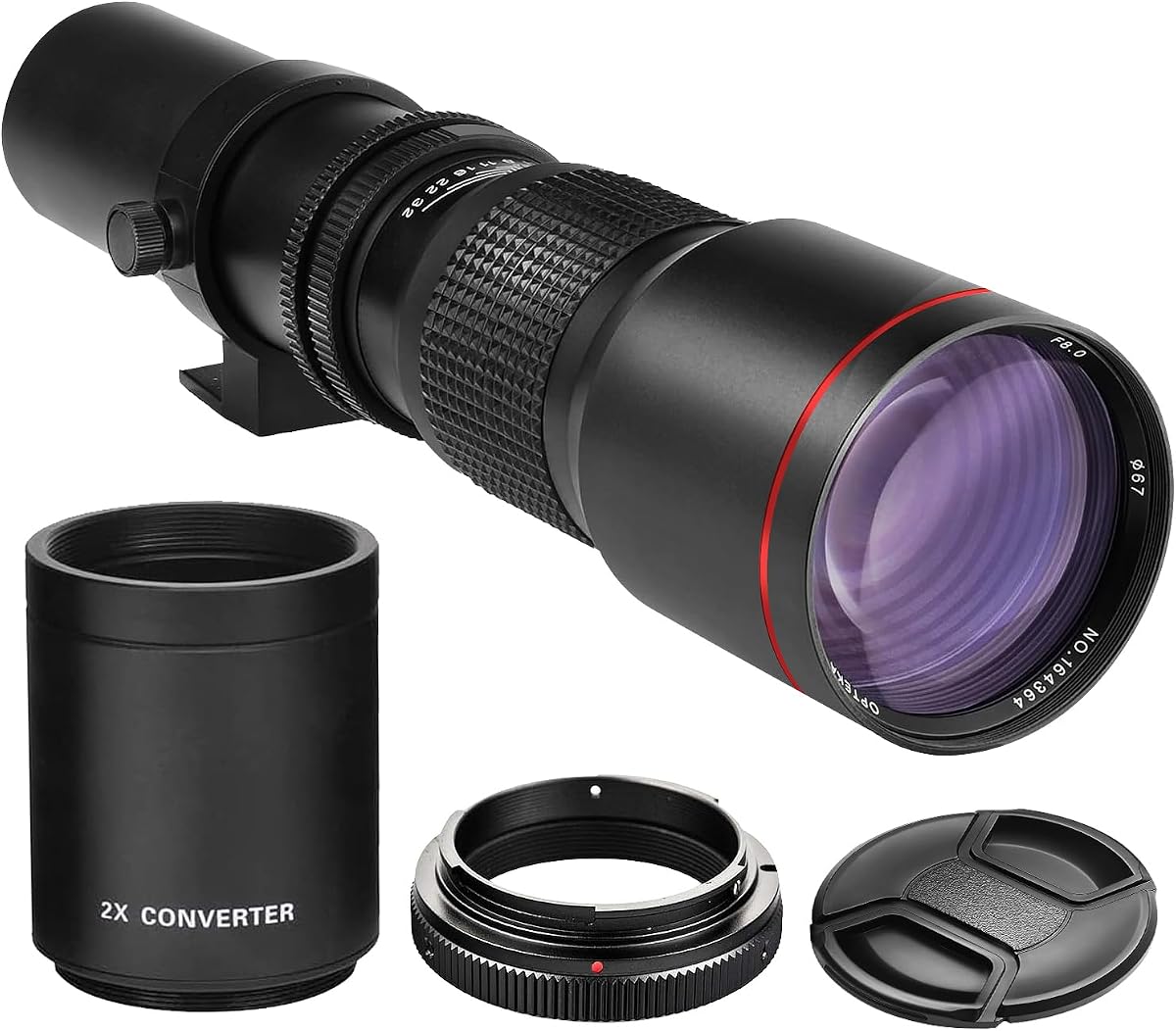
High-Power 500mm/1000mm f/8 Manual Telephoto Lens
4.0Editor score
Manual focus precision
1000mm max reach
Compatible with Canon DSLR
Discover the best camera lens for long distance wildlife with our expert guide comparing top telephoto zooms for sharp shots and stable performance in the
Capturing wildlife from a distance requires a powerful lens that brings subjects closer without compromising image quality. A good lens offers long focal lengths, fast autofocus, and strong stabilization to handle movement and low light conditions effectively.
We compared ten top-rated lenses based on optical performance, reach, weight, and value. Each product was evaluated for its suitability for birding, safari photography, and tracking fast-moving animals in natural habitats.
Every pick highlights key specs and real-world strengths to help you choose confidently. Note that prices change frequently due to market conditions, so always verify current listings before making your final purchase decision today.
4.0Editor score
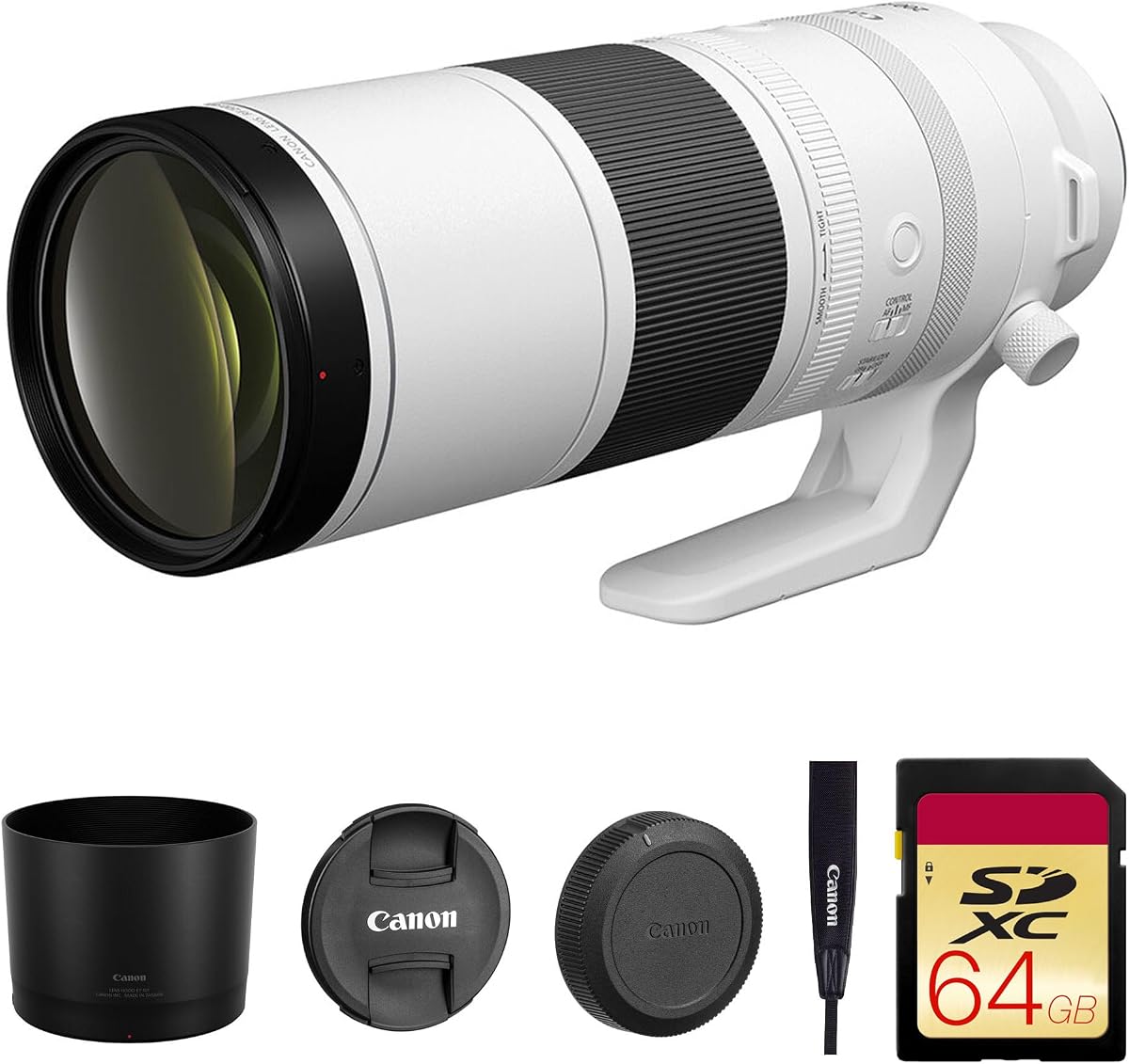
4.7Editor score

4.0Editor score
This side-by-side comparison outlines the key specifications and strengths of each lens to help you find the perfect match for your wildlife photography needs and budget.

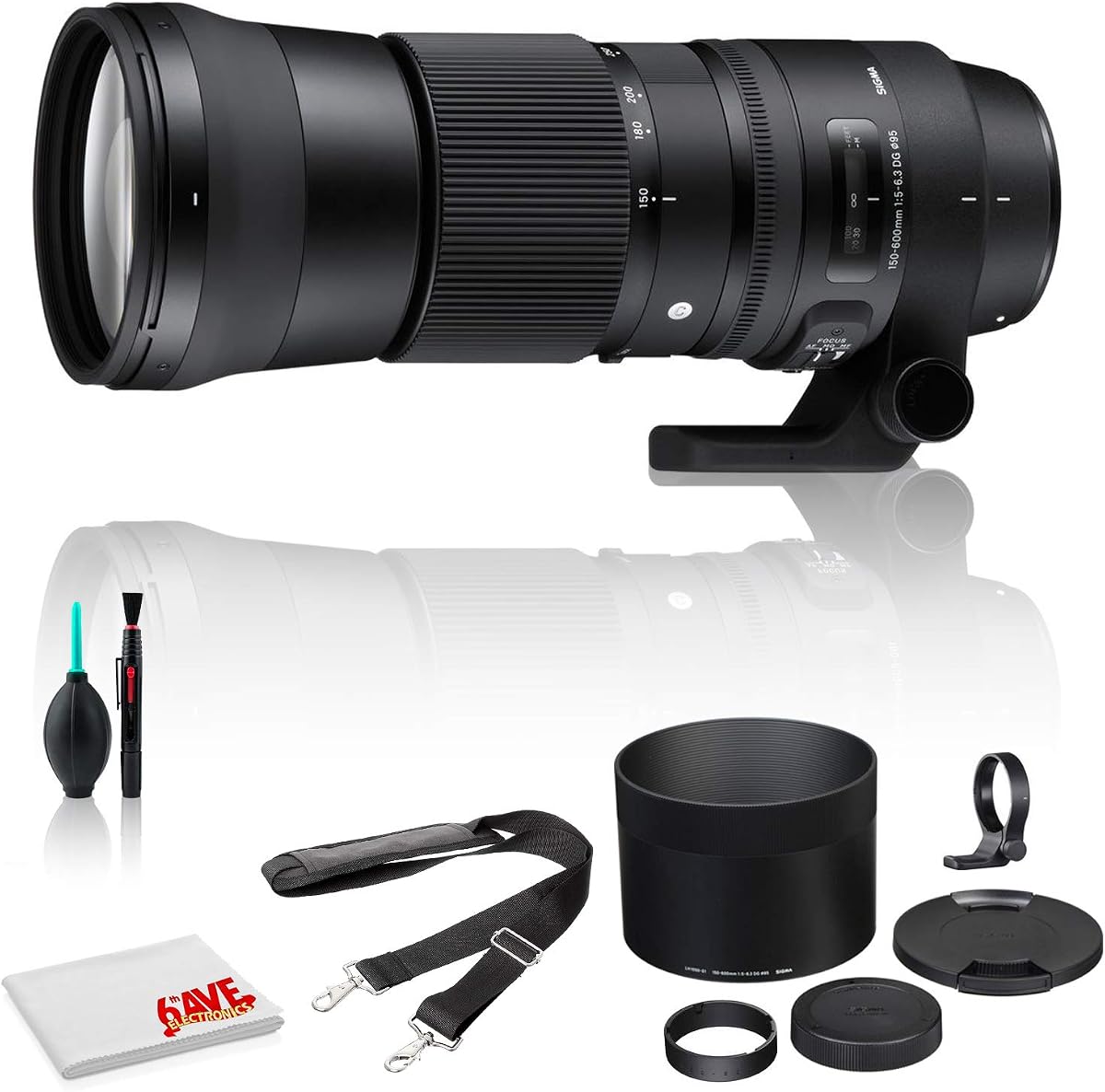


The Canon RF 200-800mm stands out as a top choice for wildlife photographers seeking extreme reach without excessive bulk. It carries a 4.7 rating from users who praise its optical clarity and flexibility across varied shooting conditions.
We may earn a commission when you buy through this link, at no additional cost to you.
Its standout quality lies in the unmatched zoom flexibility from 200mm to 800mm. This allows you to frame distant birds or mammals tightly while retaining enough context for environmental shots. The built-in image stabilization ensures shake-free results even when shooting handheld at full zoom.
While the variable aperture of f/6.3 to f/9 might limit performance in very low light, it remains effective during daylight hours when wildlife is most active. The trade-off is acceptable considering the compact design and lightweight build that makes travel and outdoor adventures far more manageable.
This lens is ideal for dedicated nature photographers and birders who want pro-grade performance in a manageable package. We recommend it for anyone prioritizing reach and stability over fixed aperture speeds.
From 200mm to 800mm, this lens adapts to subjects at various distances without needing multiple lenses.
Built-in stabilization and USM autofocus deliver sharp focus and steady shots even when tracking moving animals.
We may earn a commission when you buy through this link, at no additional cost to you.
The High-Power 500mm/1000mm manual lens delivers extraordinary reach at a fraction of the cost of automatic lenses. With a 4.0 rating, it is favored by hobbyists and beginners seeking high magnification without a large financial investment.
We may earn a commission when you buy through this link, at no additional cost to you.
Its key strength is the 2X teleconverter capability, doubling power to 1000mm for capturing elusive wildlife from far away. The manual precision allows you to fine-tune shots with complete creative control, which is valuable for static or slow-moving subjects.
The main trade-off is the lack of autofocus and fixed aperture, requiring patience and manual adjustments. However, these limitations are acceptable given the price point and the fact that it remains a reliable companion for outdoor adventures and learning photography.
This lens is best for budget-conscious photographers willing to trade automation for magnification and control. It is an excellent entry point for those exploring wildlife photography on a tight budget.
With optional teleconversion, this lens reaches 1000mm for bringing distant wildlife impressively close.
Manual focus and aperture provide creative expression and precise adjustments for patient photographers.
We may earn a commission when you buy through this link, at no additional cost to you.
The Canon EF 100-400mm L IS USM is a professional-grade lens designed for demanding wildlife and sports photography. It has a 4.0 rating reflecting its reliability and high image quality across its extensive focal range.
We may earn a commission when you buy through this link, at no additional cost to you.
Its key strengths include advanced optical construction with fluorite and UD elements that minimize chromatic aberrations. This ensures high contrast and color accuracy whether shooting in bright daylight or challenging lighting conditions.
While the lens is heavier and pricier than consumer alternatives, the robust construction and rotating tripod collar offer balanced support for long sessions. The investment is justified by its durability and consistent performance at every focal length.
This lens is ideal for serious wildlife photographers and sports shooters who need professional performance. We recommend it for users who prioritize optical excellence and build quality over portability.
Advanced elements reduce aberrations to deliver sharp images with vibrant colors and high contrast.
Includes tripod collar and robust build for stable, reliable operation during extended shoots.
We may earn a commission when you buy through this link, at no additional cost to you.
This lens is a milestone as the world's first AF super-telephoto zoom with an 800mm telephoto end. It scores high in performance and ergonomics, making it a powerful choice for mirrorless shooters.
We may earn a commission when you buy through this link, at no additional cost to you.
Its key strengths are its powerful telephoto capabilities combined with a compact design. This balance allows for excellent mobility and comfortable handling during long outdoor sessions. Compatibility with RF extenders extends flexibility further for diverse shooting needs.
One trade-off is the variable aperture which can be limiting in darker environments. However, the optimized optical design ensures high quality across the zoom range. These factors make it suitable for travel and outdoor adventure photography.
We recommend this lens for mirrorless users wanting exceptional reach without carrying heavy gear. It is best suited for nature photographers who value speed and mobility.
Fast autofocus enables precise focus on moving wildlife for sharper action shots.
Optimized for RF mount to maintain high image quality in a compact super-telephoto package.
We may earn a commission when you buy through this link, at no additional cost to you.
The Sigma 150-600mm Contemporary delivers reliable performance for Canon EF shooters with a 4.5 rating. Its versatile focal range makes it suitable for birding, nature, and sports photography.
We may earn a commission when you buy through this link, at no additional cost to you.
Key strengths include its optical design with FLD and SLD elements to reduce aberrations. The OS with accelerometer ensures stable handheld shooting at long focal lengths, improving image quality in various conditions.
While the weight and aperture changes are trade-offs, the lens offers excellent value for a full-frame capable super-telephoto zoom. These factors are acceptable for most wildlife photographers prioritizing reach and quality.
We recommend this lens for Canon DSLR users seeking a versatile tool for wildlife photography. It is ideal for those needing a balance of reach and optical quality.
FLD and SLD elements minimize chromatic aberrations for sharper and more detailed images.
Optical Stabilizer with accelerometer ensures steady shots even when shooting handheld at long ranges.
We may earn a commission when you buy through this link, at no additional cost to you.
This manual lens offers incredible magnification with a range up to 1600mm, appealing to budget wildlife photographers. It holds a 4.0 rating for its ability to bring subjects closer than ever before.
We may earn a commission when you buy through this link, at no additional cost to you.
Key strengths include its enhanced zoom capability and compatibility with numerous Canon DSLRs. The 2X teleconverter feature is particularly useful for those seeking maximum reach without additional costs.
While manual focus and fixed aperture limit its use in dynamic scenes, these trade-offs are acceptable given the extreme zoom and price. It remains a reliable tool for learning and experimenting.
We recommend this lens for beginners wanting high magnification at low cost. It is best for static subjects or patient photographers.
With 1600mm reach, you can capture distant wildlife with impressive magnification.
Designed to fit many Canon Rebel and EOS models, offering broad appeal for DSLR users.
We may earn a commission when you buy through this link, at no additional cost to you.
The Canon RF100-400mm is a compact telephoto lens with a 4.6 rating praised for its image quality and handling. It offers a versatile zoom range suitable for wildlife and sports on EOS R series cameras.
We may earn a commission when you buy through this link, at no additional cost to you.
Key strengths include up to 5.5 stops of shake correction combined with Nano USM autofocus. This ensures smooth and quiet shooting, which is vital for not disturbing wildlife during critical moments.
While the aperture narrows at 400mm and range is shorter than super-telephoto options, the lens excels in portability. These trade-offs are acceptable for photographers who prioritize mobility and ease of use.
We recommend this lens for mirrorless shooters wanting a lightweight option for everyday wildlife photography. It is ideal for travel and outdoor adventures.
Up to 5.5 stops of correction ensures sharp handheld images in diverse conditions.
Nano USM delivers smooth and quiet autofocus, ideal for wildlife that can be easily disturbed.
We may earn a commission when you buy through this link, at no additional cost to you.
The Canon EF 75-300mm III is a lightweight telephoto lens that has earned a 4.7 rating for its value and simplicity. It serves well for beginners needing basic zoom capabilities.
We may earn a commission when you buy through this link, at no additional cost to you.
Its key strengths include smooth zooming and a compact design. This makes it easy to handle during shorter sessions. The closest focus distance of 4.9 feet allows for decent close-up photography of nearby subjects.
The lack of image stabilization and limited 300mm reach are significant trade-offs for wildlife. However, for casual photographers or those prioritizing portability, these factors are acceptable.
We recommend this lens for entry-level users and casual shooters. It is best for situations where lightweight gear is preferred over extreme reach.
Weighing just 16.8 ounces, it is easy to carry for extended periods.
Improved mechanism makes zooming smoother, reducing wear and enhancing user experience.
We may earn a commission when you buy through this link, at no additional cost to you.
This Nikon lens delivers solid performance for FX and DX sensors with a 4.2 rating. It is well-suited for wildlife photography requiring long reach and consistent performance.
We may earn a commission when you buy through this link, at no additional cost to you.
Key strengths include three ED elements that diminish chromatic aberrations and the VR system offering up to 4.5 stops of stabilization. This ensures sharp images and color precision across the entire zoom spectrum.
While the weight and fixed aperture require sturdy support and careful exposure settings, they are acceptable for the level of reach. These trade-offs are manageable for serious outdoor photographers.
We recommend this lens for Nikon users seeking versatile and reliable wildlife photography. It is ideal for users valuing stabilization and optical quality.
Three ED elements reduce color fringing for high-quality images with excellent color precision.
Vibration Reduction minimizes camera shake, improving handheld performance and low-light shots.
We may earn a commission when you buy through this link, at no additional cost to you.
This renewed lens offers the same value as the new version with a 4.7 rating. It is a great choice for budget-conscious photographers needing basic telephoto capabilities.
We may earn a commission when you buy through this link, at no additional cost to you.
Its strengths include a lightweight design and improved zoom mechanism. The DC autofocus motor delivers reliable focus for general photography. It remains a practical option for entry-level users.
While the lack of stabilization and shorter reach limit wildlife use, these factors are acceptable given the renewed price. This lens is useful for beginners learning composition.
We recommend this lens for those seeking an affordable telephoto. It is best for casual and learning photography.
Renewed condition offers significant savings while maintaining key optical features.
The improved zoom mechanism makes operation smoother, enhancing user experience.
We may earn a commission when you buy through this link, at no additional cost to you.
Choosing the right lens involves weighing reach, autofocus speed, image stabilization, build quality, and price.
Focal length determines how close you can get to distant subjects. Wildlife photography often requires 300mm or more to capture birds and mammals without approaching too closely. Longer reach is essential for safety and maintaining natural animal behavior.
Look for zoom ranges that extend to 400mm or higher for versatile wildlife work.
Fast autofocus systems ensure you can lock on moving animals quickly. Motors like USM and STM provide silent, responsive focusing that won't disturb wildlife. Accurate AF is crucial for capturing sharp action shots.
Prioritize lenses with quick and quiet AF for best results in the field.
Stabilization helps counteract camera shake when using long focal lengths or shooting handheld. Lenses with IS or VR allow sharper images without always needing a tripod. This feature is vital for travel and outdoor shoots.
Choose lenses with IS if handheld shooting is your primary method.
Wider apertures let in more light for better low-light performance and faster shutter speeds. However, long-range lenses often have smaller maximum apertures due to optical constraints. Consider whether you shoot in variable light conditions.
For wildlife, aperture affects exposure flexibility and background separation.
Ensure the lens matches your camera system. DSLR lenses use EF mounts while mirrorless use RF, Z, or E mounts. Adapters may work but native lenses deliver optimal performance. Check your camera brand and model.
Match lens mount to your camera for best performance.
Durable construction protects your lens during outdoor adventures. Professional lenses often feature weather sealing and robust build. Balance weight with usability. Lightweight lenses ease travel but may lack stability.
Choose build quality and weight that suits your shooting style.
Prices vary widely from affordable manual lenses to high-end professional glass. Set a realistic budget that balances features and cost. Renewed lenses can provide excellent value without sacrificing quality.
Balance cost with features that matter most to you.
Always attach your lens securely to the camera body to avoid dust or damage. Use a sturdy tripod or monopod for long focal lengths to maintain stability during shooting.
Clean the front and rear elements with a soft microfiber cloth when needed. Avoid touching glass surfaces with fingers to prevent smudges that degrade image quality.
Store lenses in a dry case to prevent moisture damage and protect from physical impact. Regularly inspect for dust or debris and maintain focus and zoom rings for smooth operation.
A focal length of 400mm or more is ideal for wildlife to keep distance and maintain animal behavior. Shorter lenses may require getting too close and risk disturbing subjects.
Image stabilization is highly recommended for long focal lengths when shooting handheld. It reduces camera shake and helps produce sharper images without always relying on tripods.
Many mirrorless systems support DSLR lenses via adapters. However, native lenses deliver better autofocus and optical performance without compatibility issues.
Use a soft microfiber cloth to gently wipe the front and rear elements. Avoid harsh chemicals and keep your lens dry to protect optical coatings and maintain image clarity.
An aperture of f/5.6 to f/8 provides good depth of field and sharpness. Wider apertures help in low light but may reduce sharpness at the edges.
Manual lenses are budget-friendly but require more skill and patience. They work well for stationary subjects but may be impractical for fast-moving wildlife.
Use a padded camera bag or case to prevent physical damage. Keep the lens dry and clean to avoid moisture issues that can harm the optics and mechanics.
Your top picks include the Canon RF 200-800mm for pro-grade reach and stabilization, the Sigma 150-600mm for versatile EF mount use, and the Nikon 200-500mm for solid value.
Prioritize focal length and stabilization if you shoot handheld, while matching mount compatibility to your camera. Consider your budget and how much weight you can carry in the field.
Always check current prices and stock before buying since deals change often. Your best lens will be the one that fits your shooting style and keeps you ready for the perfect wildlife shot.