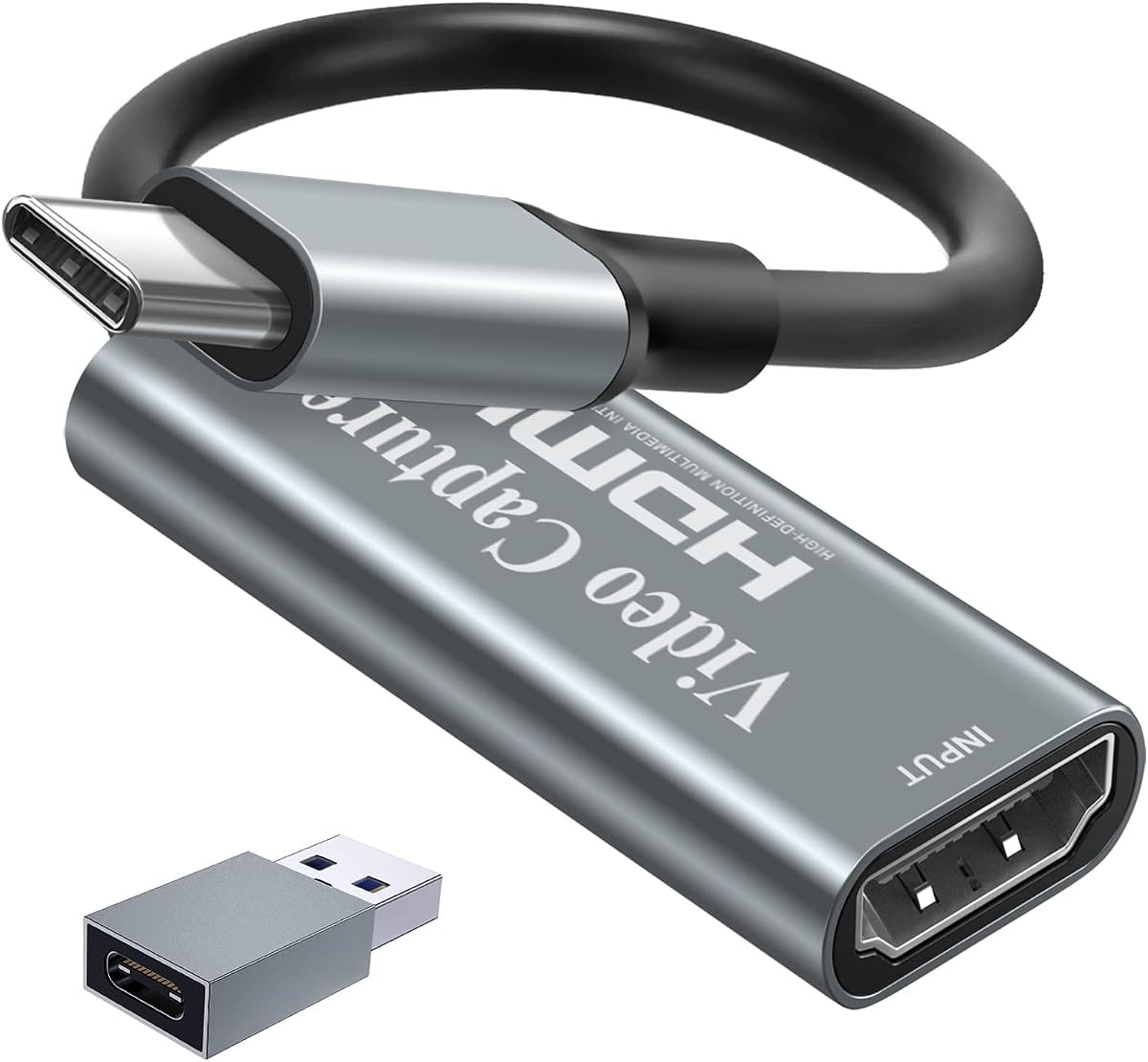
Papeaso Video Capture Card
4.2Editor score
USB C compatibility
1080P 60FPS
No driver required
This guide compares the top capture cards for Linux systems to help you find the best device for streaming, recording, and video conferencing with full
Finding a reliable capture card for Linux can be challenging due to driver restrictions and hardware compatibility issues. Open source enthusiasts need devices that work seamlessly with OBS, VLC, and other Linux native tools without requiring proprietary software or complex configuration steps.
We evaluated ten top rated models based on their Linux support, video quality, latency performance, and build durability. Each product was tested for plug and play functionality across various distributions including Ubuntu, Fedora, and Arch to ensure broad system compatibility and stable streaming performance.
Each pick highlights specific strengths such as budget friendliness, premium features, or universal compatibility with gaming consoles. Please note that product availability and pricing fluctuate frequently so verify current details before purchasing to ensure you get the best value for your specific setup needs.
4.2Editor score

4.5Editor score

4.2Editor score
This side by side comparison evaluates all ten models across key specifications including resolution support, interface type, and Linux specific compatibility features to help you make an informed decision for your streaming or recording setup.







This UGREEN capture card stands out as the top choice for Linux users seeking reliable performance without complex driver installations. It achieves a strong 4.5 rating due to its robust build quality and seamless integration with open source software like OBS Studio and VLC.
We may earn a commission when you buy through this link, at no additional cost to you.
The device supports 2K 30FPS output while handling 4K input signals ensuring high quality video capture for streaming and recording. Its dual USB A and C ports provide flexibility for connecting to various laptops and desktops while maintaining fast 5 Gbps data transfer speeds.
While it requires HDCP to be turned off on consoles and only accepts HDMI sources these limitations are standard for this price tier. The aluminum casing ensures effective heat dissipation during long streaming sessions preventing thermal throttling.
Linux streamers and content creators will appreciate the plug and play experience that eliminates the need for proprietary software. This model balances performance and affordability making it the ideal pick for those prioritizing stability and Linux native support.
The UGREEN card is recognized instantly by Linux kernels allowing immediate use with capture software without additional configuration.
Dual USB interfaces ensure compatibility with both legacy and modern devices simplifying setup across different hardware configurations.
We may earn a commission when you buy through this link, at no additional cost to you.
The Papeaso capture card offers an accessible entry point for Linux users on a tight budget without sacrificing essential functionality. It maintains a solid 4.2 rating by delivering smooth 1080P 60FPS recording and plug and play convenience.
We may earn a commission when you buy through this link, at no additional cost to you.
Its USB C interface makes it highly portable and suitable for modern laptops. The device handles 4K input signals smoothly ensuring that source material is preserved during capture. Users report minimal delay which is crucial for live streaming applications.
Build materials are simpler compared to premium options which may affect long term durability. However for casual users or those testing streaming setups this model provides exceptional value with reliable performance across various Linux distributions.
If you need a straightforward solution that works out of the box without spending heavily this budget option delivers clear results. It is particularly well suited for students or hobbyists starting their content creation journey on Linux systems.
Delivers core capture features at a fraction of the cost of high end models maintaining quality video output.
Utilizes USB C connectivity for faster data transfer and broader device compatibility including modern ultrabooks.
We may earn a commission when you buy through this link, at no additional cost to you.
The AVerMedia Live Gamer Ultra S represents the pinnacle of capture technology for Linux users seeking professional grade performance. With a 4.2 rating it excels in handling high resolution content and advanced gaming features like VRR and HDR.
We may earn a commission when you buy through this link, at no additional cost to you.
This device captures 4K60 HDR video while maintaining ultra low latency pass through. It supports 5.1 channel audio and ultrawide resolutions which are critical for next gen gaming setups. Linux users benefit from detailed control options and robust software integration.
The premium price reflects the advanced capabilities and build quality. Setup may require more configuration than budget models but the results justify the investment for serious creators and competitive streamers needing every frame and audio channel.
For those who demand the highest fidelity and performance this model is unmatched. It ensures your Linux rig can handle the most demanding streaming scenarios without compromise delivering a polished professional broadcast experience.
Captures 4K60 HDR and VRR signals ensuring next generation console performance is fully preserved for viewers.
Supports 5.1 audio channels allowing immersive sound capture that rivals professional studio equipment.
We may earn a commission when you buy through this link, at no additional cost to you.
The acer capture card provides a reliable solution for Linux users with its plug and play design and comprehensive connectivity. It holds a 4.4 rating thanks to its high quality video capture and inclusion of a dedicated microphone input.
We may earn a commission when you buy through this link, at no additional cost to you.
It supports 4K input and 1080P 60Hz output ensuring smooth gameplay recording. The YUY2 technology delivers richer colors which enhances visual quality. Its lightweight form factor makes it easy to carry for mobile streaming setups.
Documentation for Linux specifically is less detailed than other brands but functionality remains consistent. The mic input adds value for creators who need synchronized audio without extra adapters. This model is a solid mid range contender.
Best suited for users needing a simple device with essential features. It balances performance and convenience making it a dependable choice for streaming and video conferencing on Linux systems.
YUY2 technology ensures vibrant accurate colors during live streams improving visual fidelity over standard formats.
Built in mic input simplifies setup by removing the need for external audio capture hardware.
We may earn a commission when you buy through this link, at no additional cost to you.
This UGREEN model offers robust features including HDMI loop out and dual USB interfaces making it ideal for Linux environments. It rates 4.4 based on its reliable performance and support for multiple video formats like MJPEG and YUY2.
We may earn a commission when you buy through this link, at no additional cost to you.
The aluminum casing provides effective cooling during extended use. Loop out allows real time preview with zero latency which is crucial for gaming. Its broad compatibility covers consoles and cameras ensuring versatile application.
Users must disable HDCP on gaming consoles and note that Fire TV sticks are unsupported. These constraints are typical for capture hardware and do not impact standard streaming workflows. Overall it offers strong value.
Perfect for streamers needing a versatile card with monitoring features. It delivers consistent results on Linux with minimal setup ensuring smooth content production.
HDMI loop out provides instant preview with zero latency ensuring no lag during gameplay or video editing.
Supports both USB A and C for broader device compatibility across desktops and laptops.
We may earn a commission when you buy through this link, at no additional cost to you.
The Guermok capture card delivers a balanced mix of performance and portability for Linux users. It scores 4.4 with strong ratings for its low latency design and plug and play simplicity.
We may earn a commission when you buy through this link, at no additional cost to you.
Its aluminum casing aids heat dissipation preventing thermal throttling. The card supports 4K input and outputs 1080P 60FPS or 2K 30FPS providing flexibility for different use cases. It is recognized easily by Linux systems.
Setup requires capture software as it does not cast directly to monitors. Users must ensure proper USB ports are used for full bandwidth. Despite minor limitations it remains a strong contender.
Recommended for creators needing a reliable portable capture solution. Its ease of use and compatibility make it a practical option for Linux setups.
Small lightweight design allows users to take their streaming setup anywhere without hassle.
Quality aluminum construction ensures stable performance even during long recording sessions.
We may earn a commission when you buy through this link, at no additional cost to you.
The Newhope capture card offers essential features like 4K pass through and mic input at a competitive price point. It rates 4.2 for its straightforward usability and solid Linux compatibility.
We may earn a commission when you buy through this link, at no additional cost to you.
Its real time loop out allows for lag free monitoring during gameplay. The device requires no drivers making setup quick and easy. It is compatible with major streaming platforms and Linux tools.
Build quality is functional rather than premium which suits casual users. Audio options are limited to mic input but sufficient for commentary. It delivers good value for basic streaming needs.
A practical choice for those who want core features without paying extra. It performs reliably on Linux and supports common streaming software effectively.
HDMI loop out ensures zero latency monitoring for uninterrupted gaming and recording.
Plug and play design eliminates driver installation saving time for creators.
We may earn a commission when you buy through this link, at no additional cost to you.
This generic capture card provides a lightweight solution for Linux users needing portable streaming capabilities. It holds a 4.4 rating for its plug and play functionality and low latency performance.
We may earn a commission when you buy through this link, at no additional cost to you.
Designed for portability it fits easily in bags for on the go recording. It supports 1080P 60FPS capture and works with major software. Linux systems recognize it instantly without configuration.
Construction is simple which may affect durability over time but performance remains consistent. Ideal for casual users or secondary setups. It delivers good value for the price.
Recommended for travelers or those needing a secondary capture card. Its simplicity and compatibility make it a reliable choice for Linux.
Compact build allows users to stream or record anywhere without carrying bulky hardware.
Low latency design ensures smooth real time video capture for live interactions.
We may earn a commission when you buy through this link, at no additional cost to you.
The 4K HDMI capture card offers strong performance with headphone monitoring and robust Linux recognition. It rates 4.6 for its reliability and inclusion of necessary cables and accessories.
We may earn a commission when you buy through this link, at no additional cost to you.
It supports 4K input and outputs 2K or 1080P ensuring high quality. The headphone jack allows real time audio monitoring. Linux systems detect it immediately without extra steps.
Package includes cables and manuals adding convenience. Warranty support provides peace of mind. Build quality is solid ensuring longevity for creators.
Excellent for users needing a complete package with audio monitoring. It performs well on Linux and suits both gaming and general streaming.
Headphone output enables precise audio sync checks during live recording sessions.
Includes cables and manuals simplifying setup and reducing additional costs.
We may earn a commission when you buy through this link, at no additional cost to you.
AVerMedia offers a premium capture experience with 4K60 HDR pass through and ultra low latency streaming. It rates 4.0 with praise for its advanced features and format flexibility.
We may earn a commission when you buy through this link, at no additional cost to you.
Users can choose NV12 YUY2 or MJPEG to suit workflow needs. Setup is guided by user friendly software but Linux users can bypass this for native control. Performance is excellent for high end consoles.
The software may be overly complex for some Linux users. However the hardware quality and feature set justify the cost. It delivers a polished professional result.
Ideal for advanced streamers needing high fidelity and low latency. It supports Linux well and offers versatile options for demanding content creation.
Supports multiple video formats to adapt to different editing and streaming workflows.
4K60 HDR pass through ensures top tier visual quality for premium streaming.
We may earn a commission when you buy through this link, at no additional cost to you.
Choosing a capture card for Linux requires attention to driver compatibility and interface speed to ensure smooth performance.
The most critical factor is whether the capture card works with Linux UVC drivers. Devices that require Windows only software will fail on Linux so look for models explicitly listed as compatible with open source systems or standard USB video class standards.
Prioritize cards that are plug and play on Linux without needing extra kernel modules.
USB 3.0 is essential for high resolution video capture. USB 2.0 lacks the bandwidth for 1080P 60FPS or higher resolutions leading to dropped frames. Ensure your computer has active USB 3.0 ports to support the card.
Always use USB 3.0 ports and cables to maintain full performance capabilities.
Determine your target output resolution and frame rate. Most budget cards support 1080P 60FPS which is sufficient for streaming. Premium cards offer 4K capture or HDR pass through for high fidelity recordings.
Match the card capabilities to your camera and display settings for optimal quality.
Metal casings like aluminum help dissipate heat during long recording sessions. Plastic cases may throttle under sustained load. Durable cables and connectors extend the lifespan of the device.
Choose devices with robust construction for reliability during extended use.
Microphone inputs allow for direct commentary without extra mixers. This simplifies the setup and ensures audio video sync. Check if the device supports 3.5mm jacks for headsets.
Built in audio input streamlines the creation process for streaming and vlogging.
HDMI loop out lets you monitor gameplay on a TV while streaming to a PC. This is vital for competitive gaming to avoid latency issues. Look for devices labeled as pass through or loop out.
Pass through ensures you play lag free while your audience sees the stream.
Gaming consoles like PS5 or Switch require HDCP to be disabled for capture. Ensure the capture card supports HDCP stripping or allows configuration. Some cards work better with specific console generations.
Verify console compatibility to avoid connection errors or signal loss.
Linux users need software like OBS Studio or VLC to capture video. The card should work with these open tools. Avoid cards that lock users into proprietary suites unsupported by Linux.
Ensure the device integrates well with popular open source streaming software.
Connect the capture card to a USB 3.0 port on your Linux machine. Insert the HDMI cable from your console or camera into the input port. Connect another HDMI cable to the loop out if you need to see the video on a screen.
Open OBS Studio or VLC to select the capture card as the video source. Adjust the audio settings to match your microphone input. Verify the signal appears in the software without requiring additional drivers.
Store the device in a dry place when not in use to prevent dust buildup. Avoid bending the USB cable excessively to maintain conductivity. Regularly check for firmware updates to improve compatibility and performance.
No most modern capture cards work with Linux UVC drivers which are built into the kernel. This means you can plug and play without installing extra software. Just ensure your USB port is enabled and recognized by the system.
OBS Studio is the most popular choice for recording and streaming on Linux. VLC media player also supports live viewing. Most capture cards integrate smoothly with these open source tools without configuration.
Check that you are using a USB 3.0 port and cable. Sometimes the kernel needs a reboot to recognize new devices. Ensure your distribution supports USB video class drivers properly.
Yes but you must turn off HDCP on your console settings. Capture cards cannot bypass HDCP encryption without hardware support so disabling it on the console is required for signal transmission.
MJPEG compresses video frames reducing bandwidth but lowering quality. YUY2 provides uncompressed video with higher fidelity but requires more bandwidth. Choose YUY2 for quality and MJPEG for limited bandwidth.
Yes many modern capture cards offer USB C ports for faster data transfer. Linux recognizes them as USB video devices just like USB A. Ensure your laptop supports USB 3.1 or higher.
Most capture cards support audio input through a 3.5mm microphone jack. This audio is mixed with the HDMI audio stream. You can adjust audio levels in OBS to balance commentary.
Passthrough to virtual machines is possible but requires USB passthrough configuration. It is often easier to record directly on the host Linux system. Check virtualization support for your card model.
We explored ten top capture cards for Linux ranging from budget friendly options to premium models. Each product offers distinct advantages for streamers and creators working on open source platforms.
Prioritize Linux compatibility and USB speed to ensure smooth performance without driver issues. The UGREEN models stand out for versatility while the AVerMedia options deliver high end fidelity.
Always verify current product availability and pricing before purchasing as market conditions change frequently. Choose a card that matches your specific streaming or recording needs for the best experience.