
Dorhea 7 Pack 3.3V DC-DC Buck Converter 3 Pins AMS1117-3.3V DC 4.75V-12V to 3.3V Voltage Regulator Step Down Power Supply 800mA Buck Module
4.2Editor score
Simple 3-pin AMS1117 design
Low cost 7-pack value
Ideal for low power MCUs
This guide compares the top 5V to 3V Voltage Regulator options for 2026. We analyze efficiency, size, and output stability to help you choose the right power
Finding the right power source is critical for any electronics project. A reliable 5V to 3V Voltage Regulator ensures your microcontrollers and sensors receive clean, steady power without damage.
We evaluated ten top-rated modules based on input range, current output, and physical size. Our analysis focuses on real-world performance, thermal management, and ease of integration for hobbyists.
Each pick highlights specific strengths like compact design or high current capacity. Prices and availability change frequently, so check the links for the latest deals before starting your build.
4.2Editor score

4.6Editor score
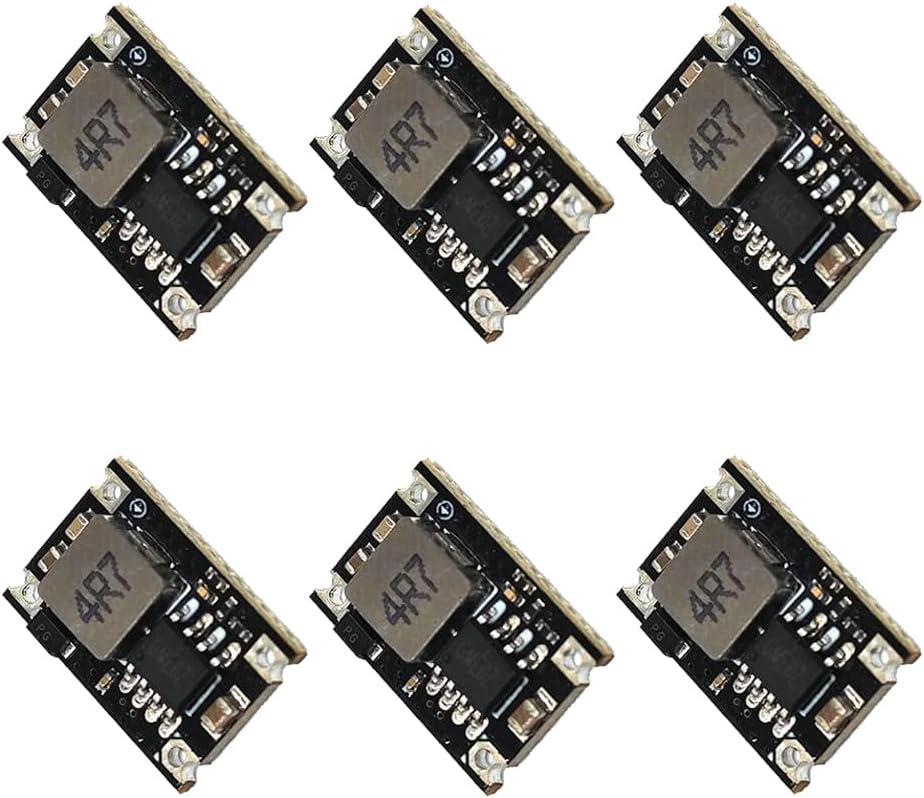
4.9Editor score
This table provides a side-by-side look at all ten selected voltage regulators. Compare their input ranges, maximum current outputs, and physical dimensions to find the best fit for your specific application needs.


This module stands out as the top choice for general purpose power regulation. It accepts a broad input range from 4.5V to 24V and delivers a stable 3.3V output. With a current rating of 1.8A it can power most microcontrollers and sensors without issue.
We may earn a commission when you buy through this link, at no additional cost to you.
The compact size of 17.5x12mm makes it ideal for portable or space constrained projects. The low ripple under 30mV ensures clean power for sensitive electronics. Users appreciate the five pack value allowing multiple projects or spares.
While it lacks reverse polarity protection the board is straightforward to use. The switching frequency is high enough to keep inductor size small. It is crucial to add protection diodes for inductive loads like motors.
Best for hobbyists needing reliable high current 3.3V power. Its versatility and small size make it a great all around option. The price point is excellent for the performance provided.
Its tiny footprint fits easily into tight enclosures or wearables. This saves space for other components on the PCB or breadboard.
The low ripple voltage protects sensitive sensors from noise. This ensures accurate readings and reliable system operation over time.
We may earn a commission when you buy through this link, at no additional cost to you.
This AMS1117 module offers a classic linear regulation solution for low power needs. It converts 4.75V to 12V inputs to a steady 3.3V output. The design is simple making it easy to connect for MCUs like Arduino or STM32.
We may earn a commission when you buy through this link, at no additional cost to you.
The main benefit is the simplicity of use with just three pins. It generates less noise than switching regulators which helps with audio or sensitive analog circuits. The 10 pack provides good value for multiple prototypes or builds.
Heat management is key as linear regulators dissipate excess voltage as heat. It is best used with low current loads under 800mA to avoid overheating. Ensure proper airflow or a heatsink if pushing limits.
Ideal for projects where simplicity and low noise are priorities over efficiency. The pack size makes it great for classroom kits or bulk prototyping. It is a reliable choice for standard logic voltage needs.
Linear regulators like this produce very little electrical noise. This makes them preferable for audio amplifiers or sensor interfaces.
Built-in thermal shutdown prevents damage from excessive heat. This adds a layer of safety for unattended or remote projects.
We may earn a commission when you buy through this link, at no additional cost to you.
This converter offers unique flexibility by supporting both step up and step down modes. It handles inputs from 1.8V up to 5V providing a constant 3.3V output. This makes it exceptionally useful for battery powered devices where voltage varies.
We may earn a commission when you buy through this link, at no additional cost to you.
With a maximum current of 100mA it is best for very low power tasks like microcontrollers in sleep modes or small sensors. The high rating suggests users find it reliable for its intended low power applications.
You cannot use this for motors or high draw peripherals due to the current limit. It is purely for logic level power needs. The small size fits well in portable gadgets or coin cell projects.
Choose this if you need to run 3.3V logic from a single cell or varying source. It simplifies power design for wearables or remote sensors. The low current is acceptable for many IoT use cases.
This module boosts voltage from low batteries and steps down from higher ones. This allows use with a wide range of battery types.
It consumes minimal current itself which extends battery life. This is critical for devices that must run for months on a charge.
We may earn a commission when you buy through this link, at no additional cost to you.
This module is a powerful choice for projects requiring wider input voltages. It works with 4.5V to 24V sources making it compatible with many power supplies or batteries. The output is a stable 3.3V capable of delivering 1.5A.
We may earn a commission when you buy through this link, at no additional cost to you.
The Mini360 design is renowned for its efficiency and small size. This allows for dense circuit layouts without sacrificing performance. The output ripple is kept low to protect sensitive components from electrical noise.
Inductive loads like motors need extra components to prevent voltage spikes. Adding a diode or capacitor is recommended as per instructions. This keeps the rest of the circuit safe from back EMF.
It is excellent for automotive or solar applications where voltage fluctuates. The pack of five gives enough for prototyping and final builds. Consider it for any robust 3.3V power requirement.
Support for 24V inputs allows use in vehicles or industrial gear. This expands compatibility beyond standard 5V supplies.
The buck design loses less energy to heat than linear regulators. This helps maintain cool operation even under heavier loads.
We may earn a commission when you buy through this link, at no additional cost to you.
This option prioritizes cost effectiveness for those building many devices. It uses the AMS1117 linear regulator to convert voltage cleanly. The three pin layout is straightforward for quick connections on breadboards.
We may earn a commission when you buy through this link, at no additional cost to you.
You get seven modules in a pack which is a great deal. This is perfect for education kits or when testing many designs. The overheat protection provides peace of mind during long runs.
Be aware that as a linear regulator it dissipates heat. Do not exceed the 800mA limit or apply too high an input voltage. Otherwise it offers consistent stable power for small chips.
Select this when budget is the main concern. It is ideal for logic circuits that do not draw high currents. The simplicity makes it accessible for beginners.
Getting seven units for a low price saves money long term. This is useful for classrooms or large scale prototyping.
The simple pinout reduces wiring errors and confusion. This helps new users learn power management quickly.
We may earn a commission when you buy through this link, at no additional cost to you.
This listing offers the largest quantity of AMS1117 modules available. You get fifteen units which is ideal for schools or factories. The regulator provides a fixed 3.3V output with tight accuracy.
We may earn a commission when you buy through this link, at no additional cost to you.
It is designed for low dropout scenarios where efficiency is not critical. The built-in thermal shutdown protects against accidental overheating. Users rate it highly for reliability in simple applications.
The main drawback is the heat generated at higher voltages or currents. Keep loads below 800mA to avoid issues. For logic power this is rarely a problem.
If you need many power supplies for multiple boards this is unmatched. The value per unit is excellent compared to single buys. It is a great stock item for an electronics lab.
The large pack ensures every student has a supply. This reduces wait times in shared electronics spaces.
Output voltage accuracy of ±2% ensures consistent performance. This helps with stable digital logic levels.
We may earn a commission when you buy through this link, at no additional cost to you.
This board supports a very wide input range up to 30V. This makes it suitable for industrial 24V or 28V systems. The output is a steady 3.3V with up to 1.8A available.
We may earn a commission when you buy through this link, at no additional cost to you.
The black PCB with polarity marks helps prevent wiring errors. This is useful for quick deployment in field projects. The high current capacity allows driving more peripherals.
Users note mixed experiences possibly due to component variance. Testing before final assembly is wise. The value is still good for those needing high input tolerance.
Opt for this when your source voltage exceeds typical limits. It handles the drop efficiently via buck conversion. Use a heatsink if pushing 1.5A to maintain performance.
Input up to 30V covers 24V industrial rails. This bridges the gap to 3.3V logic power.
The board marks input polarity clearly to avoid shorts. This adds a layer of safety during assembly.
We may earn a commission when you buy through this link, at no additional cost to you.
This module handles a broad 4.5V to 30V input range. It is perfect for solar or battery setups with voltage swings. The output is a clean 3.3V suitable for sensitive electronics.
We may earn a commission when you buy through this link, at no additional cost to you.
The compact size allows it to fit in tight spots like drones. Each unit is tested before shipping ensuring basic functionality. The five pack gives enough for prototyping and production.
It is ready for Arduino or ESP32 projects immediately. Just solder wires and it works. This saves time compared to building discrete circuits.
Use this when you need a wide input range in a small package. The high current makes it versatile for many sensors. It is a modern upgrade for power design.
Input up to 30V fits solar panel outputs. This simplifies energy harvesting projects.
Pre testing ensures each module functions properly. This reduces the risk of receiving defects.
We may earn a commission when you buy through this link, at no additional cost to you.
This pack is designed for common 5V sources like USB or wall warts. It converts 4.5V to 7V down to 3.3V efficiently for the range. It is simple to use for basic step down needs.
We may earn a commission when you buy through this link, at no additional cost to you.
The 800mA limit is sufficient for most logic chips. Users appreciate the value of getting ten units for prototyping. The high rating indicates satisfaction with performance.
Input voltage must stay within range to avoid damage. Do not apply more than 7V or the chip will overheat. Use a heatsink if current is high.
Best for USB powered projects or standard 5V logic. The bulk pack is great for labs or makers. It provides a reliable supply for your microcontrollers.
The input range matches USB output perfectly. This removes the need for external regulators on USB ports.
Ten units allow many designs without running out. This keeps project costs low for students and makers.
We may earn a commission when you buy through this link, at no additional cost to you.
This module features the high performance MP1584EN chip. It ensures stable operation even under varying loads. The input range spans 4.5V to 24V providing versatility.
We may earn a commission when you buy through this link, at no additional cost to you.
The 1.8A output is robust for demanding projects. Users report very high satisfaction with stability and build quality. The low ripple keeps noise away from sensitive circuits.
Inductive loads need external protection to avoid spikes. This is a common requirement for buck converters. The size is small enough for aircraft models.
Premium users should choose this for reliability and efficiency. It justifies the cost with better components. Ideal for professional or advanced hobbyist builds.
This chip offers better efficiency than older models. It runs cooler and provides cleaner power output.
Users rate it highly for consistent voltage delivery. This makes it suitable for critical applications.
We may earn a commission when you buy through this link, at no additional cost to you.
Selecting the right regulator depends on your input source and power needs. This guide helps you compare specs to avoid overheating or noise issues in your project.
Check that your power source falls within the module's input limits. A 5V supply requires a regulator that accepts near that value. Some modules support up to 24V or 30V for industrial use.
Match your input voltage to the regulator's accepted range to ensure operation.
Determine how much current your load needs. Microcontrollers might draw 200mA while sensors draw less. Ensure the regulator exceeds the maximum load by a safety margin.
Choose a module rated at least 20 percent higher than your peak current.
Switching regulators are more efficient and run cooler than linear ones. If your voltage drop is large switching types reduce waste. Linear types are simple but dissipate heat proportional to the difference.
Use buck converters for large voltage drops to minimize heat generation.
Sensitive circuits like audio or sensors need low ripple power. Linear regulators provide very low noise but are less efficient. Switching regulators can introduce ripple that may need filtering.
Look for ripple specs under 30mV for clean sensitive electronics power.
Small modules fit better in compact devices like wearables. Measure your enclosure space before buying. Mini360 modules are popular for their tiny footprint.
Select a size that fits your PCB or enclosure without crowding.
Buying in packs offers better value than single units. Five or ten packs allow for spares or multiple builds. This is especially useful for classroom or prototyping scenarios.
Consider buying a pack to save money over long term use.
Features like thermal shutdown protect against overheating. Reverse polarity protection prevents damage from wire swaps. Some modules lack these so external protection may be needed.
Prioritize models with built-in thermal protection for safety.
Motor loads need diode protection to handle inductive spikes. Battery projects may need step up or down capability. Identify your specific load type to choose the right regulator.
Match the regulator type to your load for reliable performance.
Connect the input pins to your power source. Ensure polarity matches the markings on the board. Connect the output pins to your device. Ground must be shared between input and output.
Verify voltage levels before attaching your load. Use a multimeter to measure the output. If it reads 3.3V you are ready to proceed. Never exceed the maximum current rating.
Keep the regulator in a ventilated area if running high current. Heat sinks can help if using linear types for long periods. Store modules dry to prevent corrosion before use.
Yes most listed modules accept 5V input and output 3.3V. Buck types are best for efficiency while linear ones work for low current. Always verify input specs match your source voltage.
Linear regulators are simple and low noise but less efficient. Buck regulators switch quickly to save energy and run cooler. Choose buck for larger voltage drops to minimize heat.
Buck types usually run cool without a heatsink. Linear types may need one if dropping voltage or driving high current. Check your current and temperature to decide.
Yes but you should add protection diodes for inductive loads. This prevents voltage spikes from damaging the regulator. The manual often specifies where to add protection components.
Yes most Arduino boards draw far less than 1.8A. It gives plenty of headroom for sensors or small peripherals. Just avoid shorting the output to ground accidentally.
Use a fine tip soldering iron and thin solder. Tin the pads first then attach wires. Check the pinout diagram before connecting to avoid reversing connections.
Most do not unless stated. You must wire them correctly to avoid damage. If unsure use a diode at the input to block reverse current flow.
The top picks cover various needs from compact size to high input tolerance. The 5pcs Buck Converter stands out as a balanced all around choice for most. It offers a great mix of current and size.
For low power needs consider the AMS1117 packs to save costs. Efficiency is key if running from batteries or heat sensitive areas. Match the regulator to your specific load requirements.
Prices change frequently so review the latest links before purchasing. Always double check your voltage and current requirements. This ensures safe operation and longevity for your electronics.