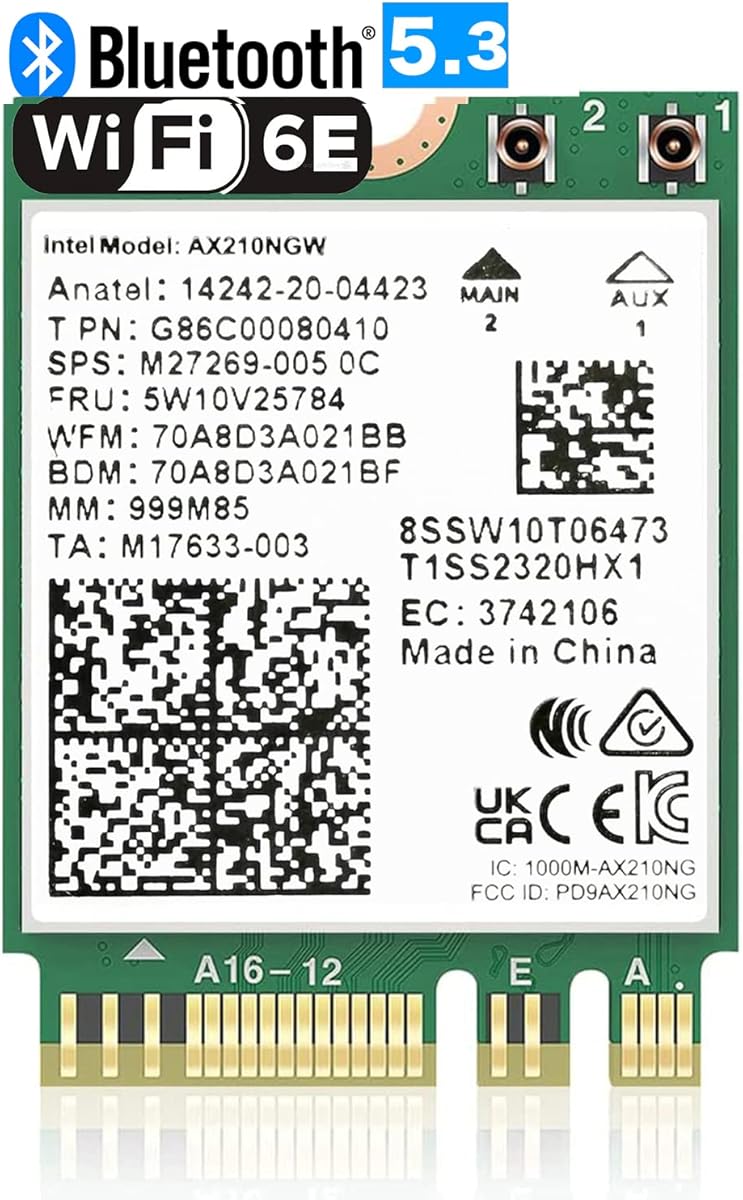
WiFi 6E AX210 NGW Wireless Card M.2 2230/NGFF
4.6Editor score
5400Mbps max speed
MU-MIMO technology
Windows 10/11 support
This guide compares the top M2 WiFi Cards for laptops and PCs, evaluating performance, compatibility, and features to help you choose the right wireless
Modern computing demands fast and reliable wireless connectivity. M2 WiFi Cards offer a direct upgrade path for laptops and desktops, enabling support for the latest standards like WiFi 6E and WiFi 7. Choosing the right card ensures stable connections, lower latency, and better throughput for streaming, gaming, and work.
We compared ten real products based on chipset performance, compatibility, and user feedback. Each entry features the Intel AX210, BE200, or alternative chipsets like MT7925. We evaluated range, speed potential, Bluetooth version, and installation requirements to provide a clear picture of what each card delivers.
Each pick highlights key strengths and ideal use cases. Whether you need budget-friendly tri-band speeds or cutting-edge WiFi 7 performance, there is a option here. Note that prices and stock vary over time, so check current listings before purchasing to ensure you get the best deal available today.
4.6Editor score

4.8Editor score

4.6Editor score
This side-by-side comparison covers all ten products listed in our guide. We highlight key specifications like maximum speed, supported bands, Bluetooth version, and processor compatibility to help you quickly identify the card that fits your hardware and performance needs.


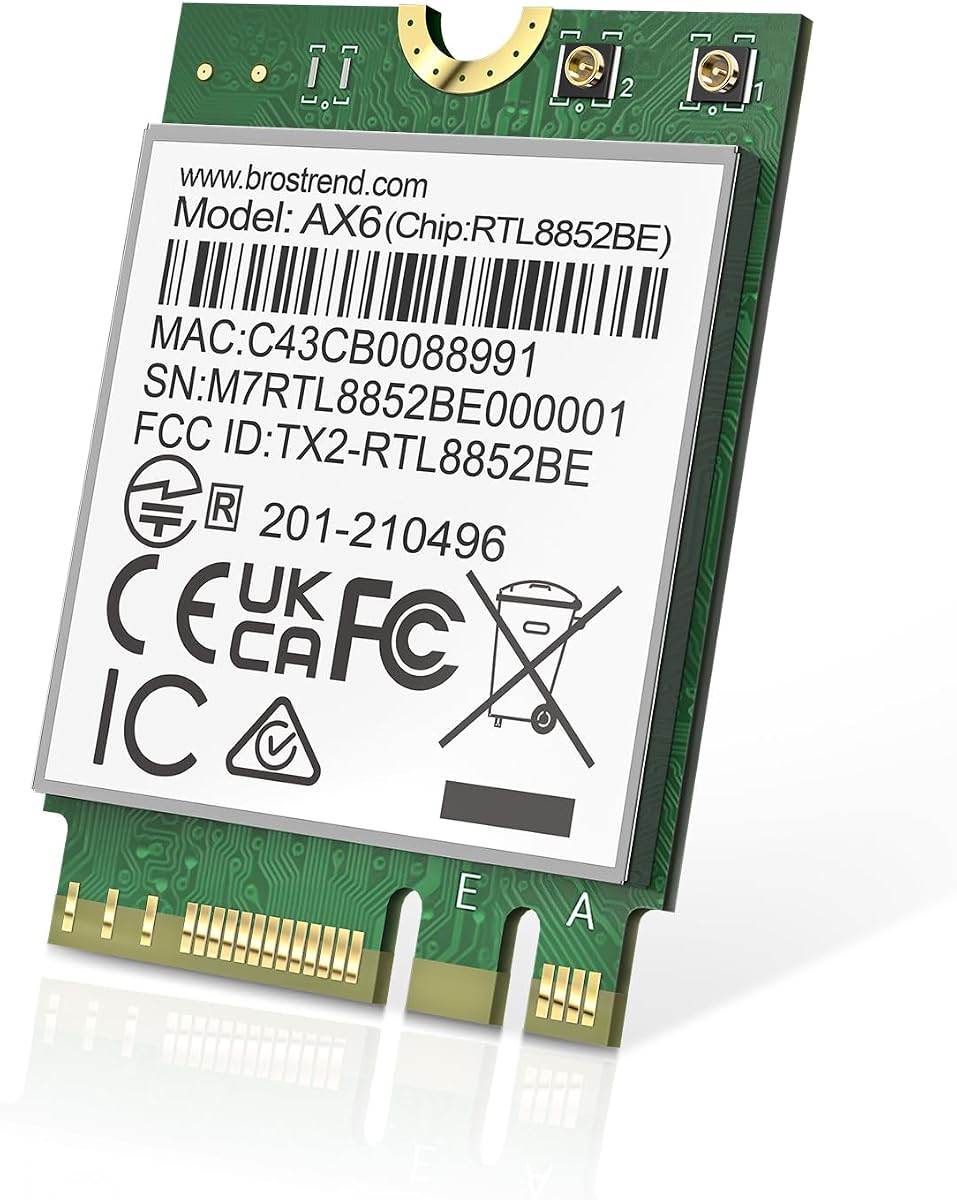

This DTK WiFi Card offers a complete solution for upgrading to WiFi 6E. With a 4.5 rating, it provides reliable tri-band connectivity including the new 6GHz band. The inclusion of high-gain antennas makes it stand out for users needing stronger range without buying extra accessories.
We may earn a commission when you buy through this link, at no additional cost to you.
The AX210 chipset delivers up to 574Mbps on 2.4GHz and 2400Mbps on both 5GHz and 6GHz bands. OFDMA and MU-MIMO ensure efficient data handling for multiple devices. Bluetooth 5.3 adds low-latency support for wireless peripherals and audio gear.
While the kit is comprehensive, you must download drivers from Intel manually. Additionally, the low-profile brackets may require adjustment depending on your chassis. These are minor trade-offs given the performance and value it brings to the table.
Buyers seeking a ready-to-install WiFi 6E upgrade with strong antenna support should choose this option. It balances cost and features effectively for home or office use.
Includes RF cables and high-gain antennas to simplify installation and boost signal range.
Supports 6GHz for less interference and higher speeds alongside 2.4GHz and 5GHz bands.
We may earn a commission when you buy through this link, at no additional cost to you.
This AX210 module targets laptop users needing fast tri-band speeds. With a 4.6 rating, it delivers 5400Mbps combined across 2.4GHz, 5GHz, and 6GHz. The ultra-low latency ensures smooth performance for online gaming and video conferencing.
We may earn a commission when you buy through this link, at no additional cost to you.
Key strengths include MU-MIMO and 1024QAM support for efficient data transfer. It works with both Intel and newer AMD CPUs. Bluetooth 5.3 enhances peripheral connectivity with improved stability and lower power usage.
The card does not include external antennas so you must use built-in laptop antennas. You also need to install drivers from Intel manually. These steps are standard for most M.2 cards but may add slight setup time.
Choose this card if you prioritize speed and compatibility over a full accessory kit. It is an excellent choice for modern laptops with M.2 E-key slots.
Delivers responsive connections ideal for competitive gaming and real-time applications.
Works with both Intel and AMD processors for flexible laptop upgrades.
We may earn a commission when you buy through this link, at no additional cost to you.
The Intel AX210 Tri-Band card leads with a 4.8 rating. It delivers clean tri-band WiFi 6E performance with official Intel drivers. Its stability and efficiency make it a preferred choice for notebook users who value reliability.
We may earn a commission when you buy through this link, at no additional cost to you.
This card provides seamless access to 2.4GHz, 5GHz, and 6GHz bands. It integrates Bluetooth 5.3 for modern peripherals. The chipset ensures minimal CPU load during heavy network tasks.
Packaging is basic and no antennas are included. You may need to ensure your notebook has compatible antenna connectors. These are typical limitations for OEM-style modules.
Select this if you want verified Intel quality and maximum stability. It is ideal for notebooks needing a proven upgrade path.
Ensures seamless compatibility with Windows systems and regular security updates.
Optimized to reduce battery drain during active network usage.
We may earn a commission when you buy through this link, at no additional cost to you.
This BE200 card introduces WiFi 7 technology with 5800Mbps speeds. A 4.6 rating reflects its performance potential. It supports 6GHz and 5.8GHz bands for maximum throughput. Bluetooth 5.4 improves link stability and battery life.
We may earn a commission when you buy through this link, at no additional cost to you.
The card offers tri-band connectivity with reduced power draw. It works on Linux and Windows systems. This positions it well for power users wanting the latest standards.
Compatibility is limited to Intel 12th Gen and newer CPUs. AMD users cannot use this card. You also need a WiFi 7 router to unlock full speeds.
Buy if you have compatible Intel hardware and want cutting-edge performance. It is a strong choice for future-proof systems.
Unlocks multi-gigabit speeds beyond WiFi 6E for heavy loads.
Provides enhanced connection stability for wireless peripherals.
We may earn a commission when you buy through this link, at no additional cost to you.
This EDUP card bridges WiFi 7 performance with AMD compatibility. A 4.4 rating shows steady reliability. It delivers 6.5Gbps across tri-bands. Bluetooth 5.4 allows seven devices simultaneously.
We may earn a commission when you buy through this link, at no additional cost to you.
Multi-Link Operation (MLO) reduces lag by selecting optimal paths. WPA3 ensures secure connections. The module fits M.2 2230 A/E key slots.
Driver support relies on EDUP website downloads. You must disable built-in Bluetooth before use. These steps add minor setup complexity.
Choose this if you run AMD systems and want WiFi 7. It offers broader CPU support than many competing cards.
Unique among WiFi 7 cards for supporting AMD platforms directly.
Intelligently selects best signal paths to reduce lag and dropouts.
We may earn a commission when you buy through this link, at no additional cost to you.
This EDUP AX210 card earns a 4.8 rating for stability. It provides tri-band speeds with Intel AX210 chipset. Bluetooth 5.3 adds low latency. The brand offers lifetime support for long-term reliability.
We may earn a commission when you buy through this link, at no additional cost to you.
It supports 5400Mbps speeds with MU-MIMO and OFDMA. Security includes WPA3. It fits laptops with M.2 2230 A/E slots.
Not compatible with CNViO2 or Mini PCIe slots. Careful handling of antenna connectors is required during install.
Pick this for trusted support and proven AX210 performance. Ideal for users valuing vendor assistance.
Provides peace of mind with ongoing technical assistance.
Supports WPA3 to protect wireless data.
We may earn a commission when you buy through this link, at no additional cost to you.
The AC 9560 card targets older laptops needing AC upgrade. A 4.4 rating reflects solid dual-band performance. It delivers 1.73Gbps on 5GHz. Bluetooth 5.1 works well for peripherals.
We may earn a commission when you buy through this link, at no additional cost to you.
It includes WPA3 security. Form factor is M.2 2230. Best on Intel processors.
Lacks WiFi 6 and 6GHz. It may not suit new systems.
Choose for budget legacy upgrades where 6E is not needed.
Delivers fast 5GHz connections for streaming and web browsing.
Ensures reliable connection for wireless mice and headsets.
We may earn a commission when you buy through this link, at no additional cost to you.
This BrosTrend card offers WiFi 6 at entry price. A 4.4 rating shows good value. AX1800 speeds suit daily tasks. BT 5.2 improves range and speed.
We may earn a commission when you buy through this link, at no additional cost to you.
OFDMA aids multitasking. Dual-band 2.4GHz and 5GHz coverage works in most homes. Linux 6.5+ works.
No 6GHz band. Linux support lacks dedicated help. Still solid for general use.
Choose for simple 6 upgrade on budget. Fits standard M.2 slots.
Provides modern connectivity without high-end features.
Ensures broader range for wireless devices.
We may earn a commission when you buy through this link, at no additional cost to you.
This BE200 targets gamers needing low latency. A 4.6 rating supports its focus. Tri-band 5.8Gbps speeds work. Killer prioritizes gaming traffic.
We may earn a commission when you buy through this link, at no additional cost to you.
BT 5.4 reduces lag. It needs Windows 11 and Intel CPU. Key E interface fits many motherboards.
Limited to newer Intel chips. You need a WiFi 7 router. Still top for competitive play.
Pick if you prioritize lag-free gaming. Great for high-end Intel rigs.
Intelligently prioritizes gaming traffic to minimize lag.
Delivers instant response for competitive titles.
We may earn a commission when you buy through this link, at no additional cost to you.
The AX411 card serves server needs. A perfect 5.0 rating shows reliability. Tri-band 3Gbps speeds ensure stability. Killer optimizes real-time apps.
We may earn a commission when you buy through this link, at no additional cost to you.
BT 5.3 saves power. Fits M.2 2230. Designed for workloads.
More power than home users need. Higher cost applies.
Choose for servers needing stability. Ideal for demanding workloads.
Engineered for continuous operation with minimal downtime.
Optimized to reduce load on host processors.
We may earn a commission when you buy through this link, at no additional cost to you.
Selecting the right M2 WiFi card depends on your system compatibility, performance needs, and budget. Understanding chipset capabilities and physical constraints ensures a smooth upgrade.
WiFi 7 cards like BE200 offer highest speeds but require compatible routers and CPUs. WiFi 6E provides tri-band access with better cost balance. WiFi 6 is sufficient for most users.
Choose based on current and future needs for internet plans and router support.
Intel AX210 supports both Intel and AMD CPUs. Some BE200 cards only work with Intel 12th Gen+. Check your motherboard slot key and CPU specs before buying.
Always verify CPU compatibility to avoid purchase returns due to hardware constraints.
Newer cards include Bluetooth 5.3 or 5.4 for lower latency. This affects audio and peripheral performance. Ensure your OS supports the latest versions for best results.
Opt for BT 5.3+ if you use wireless headsets or gaming controllers.
All cards use M.2 2230 size. Key A or E slots are standard for WiFi. Mini PCIe and CNViO2 slots are not supported. Check your laptop or desktop manual.
Ensure your slot type matches the card's interface to enable physical installation.
Linux users should check kernel versions. Windows 10 and 11 need official drivers from Intel or vendor sites. Ensure you have admin access to install drivers.
Confirm OS compatibility to avoid driver issues after installation.
Some kits include antennas and brackets. Others rely on built-in connectors. If your chassis has no antennas, you will need to source compatible ones separately.
Include antenna costs in your budget if you need external signal boosters.
Gamers may prefer low-latency WiFi 7. General browsing can use WiFi 6. Match speed needs with your internet plan to avoid overspending.
Choose speed tier that matches your ISP plan and usage habits.
Vendor support varies. Some offer lifetime technical help. Others provide limited warranties. Reliable brands simplify driver updates and troubleshooting.
Prefer brands offering support to ensure long-term usability.
To install your M2 WiFi card, shut down your computer and disconnect power. Open the case and locate the M.2 slot. Insert the card at a 30-degree angle and secure it with a screw. Connect antenna cables to the correct ports for 2.4 and 5GHz bands.
After installation, boot your system and install the latest drivers from Intel or the vendor's website. Ensure your OS recognizes both Wi-Fi and Bluetooth devices. Use device manager to confirm the network adapter status.
Maintain performance by keeping drivers updated and cleaning dust from the card periodically. Avoid bending antenna wires excessively. If you upgrade routers, re-check settings to enable WPA3 and MU-MIMO features.
Yes, many AX210 cards support both Intel and AMD. However, newer BE200 models often require Intel 12th Gen and above. Always verify compatibility notes before purchasing.
WiFi 6E adds access to the 6GHz band, which has less congestion. This means faster speeds and lower latency. Ideal for homes with many connected devices.
Not always. If your laptop has built-in antennas, you can reuse them. Desktop users may need to buy antenna kits if none are included with the card.
No. M2 WiFi cards use M.2 2230 slots. Mini PCIe is a different physical interface. Check your hardware manual for exact slot type before upgrading.
Some AX210 cards work with built-in kernel drivers. BE200 may need manual driver downloads. Linux 6.5 or higher is recommended for best support.
Yes, if your system enables the card's Bluetooth function. Ensure you disable any internal Bluetooth adapter first. Then install drivers for the new combo module.
Our top picks include the Intel AX210 Tri-Band for value, DTK AX210NGW for accessories, and BE200 for gaming. Each offers unique strengths depending on your needs.
Prioritize chipset compatibility and slot types over raw speed. A card that fits your hardware and supports your CPU will perform best.
Prices change frequently so verify current listings before buying. With proper selection, you can enjoy fast wireless performance for years.